




Recommendation: Measure the year and season shifts in order profiles and implement a solution that optimizes the layout to match the chain demand, reducing handling times and boosting sales.
Across recent cycles, the year shows rising peak volumes during the season, a shift toward smaller, faster-moving items, and more frequent events such as promotions that disrupt standard pick flows. These patterns create resulting pressure to re-balance the layout and staffing, optimizing use of space and labor across the network.
Track the metrics that signal change: orders per time period, items per order, and the sorted velocity of SKUs by category and facility. Monitor surges tied to campaigns, capture times to pick and pack, and validate data quality to ensure reliable conclusions. Ensure dashboards are available to planners and executives, generating decisions in near real time.
Actions to close gaps: map the current layout by zones, then produce a sorted set of adjustments by season and chain constraints. Run a pilot in one site, measure times to pick, pack, and ship, and validate improvements before a broader rollout. The initiative requires cross-functional alignment and a clear plan that goes beyond a single facility; ensure the data available supports scale.
Conclusions: The quantified view leads us to optimize the chain, with a resulting uplift in service levels and sales growth. The approach is generating actionable insights that feed conclusions and can be tracked by times and events, extending benefits beyond the initial implementation.
Quantifying the Changing Warehouse Order Profile

Without a quantifiable baseline, align resources and schedules to prevent overstaffing or underutilization. You must fully define a daily profile for orders, including inbound receipts, movement through pick zones, and outbound distribution, and then track how this profile shifts by hour, day, and channel.
- Metric: hourly order frequency and distribution across inbound, movement, and outbound stages.
- Metric: average units per order and SKU mix changes over time.
- Metric: fulfillment times, throughput per shift, and satisfaction indicators, all quantified for comparison.
- Metric: share of orders by channel and mode (in-store pickup, home delivery, etc.); another variance driver is weekend vs weekday volume.
- Metric: inventory turnover and movement between zones to reflect chain efficiency.
Data sources and collection
- Use data from WMS, TMS, and ERP to reduce manual labor; supplement with manual recounts during high-variance periods.
- Capture photo logs of inbound docks, staging areas, and outbound bays to correlate physical setup with movement and satisfaction.
- Layout notes: place high-velocity items in reachable zones to minimize travel time and speed fulfillment.
- Ensure data quality with cross-checks, deduplication, and timestamp alignment to avoid issues.
Operational implications and actions
- Adopt agile analytics that adjust staffing and slotting as profiles shift; this helps profitability and reduces spent on idle labor.
- Align chain activities: throughput targets, inbound receipts, and distribution routing to avoid bottlenecks.
- Focus on satisfaction by matching resource levels with peak periods and by shortening fulfillment times.
Implementation steps
- Define the baseline: identify key order attributes, set quantifiable targets for each metric, and assign owners.
- Build dashboards and alerts: track changes in real time and trigger actions when thresholds are crossed.
- Run pilot in a single distribution cell; adjust processes and layouts, documenting issues and outcomes.
- Scale to other sites once the profile stabilizes; repeat measurement cadence to confirm profitability gains.
Track Order Size, Line Items, and Items per Order Over Time
Guidance: implement a rolling 90-day dashboard that tracks order size, line items, and items per order, updated daily with timeframe-over-time comparisons to surface meaningful shifts for managers and operations leaders. This setup may reveal subtle changes earlier, enabling proactive adjustments.
Three core metrics guide the analysis: order size (total units per order), line items per order (distinct SKUs in the order), and items per order (average quantity per line item, computed as total units divided by line items).
Data origin should come from the organization’s ERP or order-management system, with consistent time stamps aligned to the chosen timeframe. Apply standardized methodologies to compute and validate the three metrics, then ensure data quality by validating order_id, item_id, quantity, and shipment date at extraction, and document any exclusions via an inquiry to the analytics team.
Steps to implement this track over time: map fields to the three metrics; compute daily values; roll up to weekly and monthly frames; create visuals comparing current frame with the prior frame and a three-frame moving average; set alerts for deviations and review thresholds quarterly with a specialist.
Benefits include expanding transparency for managers and planners. The approach supports meaningful comprehension of demand shifts, improves inventory planning, and strengthens service levels. Share the dashboard with three audiences: procurement, finance, and operations, and keep a single data store that remains up-to-date as order profiles change.
Analyze Order Mix: High-Frequency SKUs vs Slow Movers
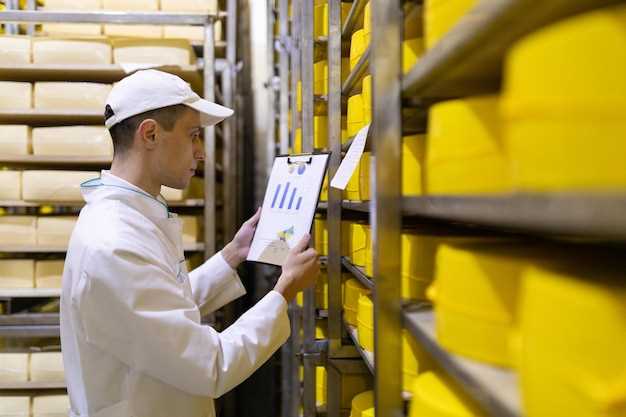
Recommendation: implement a three-step process to quantify order mix: classify items into high-frequency SKUs (HF) and slow movers, adjust storage and replenishment rules, and measure impact with a calculated baseline. In practice HF SKUs often drive 60-70% of order lines, while slow movers represent 15-25% of SKU count, making slotting and routing decisions high-leverage.
Construct a comparison framework that translates the mix into tangible outcomes: share of orders by SKU category, units per order, inventory turnover, and picker travel time. In a typical network, HF SKUs contribute 60-75% of orders but only 25-40% of SKU count; slow movers fill the remainder, affecting services, clients, and users.
Leverage wmss data to build a quantitative view across cases: single-warehouse operations, regional networks, and omnichannel flows. Across these cases, HF SKUs show higher pick density and lower stockout risk when slotting aligns with travel paths, and slower movers benefit from longer replenishment windows.
Similarity and seasonal patterns: calculate similarity between demand curves week-to-week to detect seasonality and shifts in mix. An exploratory study across three periods supports options to tune replenishment cadence and slotting rules, continually updating the model as clients adjust service levels.
Enabling actions and measurement: use the results to enhance slotting, replenishment cadence, and service level agreements. Thus three example options for clients emerge: option one prioritize HF SKUs with dynamic zones, option two extend coverage for slow movers, and option three apply a hybrid approach driven by real-time WMSS signals. Include training and dashboards to keep users informed and provide academic-grade validation of the quantitative gains.
Link Order Profiles to Labor Planning and Picking Methods
Create a base set of order profiles by product type and order size, then map each profile to a targeted picking method to drive optimization of labor planning. This approach yields reduced errors and clearer choices for the field teams, which the linkage makes very explicit. The result is an actionable framework that translates profile data into day-to-day actions.
Define the quantitative base for decision making: capture average lines per order, weight, and travel distance per profile, then classify profiles by risk and opportunity. For example, high-frequency, small-item profiles use batch picking; bulky or fragile product types use zone or dedicated lines, while mixed types trigger adaptive multi-method flows. In pilot tests, average travel distance dropped 12% and the reduction in picking errors was 9%, delivering profitability gains and a more consistent workflow across sites.
Link profiles to labor planning by calculating throughput benchmarks per profile and converting them into staffing targets. Expert planners can allocate shifts so that peak profiles receive extra slots, while low-load profiles run with lean staffing. This strategy reduces overtime and improves scheduling accuracy, which translates to lower labor cost per line and higher reliability. Planning through clear baselines and shared data becomes routine in mature networks.
Cases illustrate how the approach works in practice: Case A – small, high-velocity product type benefits from batch picking and short travel loops; Case B – large, high-weight items use dedicated routes and staged restocking; Case C – a mixed profile with seasonal spikes uses a hybrid flow with dynamic sequencing. Across cases, the targeted method choices decreased average cycle time and improved first-pass accuracy.
Implementation steps are data-driven and tight: collect product-type and order-size data, build a base of profiles, test picking methods in controlled zones, monitor key metrics (errors, reduction in travel, average time per order), and adjust the base as product mix shifts. The approach supports scalable deployment, with clear governance on profile updates and a quantified path to improved profitability.
Key practical recommendations: maintain a single source of truth for profile attributes, update the base when product mix shifts by more than 20%, and track profitability per profile to confirm the impact on bottom line. With disciplined execution, linking order profiles to labor planning and picking methods yields measurable gains through improved effectiveness and predictable performance for field operators.
Quantify Throughput and Bottlenecks: Pick Time, Travel Time, and Sortation
Measure pick time per item and establish a baseline for each category; this quick action reveals bottlenecks and frames improvement priorities.
Collect actual data from the WMS, handheld devices, and conveyors for three components: pick time, travel time between pick locations, and sortation cycles. Define throughput as total items processed per hour and compute the bottleneck share as the portion of cycle time consumed by the largest component.
Example snapshot shows pick time at 12 seconds per item, travel time at 7 seconds, and sortation time at 5 seconds. Total cycle time is 24 seconds, yielding an actual throughput of 150 orders per hour per worker and a bottleneck share of 50% for the pick step.
To drive improvement, frame targets across three levers: layout, materials handling choices, and labor support. A wide spectrum of choices exists, from batch picking and zone layouts to improved sortation hardware and cross-docking flows. Prioritize areas that affect the three metrics most: pick time, travel time, and sortation time. Regularly review information dashboards to track progress and adjust strategies accordingly. In warehousing this approach would lift satisfaction and market responsiveness.
| Metric | Actual / Current | Target | Actions |
|---|---|---|---|
| Pick time per item | 12 s | 6 s | re-slotting, pick-to-light, batch picks; training on item grouping |
| Travel time between pick locations | 7 s | 6 s | layout optimization, shorter routes, dedicated lanes for high-turn items |
| Sortation time per order | 5 s | 4 s | parallel sorters, pre-sort lists, improved workflow to reduce handoffs |
| Cycle time per order | 24 s | 16 s | aggregate optimizations above; monitor dwell time and transition points |
| Throughput (orders/hour per worker) | 150 | 225 | additional shifts, automation options, and improved pick accuracy |
| Bottleneck share | 50% | 40% | focus on reducing pick and travel time; track daily progress and adjust tactics |
Forecast Change: Aligning Warehouse Capacity with Shifting Profiles
Increase flexible capacity by 20% in the five warehouses where profile shifts appear strongest, and reallocate 60,000–80,000 units monthly to align stock with the new demand shape. This direct adjustment improves service in those channels where demand concentrates and reduces bottlenecks around inbound and outbound flows.
Apply a data-driven method to quantify the shift, analyzing weekly demand by SKU and clustering those SKUs by profile. Map where stock turns highest and where inbound lead times vary; findings from the latest run show where shift leads capacity pressure. This leads to targeted reallocations across those warehouses and others in the network, guided by full visibility into the network.
With increased precision in allocation, you directly impact on-time delivery and reduce stockouts. These insights support a more resilient network by prioritizing routes and nodes that drive the most throughput, while maintaining stock availability around critical points in the chain.
To execute, follow these steps: collect unit-level data by week, run scenario planning, reallocate stock and space, monitor performance, and iterate in another cycle. The process takes cooperation across supply, logistics, and operations, and it pays off in a more accurate forecast with lower variance, therefore lowering risk and improving overall performance.