




Recommendation: map the implemented tariffs now and monitor price shifts across affected sectors to quantify the case and its interactions, establishing a baseline before any further measures. Use official notices, market data, and firm reports to track whether a policy applies and where penalties would be imposed under current policies, clarifying implications for consumers.
Build an exposure map from credible data to capture the highest risk sectors and signs of spillovers, with special attention to imports from brazil that influence input costs. Use price indexes and customs notices to verify how tariffs feed into wholesale and retail prices, and note any immediate shifts before downstream margins adjust.
In-depth methodology helps you compare cases across countries, seeking to isolate the tariff impact from other policies. Create a dashboard that tracks price changes, import shares, and production adjustments, and estimate the balance between domestic gains and external constraints. This approach yields actionable signals for businesses seeking to hedge risk.
Policy interactions shape outcomes: not all tariffs translate evenly; some sectors would experience smaller price pass-throughs than others, while penalties would escalate with enforcement intensity. Compare the domestic balance of gains and costs, and watch for brazil's trade response. Use this frame to inform corporate decisions, supply-chain realignments, and policy advocacy.
Section 1: Tariff scope and design – which goods were taxed and how exemptions worked
Identify the exact goods affected and pursue product-specific exemptions quickly to limit costs. The Trump tariffs under Section 232 focused on two main rates: 25% on steel and 10% on aluminum. Goods made with sizeable steel or aluminum content faced these charges at import. The policy framed exemptions as a tool to preserve critical supply chains, and in march 2018 the first notices set expectations; a following week brought updates that tested how fast the secretary could apply for relief and how powers could be used to balance protection with trade ties.
The design hinges on two levers: scope and exemptions. The scope identifies taxed inputs and final products, while exemptions allow relief for specific items through a petition process. The sides–federal authorities and importing companies–must align on what counts as a dutiable item and how to measure value added. The week updates during early iterations created shifting targets for procurement teams and fed fears about sudden cost swings. Below is a practical map of the scope and the exemption route.
- Tariff scope: which goods were taxed
- Steel products: raw steel, finished steel parts, and components made with steel used in manufacturing lines.
- Aluminum products: rolled aluminum, sheets, and downstream parts dependent on aluminum input.
- Items with high metal content: some components and assemblies (chips and housings) that rely on steel or aluminum inputs.
- Tariff rates and charges
- Rates stood at 25% for steel and 10% for aluminum, applied to the dutiable value of imports.
- Charges could be assessed at the border and reflected in supplier pricing, with downstream effects on consumer prices and contract economics.
- In later steps, certain products were canceled from coverage or treated differently as policy adjustments were made.
- Exemption design: how exemptions worked
- Exemptions were granted on a case-by-case basis by the secretary of commerce, following a petition process designed to protect critical supply chains while preserving national goals.
- Petitions could be filed for specific subcategories or inputs, including inputs like pharmaceuticals or critical electronics components where domestic alternatives existed (or where a legitimate supply risk existed).
- Deadlines and timelines varied; in some notices, a 30-day window defined the initial review, with decisions issued in weeks depending on complexity.
- Geographic and bilateral considerations
- Canadian producers and other allies could seek relief under bilateral arrangements or be affected by shifts in the agreement framework with the United States (the broader negotiation context shaped eligibility and responses).
- canadian inputs and suppliers played a role in shaping exclusions and adjustments under the evolving agreement framework.
- Case examples and practical notes
- Pharmaceuticals: inputs and packaging for drugs could be subject to targeted considerations, requiring careful review of classification and exemptions.
- Larger and more complex hardware: assemblies with mixed inputs might qualify for partial relief or phased tariff applications depending on end-use and domestic production capabilities.
- Actual procurement actions: firms canceled or paused certain imports when exemptions were not granted, relying on substitutions or renegotiated supplier terms.
Policy considerations also addressed behavioral signals in sourcing and enforcement gaps. Trafficking concerns highlighted the need for transparent classifications and documented supply chains to support exemption decisions. The agreement framework sought to reduce cross-border tensions by aligning goals with canadians, partners, and other sides of the negotiation table.
Section 2: Market reactions – stock prices, currencies, and bond yields
Market snapshot

Placing hedges now in duration and quality assets limits tariff-driven downside and helps create a buffer for portfolios. The S&P 500 closed down 1.1 percent, the Dow fell 1.5 percent, and the Nasdaq slipped 1.3 percent, showing sides reacting differently to the news of exemptions and negotiations.
The euro rose to 1.112 per dollar, the highest in a week, with euros trading broadly as markets priced in an exemption for a key input in the supply chain.
The 10-year U.S. Treasury yield climbed 12 basis points to about 4.25 percent, the highest in six weeks, while the two-year moved to around 4.70 percent. Placing focus on shorter duration helped cover some of the risk from equity volatility.
Policy and inflation dynamics
Investors priced in the previously-announced tariff path; given the prospect of exemption for certain inputs, inflation risk could ease. Though some arguments favor a quick resolution, others warn of a drawn-out fight. Market watchers track the order in which tariffs apply and whether a first resolution includes exemptions. If a national or international agreement emerges, tariffs could pause or roll back; declaring tariffs indefinitely would re-price risk across equities, currencies, and bond yields. krugman notes inflation persistence as a risk, while choe highlights supply-chain bottlenecks in the policy debate.
Section 2: Market reactions – importers' hedging and supply-chain reshoring
Recommendation: Diversify suppliers and move critical production to lower-risk jurisdictions to cover levies and reduce after-tax costs. Build a hedging plan that uses forward contracts, currency hedges, inventory buffers, and flexible sourcing to stabilize margins as rules shift. Align with authorized partners and monitor notices from ministries in beijing and other jurisdictions to lock in compliant pricing.
Hedging and inventory strategies gain traction: christopher, an economist who led an investigation, notes that coverage rose to roughly 40-60% of annual import value in the latest quarter. Firms rely on forward contracts and options to cover price risk and protect earnings after-tax against tariff swings. Owners and businesses reported that associated suppliers in beijing and other jurisdictions faced fluctuating lead times; some suspended shipments when levies rose, prompting earlier orders to avoid disruption. Demand signals remain uneven across sectors, with manufacturers in aerospace and consumer electronics adjusting production schedules while wages stabilized in longer supply chains. Observers wrote that this shift followed earlier tariff rounds, reinforcing the case for hedging and reconfiguration. This helps preserve free cash flow for reinvestment.
Reshoring actions include mapping critical components, establishing dual sourcing nearshoring options, and investing in automation to reduce unit costs. Importers should aim to shorten supply routes by bringing production closer to home where feasible, test supplier performance in a staged rollout, and measure the impact on fill rate and total cost. The reshoring shift took hold gradually, with production retooled over several quarters.
Policy signals require ongoing vigilance: read ministry notices for tariff changes and exemptions, and track beijing guidance for input costs that may shift. For associated risks, run two scenarios: base case with tariffs held steady and a stress case with new levies. In the stress case, expect demand to soften and a reduction in production costs if exemptions expand. If a key input becomes exempt, the reduction in cost improves margins for the line. Firms should adjust pricing, update supplier contracts, and communicate changes to customers to maintain demand. The investigation teams will keep updating the data to reflect real-world moves.
Section 3: Sectoral effects – manufacturing, energy, and consumer goods
Recommendation: strengthen domestic sourcing and resilience by diversifying suppliers, accelerating automation, and establishing regional hubs to offset us-imposed tariff costs across manufacturing, energy, and consumer goods.
Toward a clearer picture, tariffs were applied broadly in ways that shaped sectoral dynamics. In manufacturing, output declined, employment contracted modestly, and input costs rose due to duties on steel, aluminum, and select parts. The findings from the panel indicate that the resulting price pressures prompted many firms to appeal the duties, while some took advantage of nearshoring options to Mexican sites to cut lead times and reduce exposure. A slide labeled grein highlighted alternative scenarios, underscoring how flexible sourcing could limit downside while expanding local capabilities. Times of volatility amplified the case for taking up automation, which helped some plants keep output steady even as margins narrowed. This sequence yielded a total impact that manufacturers now weigh when planning capital expenditure and supplier contracts. Additionally, updated revenue projections suggest that while some firms gained pricing power on specialty components, total revenue across the sector remained sensitive to input costs and retaliatory tariffs from external partners.
In the energy segment, tariffs on metals and critical components increased capital costs for equipment and infrastructure, affecting project timing and output. Several projects faced delays, and employment in component fabrication rose slightly in some regions while shrinking in others. The panel upheld the view that energy-intensive industries benefited from domestic manufacturing momentum, yet vulnerable segments faced higher breakeven points. For example, turbine and solar component producers reported rising material costs, with produced output showing modest gains in some firms and stagnation in others depending on supply contracts. In this context, near-term revenue recovery rests on efficient procurement and multi-sourcing strategies that reduce exposure to us-imposed duties while keeping project dates on track.
In consumer goods, retailers faced higher landed costs on finished products and components, with price updates passing through to consumers across multiple channels. Apple and other electronics manufacturers faced elevated input expenses, prompting some suppliers to explore Mexican and other nearshore production options, a move that could shorten supply chains and improve order predictability. The resulting cost pressures encouraged firms to revise pricing, adjust inventory strategies, and pursue efficiency gains. Consequently, consumer goods firms that upgraded logistics, diversified suppliers, and accelerated automation tended to preserve output and keep employment steadier than peers tied to single-source suppliers. The updated outlook for date-sensitive products emphasizes careful timing of orders and improved demand forecasting to avoid overhangs in stock levels.
| Sector | Output change (approx %) | Employment change (approx %) | Tariff exposure |
|---|---|---|---|
| Manufacturing | -2.5 to -3.5 | -0.8 to -1.2 | High |
| Energy | -0.5 to -1.5 | -0.3 to -0.7 | Medium |
| Consumer goods | -1.5 to -3.0 | -0.5 to -0.9 | High |
Overall, the verdict from the panel suggests that sectoral gains depend on how firms manage supply chains, pricing, and investment timing. For manufacturing, the appeal of nearshoring to Mexican facilities widens the set of viable options, while energy and consumer goods hinge on tighter procurement controls and smarter automation. The operative date for decisions remains close to the latest tariff announcements; however, even with constructive policy design, the total results will reflect how quickly firms adapt and how responsive the market remains. Consequently, firms should consider hedging input costs, updating supplier maps, and scheduling capital projects to align with policy updates and market demand. Additionally, provided data indicate that targeted relief and phased implementations could stabilize employment and output while preserving gains in efficiency, especially for firms with long lead times and complex supply chains.
Section 3: Price dynamics – consumer inflation, input costs, and margins
Pricing tactics and margin protection
Recommendation: quantify tariff pass-through across your product lines within two weeks and set pricing actions to protect margins while staying fair to customers.
Across the economy, tariffs increased input costs, with the number of affected SKUs and regions varying by supplier and origin. In practice, pass-through ranges from 20% to 60% for most consumer goods; electronics and components often rise toward the higher end when supply is tight. Use available data from suppliers, customs, and internal cost tracking to build a dynamic model that updates weekly. This analysis concludes that sustained policy changes can push annual inflation in exposed categories higher by roughly 0.5–1.5 percentage points unless pricing and sourcing adjust accordingly.
To defend margins, place emphasis on cost discipline and revenue levers: renegotiate terms with suppliers, pursue alternative sourcing under non-usmca where feasible, and trim nonessential spend. The situation can be a gift to efficiency for firms that modernize; tariffs trumps simple cost cuts when supply is constrained. A healthy margin requires balancing the budget with consumer affordability, so they can match expectations without eroding demand. Plan for remaining stock and adjust placing of orders with flexibility if tariffs shift again. The minister and commission have signaled that duties may evolve, and courts have upheld several duties in past challenges, so prepare for a somewhat cautious outlook.
aaron and christopher from the pricing team monitor these numbers daily and share quick briefs with leadership. They emphasize that, given the data, a 1–2 percentage point quarterly price move can help maintain a healthy balance between inflation risk and competitiveness. If supply chains rely on non-usmca suppliers, reassess the cost dynamics at least twice per year to ensure the links remain strong and the health of the business remains robust.
Section 3: Investment and productivity – business sentiment and capital expenditures under tariff policy
Investment signals and business sentiment
Investors should prioritize tariff-resilient capex by expanding domestic sourcing, automation, and modular supplier networks. Build a plan that ties projected input-cost changes to capital expenditures rather than short-term sales, and base decisions on timely information from supplier risk assessments.
August sentiment surveys show deterioration in tariffs-reliant sectors, with notices from trade associations highlighting cautious stances. This doesnt mean all activity stalls, but it does shift the basis for prioritizing projects that deliver quicker productivity gains and cost containment. Firms with diversified suppliers report smaller declines in planned investments than those relying on single import channels, improving any eventual equilibrium for cash flow.
Tariffs imposed on key inputs raise unit costs steeply, pushing profitability down and reducing after-tax cash flow. Firms take steps to protect margins by accelerating efficiency projects, negotiating rebates with suppliers, and seeking exempt or delayed duties on critical products where possible, because tariffs can be higher than anticipated. Immediate information on tariff schedules helps management take timely action and avoid last-minute cost shocks.
Capital expenditure strategies and policy levers
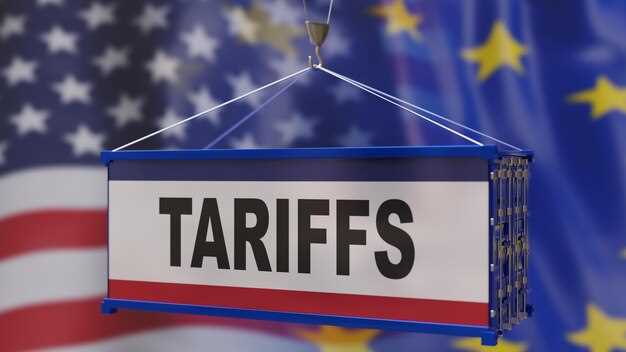
To cover cost shifts, companies should expand capex in areas with visible near-term returns: automation, energy efficiency, and supplier development. Such investments generally reduce wage pressures by lifting output per worker and broaden activity across plants, helping more than twice the impact of non-productive spending. Expanded productivity supports a more resilient balance sheet and preserves margins even when policy changes come fast.
Policy levers matter: rebates and after-tax incentives can cover part of the new investment cost, and exemptions on specific products reduce the burden on critical lines of production. Governments should uphold transparent notices and clear classifications to minimize delays, while courts enforce penalties for trafficking or illicit inputs to protect legitimate suppliers. When a bill moves, firms can take advantage of coming windows to lock in pricing and schedules, stabilizing supply chains and supporting a steadier path to equilibrium.