




Adopt a four-pillar decarbonization plan today: measure emissions, shift to cleaner modes, electrify fleets where feasible, and adopt low-carbon fuels for remaining segments. hard data will clarify budgets in euros, assign interim milestones across territories, and align the network around a single environmental goal: lower emissions in every link.
Use a shared data model to track emissions across scope 1-3, routes, and facilities. With data from the dhls network, every partner can compare options and forecast environmental savings. In pilot corridors, modal shifts to rail or barge cut fuel use by 15–25% in the first year, while optimized routing reduces idle time by up to 10%. Progress updates, as told by reporters and auditors, show real gains and help identify counterfeit risks where verification lags. Data-driven decisions support rapid adjustments.
In warehouses, install energy-saving lighting, heat-recovery HVAC, and solar canopies; shift to electric yard tractors and battery-powered last-mile devices where feasible. Environmental metrics improve quickly, and interim results demonstrate much lower energy bills, shorter dwell times, and more consistent service levels across territories and markets. Cost reductions follow from fewer idling hours and improved asset utilization.
The president invites industry, regulators, and civil society to join a cross-border movement; a six-month interim report will track environmental wins, supply-chain resilience, and counterfeit controls. This movement relies on open data, standardized reporting, and a clear path to scale from pilot to network-wide adoption, with much room left for innovative technology and governance improvements. Public trust strengthens as disclosures rise.
For finance, set aside a budget in euros to cover upgrades, training, and compliance audits. Leaders should present progress clearly and stakeholders will see year-by-year milestones, including a 20% cut in scope 3 emissions by year two and expansion of green corridors across more territories. Start with concrete pilots in 3–5 regions and expand to 15 by year four, ensuring counterfeit risk is minimized through trusted data streams and verification within the dhls-enabled network. Transparent reporting invites ongoing investment.
Neste and DHL Group tighten collaboration to reduce logistics emissions
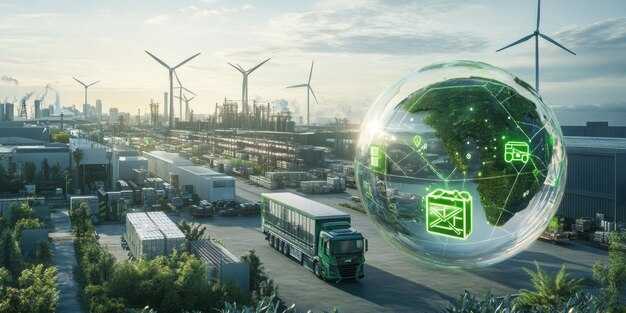
Recommendation: implement a joint emissions dashboard and time-bound decarbonization plan across DHL Group and Neste, with a 12-month baseline and explicit goals: reduce CO2 per shipment by 25% by 2026 and 50% by 2030, across aviation, road, rail, and maritime modes.
Neste, producer of SAF and renewable fuels, can provide up to 80% lower lifecycle CO2 than fossil jet fuel when blended into DHL Group's aviation network. Start with 6 pilot routes in Europe and APAC across various hubs, expanding to cover all major hubs by 2027.
To scale, deploy innovative, data-driven routing and a modal shift plan: replace about 30% of long-haul air freight with greener alternatives such as rail and electric/hydrogen trucks; accelerate last-mile electrification in urban centers.
Develop a joint governance and data framework to share performance metrics, forecast demand, and coordinate SAF supply; this effort runs with neste as the anchor for SAF supply and bridges operations with sustainability, providing support for real-time decisions. Use digital tools to simulate routes and quantify savings, enabling faster time-to-implementation and continuous improvement.
The collaboration strengthens the growing role of greener logistics across industries, bridging producer capabilities with carrier networks. Individual teams align on shared goals, ensuring reliable service for cars, aviation, and other sectors. The value for humans grows as emissions fall, and the entertainment industry benefits from more predictable deliveries for content, equipment, and events.
Pinpoint hot spots: map emissions across transport modes and routes
Create a data-driven map of emissions by transport mode and route to identify the biggest hotspots, then target them with concrete interventions that cut costs and emissions in parallel.
Design the map as a three-layer system: movement by mode (road, rail, inland water, sea, air, plus hyperloop as a future option), route density, and energy mix. According to источник data from fleet telematics, port authorities, and national inventories, compute CO2e per ton-km for each movement and separate commercial from internal travel. The most significant spread of emissions appears on congested urban corridors and on routes with low modal efficiency.
- Biggest hotspots: identify the top five routes and modes by CO2e; they often carry 45-55% of total freight emissions over the network and define where to focus action.
- Targeted interventions: shift long-haul volumes from road to rail or barge where feasible (60-80% lower CO2e per ton-km on miles >300 km), optimize loads to raise fill rate, and adopt low-emission last-mile fleets or electric trucks. For time-sensitive travel, reserve for air or high-speed freight only when necessary; pilot hyperloop on select corridors to test value against costs.
- Progress and measurement: set quarterly milestones, publish a dashboard in the service system, and track emissions, energy spend, and reliability. Use these data to show people the most impactful changes and keep momentum.
- Spending and benefits: reallocate spending toward energy efficiency, renewable fuels, and maintenance for electrified fleets; quantify benefits in fuel savings and reduced emissions; monitor cost per tonne-km and overall system spending.
- People and governance: empower employees with training and clear ownership. The president supports the goals by backing cross-functional teams. Share progress with service providers and customers to reinforce the movement toward decarbonization.
- Spread and collaboration: encourage suppliers to share data, align schedules, and reduce unnecessary travel for meetings (limit entertainment-related trips) to cut emissions across the system.
- Future opportunities: innovate with hyperloop pilots and other emerging modes; assess the value and scalability of such options before large-scale adoption.
Adopt Neste renewable fuels and DHL's low-emission transport network
Begin a concrete pilot: switch 25% of DHL road freight in Europe to Neste MY Renewable Diesel and target 75% by 2030. This transition can deliver up to 75% lifecycle CO2 reduction versus fossil diesel, advancing net-zero goals and improving urban air quality on busy corridors.
Extend the approach across DHL's low-emission transport network: zero-emission cars for city deliveries, electric vans on secondary routes, LNG trucks for regional legs, and SAF where feasible for air freight. Pair Neste blends with these modes to reduce fossil dependence while maintaining service levels and reliability on tight schedules.
Track progress with blockchain-based data sharing that records fuel type, blend percentages, route, and emissions per shipment. Provide verifiable receipts to customers and use the data to spread opportunities to other carriers and suppliers. This transparent flow supports continuous improvement and helps align operations with customers' decarbonization needs, worlddhl says the momentum already exists.
The business case rests on forward planning and cost discipline: the euros spent on Neste and related infrastructure are offset by fuel-cost stability, reduced exposure to fossil-price spikes, and a steady decrease in tons of CO2. allen says the cross-system alignment between procurement, operations, and finance, and vice versa, strengthens risk management, while placing zero-emission targets within reach for key accounts and supply chains with a credible road map.
Leverage data-driven dashboards for real-time decarbonization decisions

Install a unified, real-time dashboard across all operations by Q3 to enable immediate decarbonization decisions. This innovative tool pulls information from procurement systems, TMS, WMS, IoT sensors, and carrier invoices, giving people on the floor and at the desk a clear view of emission hotspots and progress toward targets, delivering great outcomes for teams and customers. With a friendly, user-centered design, teams can see the impact of each action and share results with customers in minutes rather than days.
Set up a multi-source data program that integrates various data streams–inventory, energy use, route optimization, and load factors–so information is available worldwide and by country, market, and facility. The dashboard tracks tons of CO2e, emission intensity per unit, and absolute emissions, and has been designed to be interpretable by vice presidents and ops teams. It enables teams to compare scenarios, apply the formula, and communicate progress to stakeholders.
Adopt a track-and-analyze workflow that uses a formula to quantify decarbonization impact for each choice, whether rerouting a shipment, shifting to rail, or adjusting packaging. The program should run scenarios in minutes, helping teams think through the trade-offs between cost, service levels, and emission reductions. The visuals highlight problem areas and growth opportunities across various regions and markets. Teams can closely monitor results and identify what works best, communicating gains to customers and leadership.
Empower a cross-functional team–people from logistics, procurement, sustainability, and finance–to own the dashboard, review alerts, and drive continuous improvements together. Regular reviews with customers and supplier partners build trust and shorten feedback loops, showing how a data-driven approach reduces spending while unlocking new efficiency gains in other markets. The effort already validated by pilot programs proves that a well-tuned dashboard boosts performance across country networks and worldwide operations, helping vice leadership make informed decisions with less risk.
To scale, run a three-country pilot with a clear KPI: reduce emission intensity by a measurable margin in six months while preserving service levels. Track information quality, spending, and growth across markets, and iterate quickly based on feedback from teams and customers. A lean training program and ready-made dashboards drive adoption, delivering visible wins in weeks and setting the stage for broader rollout across the world.
Scale circular packaging, modal shift, and optimized routing
Adopt circular packaging immediately by standardizing reusable totes for all regional outbound flows and returns, with a clear take-back schedule and partner hubs. This reduces single-use packaging, lowers waste, and creates opportunities for diverse stakeholders. Awareness among suppliers and customers accelerates adoption; a commission can oversee targets and keep the movement aligned.
Establish a nestes network of packaging loops across products, starting with three core SKUs and a shared data platform that tracks reuse, damage, and end-of-life processing. According to pilot data, reuse climbs from about 20% in year one to 40–60% by year two, with packaging material use dropping 30–50% for heavier items. The upfront investment, typically 4–6 million euros, earns a payback within 2–3 years.
Move 30–40% of regional freight from road to rail, inland waterways, or short-sea routes by aligning with existing modal corridors. In successful pilots, emissions per tonne-km drop by 25–40%, and overall freight costs improve 10–20% due to better load factors. This reduces fossil fuel travel and frees highway capacity, benefiting planet and network reliability.
Optimize routing with AI-powered planning to compress travel, consolidate loads, and avoid duplications. Expect 12–18% fewer miles traveled per shipment and 5–12% faster deliveries in dense networks, while fleet utilization improves and dispatchers gain time to focus on higher-value tasks. These gains unfold as data quality grows and routes settle.
Governance and accountability: assign a lightweight commission-led framework, require data-sharing agreements, and publish quarterly metrics to everyone. Cross-functional teams monitor a spectrum of products and routes, identify opportunities, and ensure gains are embedded in supplier contracts and carrier SLAs. The result is a steady movement toward a low-carbon, circular system that sustains growth for years.
| Strategy | CO2 impact (approx.) | Upfront cost (euros) | Time to implement | |
|---|---|---|---|---|
| Circular packaging reuse | −25% to −40% per cycle | 4–6 million | 12–24 months | Pilot on 3 core SKUs; scale after case gains |
| Modal shift (road → rail/sea) | −25% to −40% per tonne-km | 2–4 million | 12–36 months | Focus on dense corridors; pilot to scale |
| Routing optimization | −8% to −15% energy per ton-km | 0.5–1.5 million | 6–12 months | Fleet utilization gains; dispatch tasks reduced |
Engage suppliers and carriers to cut Scope 3 emissions
Launch a 90-day supplier and carrier engagement program to cut Scope 3 emissions by at least 15%, with a cross-functional owner and monthly progress reviews.
Map emissions across inbound, production, and outbound legs, and require suppliers to submit standardized information on transport modes, fuels, energy intensity, and packaging. Use this data to identify the top 20% of sources responsible for the majority of emissions and target them first.
Establish a verification process to minimize counterfeit sustainability claims and require third-party certifications for eco-claims. Only goods with verified information count toward the program, and train people in procurement and logistics to read the data accurately. This approach strengthens environmentally responsible decisions and reduces risk when items are sold.
Link 20% of total spending to verified progress within 12 months, and align contract terms with performance. Offer targeted incentives to suppliers and leading carriers that deliver measurable reductions; publish quarterly results that show cost savings and emissions benefits, reinforcing the program’s value across the supply network. This can unlock potential benefits across operations and finance.
Adopt concrete levers: shift to zero-emission fuels and rail for long-haul where feasible; optimize routes to reduce distance; consolidate shipments to cut trips; pilot zero-emission last-mile vehicles in dense zones; track benefits in CO2e and fuel consumption. Early pilots report 15–25% reductions through route optimization and modal shifts, with a favorable cost trajectory as volumes scale.
Engage people across the network to build a movement and share unique case studies. Provide learning resources and celebrate progress, so teams move forward together. Use transparent information to illustrate benefits for customers and partners around the world, while keeping entertainment and brand value aligned with sustainability milestones.