


 Türkçe
  English (UK)
  Русский
  العربية
  日本語
日本語  한국어
한국어  Magyar
  Español
  Čeština
  Svenska
  Português
  Ελληνικά
  Suomi
Suomi  Nederlands
  Română
  Italiano
  Français
  Polski
  Українська
  Deutsch
  简体中文
简体中文  Slovenčina
  Regulatory roadblocks and logistics planning for the Subic–Clark–Manila–Batangas freight rail">

The Subic–Clark–Manila–Batangas (SCMB) freight rail alignment will run roughly 198 kilometres, intended to divert container flows from Manila and increase throughput at Batangas Port and Subic Bay, thereby shifting modal pressure and changing regional freight patterns.
Key stakeholders and the February 23 consultative meeting
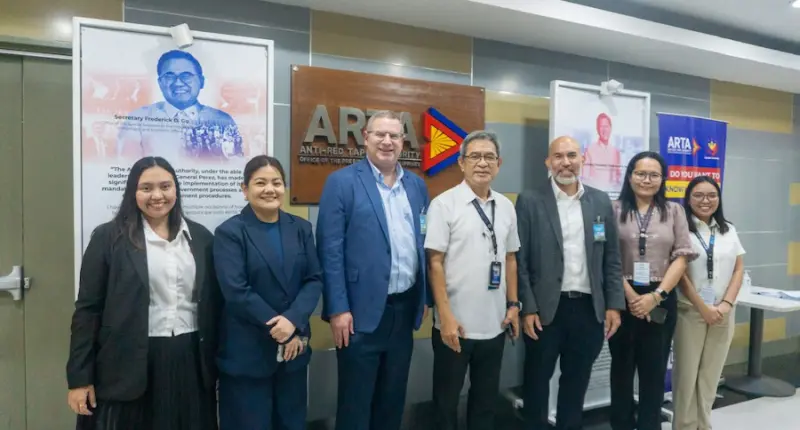
On February 23 a consultative session brought together technical and regulatory leads: Jeffrey Singer (Cadmus Group), Ernesto Perez (Anti-Red Tape Authority, ARTA) and John Garrity (formerly USAID Better Access and Connectivity Project). The meeting focused squarely on how regulatory fixes will influence corridor-based investments across the Luzon Economic Corridor.
Who’s involved
- Bu Cadmus Group — delivering the SCMB railway feasibility study (USTDA-funded).
- ARTA — driving permit streamlining and local government coordination.
- John Garrity — sharing lessons from ADB and World Bank collaborations.
- Supporting partners: Asian Development Bank (ADB), ABD. Trade and Development Agency (USTDA), and Swedfund.
Regulatory bottlenecks identified
The consultative notes and ARTA’s follow-up emphasized several practical choke points that logistics planners and transport operators should track closely.
- Right-of-way acquisition delays — land tenure and compensation processes risk schedule slippage for construction starts.
- Yerel permitting backlogs — municipal-level approvals under the Citizens’ Charter can still bottleneck civil works and ancillary facilities.
- Inter-agency coordination gaps — inconsistent requirements across national agencies and LGUs increase compliance overhead for investors.
- Port integration complexity — synchronising rail terminals with existing container yards, RoRo ramps and berth schedules needs early design-phase planning.
Practical recommendations from the meeting
- Institutionalise a Provincial Business One-Stop Shop model across the Luzon Economic Corridor to accelerate permit clearances.
- Enforce Citizens’ Charter timelines at LGU level and monitor adherence as a project KPI.
- Create a dedicated inter-agency task force for right-of-way and compensation to reduce legal disputes and time-to-construction.
- Embed port integration requirements into the feasibility stage so terminals are rail-ready from day one.
Feasibility study scope and timeline
The USTDA-funded SCMB feasibility study, produced by Cadmus, is targeted for completion by mid-2027. Core study modules include:
| Study Component | Birincil Odak | Logistics Implication |
|---|---|---|
| Right-of-way acquisition | Land maps, compensation schemes, dispute mitigation | Affects construction start dates and corridor continuity |
| Port integration | Terminal siting, intermodal transfer, berth access | Determines container handling efficiency and modal shifts |
| Logistics planning | Freight flows, schedule modelling, rake and wagon needs | Informs rolling stock procurement and hub design |
Operational considerations for logistics operators
From a transport operator’s perspective, the study’s outputs should be read as inputs to commercial planning: projected throughput will dictate how many intermodal wagons, terminal cranes, and feeder-truck rotations are required. If I had a peso for every time a rail project underestimated truck-rail transhipment demand, well — you’d see a lot more cranes in the plan.
How the SCMB route reshapes freight flows
By connecting the major ports and industrial hubs north and south of Manila, the SCMB aims to decentralize Manila Port and create alternative corridors for inbound and outbound cargo. Practically, that can mean:
- Reduced container dwell times at Metro Manila terminals;
- Increased distribution activity at Batangas and Subic, with demand for new logistics parks;
- Opportunities for rail-based long-haul freight services that lower road haulage miles.
What carriers and forwarders should prepare for
Freight forwarders, haulage companies and port operators will need to update their network models, re-evaluate slot allocations, and plan for new terminal interfaces. Expect a shift in palletised cargo routing and a renewed push for container pooling strategies once rail capacity becomes available.
Checklist for early movers
- Engage with the Cadmus study outputs as they arrive; align commercial models to projected capacity.
- Pre-negotiate terminal handling agreements with Batangas and Subic operators.
- Assess truck-to-rail transshipment costs and adjust pricing or service mixes accordingly.
- Monitor ARTA announcements on Provincial Business One-Stop Shop rollouts.
Risks that could still derail timelines
Even with political and multilateral finance support, several risks remain: protracted land disputes, LGU-level political turnover affecting permit timelines, and integration mismatches between port operators and the rail designer. These are solvable, but they require active management — not just good intentions.
A quick reality check
Projects like SCMB are as much about governance as they are about steel and sleepers. It’s one thing to design an alignment on paper; it’s another to shepherd permits, land acquisition and port agreements through dozens of hands and agencies. As someone who’s sat in too many coordination meetings, the proverb “measure twice, cut once” feels painfully apt here.
Önemli çıkarımların özeti
Paydaş alignment, efficient LGU permitting, and early port-rail integration stand out as the make-or-break factors for the SCMB freight rail. The feasibility study—due mid-2027—will feed directly into decisions on right-of-way strategy, terminal design, and logistics planning that affect freight, distribution and international shipping at a practical level.
The meeting reinforced that while funding and technical partners like ADB, USTDA and Swedfund are crucial, the day-to-day mechanics of permits and local coordination will largely determine how quickly freight benefits materialize. Even the best plans need smooth execution at the municipal level to deliver on promises of reduced truck haulage and improved container flows.
Short forecast on how this could impact global logistics: the SCMB project is largely regional in significance — it won’t instantly reshape global shipping lanes — but it will materially affect Philippine domestic distribution, port utilization and feeder patterns. That local impact is very relevant to providers tracking capacity and pricing in Southeast Asia. For your next cargo transportation, consider the convenience and reliability of GetTransport.com. Book now GetTransport.com.com
Highlights: the SCMB study tackles right-of-way, port integration and loji̇sti̇k planning; ARTA is pushing for faster LGU permits via the Citizens’ Charter and Provincial One-Stop Shops; and multilateral support from ADB, USTDA and Swedfund reduces financing friction. That said, no amount of reviews and feedback replaces getting your hands dirty on site — personal experience beats paper every time. On GetTransport.com, you can order your cargo transportation at the best global prices, helping you test and adapt logistics strategies without excessive cost or risk. GetTransport.com’s transparency and convenience make it easy to compare options and secure reliable shipments — Book now GetTransport.com.com
In closing, the SCMB freight rail feasibility effort is carving out the regulatory and logistical groundwork needed to move containers off the overloaded Manila hub and into Batangas and Subic, with clear implications for kargo, navlun, sevkiyat, Teslimat, taşıma and broader loji̇sti̇k services. Forwarders and haulage firms should watch the study outputs closely: decisions on right-of-way, terminal integration and permitting will directly affect shipping, forwarding, dispatch and distribution networks. For anyone planning moving, relocation, pallet or container shipments — domestic or international — the efficient execution of these reforms will matter. Reliable couriers, movers and operators will benefit as the corridor matures and rail capacity becomes a real alternative to road haulage.