



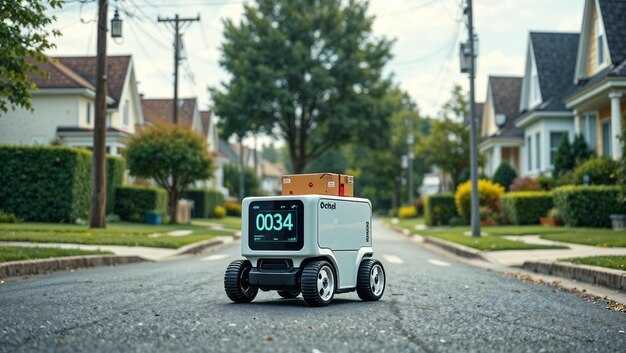
Plan to place your first order before 10 a.m. for a reliable curbside handoff by robotic couriers in DC Fall Season. Ordering apps are rolling out a fleet of on-spot helpers that move along pedestrian paths near shops, using a compact, low-profile base. Expect a short window between confirmation and the handoff, with typical times around 20 to 40 minutes in most neighborhoods. The pilot extends to Maryland and Virginia as demand grows, and you'll see live ETA and route updates in the app. It is practical, not science fiction, and you won't need special access to participate.
What to expect in the coming months: devices roll along pedestrian paths, pause at doorways, and use sensors to avoid people, pets, and street furniture. The devices stand roughly one meter tall and are designed for stable operation in urban traffic. When you place an order, you’ll see a live map showing progress and an estimated handoff time in the app. The system is built to handle groceries from common staples to everyday essentials, including beverages and non-perishables.
Safety and etiquette: keep the drop-off zone clear, avoid blocking access, and never try to move a device. If the unit cannot complete a handoff in a single attempt, it returns to its origin point and retries later. do not forget to keep entry doors accessible and to write a recipient name on the order for a smooth handoff.
Regional rollout details: initial phase focuses on downtown DC areas, with expansion into Maryland and Virginia after collecting feedback and observing reliability in street layouts. The pilot relies on rapid iterations and adaptations to improve speed, accuracy, and reliability across a range of groceries. Customers in nearby markets will see short, predictable handoffs during morning and evening peaks as the system learns curb access and pedestrian flow.
Practical tips: check the app for a precise ETA, pick a window with lower foot traffic, ensure your entry path is accessible, and have a prepared recipient name on the order. For multi-item orders, group items to minimize on-site handoffs. Residential blocks and dense areas may see multiple devices operating to keep wait times minimal.
DC Grocery Delivery Robots: Practical Plan
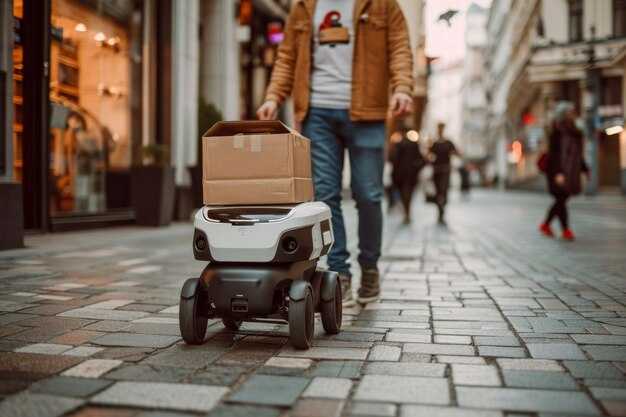
Launch the latest-generation delivery robots in a six-month phased pilot across two DC corridors to show measurable gains in delivery speed and reliability while keeping pedestrians safe. Appoint a head of the program, establish a board, and task the tech team from austin to lead testing and integration with doordash.
Set geo-fenced sidewalks along the initial corridors, cap robot speed at 2-3 mph, require a human safety observer during testing, and provide clear audible and visual signals to prevent conflicts with pedestrians.
Coordinate with councils and the mayor's office to align city rules; integrate postal-address validation with delivery dashboards; connect the program to existing city and private programs.
Finance plan covers maintenance and battery replacements over years; robots carry a payload up to 20-25 pounds, with input from private partners and city programs.
Some residents fear sidewalk clutter; transparent signage and predictable routes earn trust, and источник notes this trend in similar pilots.
Next steps: after the pilot, measure success with delivery-hub throughput, customer satisfaction, and incident rates; if metrics meet targets, scale to three more wards over the next year, and invite automakers to test co-developed hardware and safety features. Their performance data informs policy updates.
Fall rollout schedule for DC grocery robots
Start with a two-week pilot in downtown DC using 10 grocery delivery robots on core corridors; track congestion, emissions, and pedestrian safety, and adjust policy as data comes in to support a broader rollout.
Phase 1 runs from early September to mid-October on six routes in the Central Business District, Capitol Hill, and Foggy Bottom. The fleet includes 15 robots operating 7:00–9:00 and 16:00–19:00, restricted to sidewalks and curb lanes with a three-foot buffer from pedestrians and bikes. They travel along streets at slow speeds and use sensors to keep inches clearance when crowds form, theyre designed to log each interaction to inform program updates and measure success.
Phase 2 expands to Columbia Heights, Adams Morgan, Mount Vernon Triangle, bringing the fleet to 20 robots. Daytime hours extend to 10:00–16:00, and partner teams complete safety forms for policy compliance. Signage improves on routes, sidewalks stay clear around busy street corners, and theyre integrated with bikes and pedestrians through curbside space sharing.
Phase 3 runs from late October into December, adding 25 robots to campuses and high-traffic corridors with dense foot traffic. The plan includes a snow contingency: if snow accumulates, operations slow or pause on affected routes, and planners route to clear sidewalks first. Early snow of a few inches prompts prioritization of main arteries and visible queueing at loading zones. Drones monitor traffic from above, while ground units stay on streets and sidewalks.
Infrastructure upgrades accompany the rollout: curb ramps, loading zones, street signage, and smart crossings to reduce congestion and emissions. The units resemble starships on the streets, but they stay on the ground and operate only on sidewalks or designated curb lanes. This setup minimizes conflicts with pedestrians and bikes, especially where theyre present on busy streets.
A weekly dashboard reports success rates, incidents, distance delivered, and energy use. источник: city policy report provides the data source and notes on methodology.
Where to watch: shoppers and residents will see these units near grocery pickup zones, on streets shared with bikes, and along transit corridors. Expect clear signage, audible warnings, and predictable stops at crosswalks to protect pedestrians. The programs rely on safety forms and reporting forms to keep oversight tight; where you spot them, give space and obey curbside rules to keep the process smooth.
Neighborhoods first: where DC robots will operate
Start the rollout in Dupont Circle and Shaw, focusing on the front doors of partner stores and high-traffic apartment blocks. This suggested approach keeps the initial wave tight and testing within a two-mile radius around core corridors.
These neighborhoods offer dense foot traffic and public access to sidewalks, enabling safe curbside pickups and machine drop-offs. Doordash orders from within this zone feed fulfillment queues, with machines navigating sidewalks, crosswalks, and small intersections while keeping people and deliveries in view and within reach.
To support operations, invest in infrastructure near storefronts: marked loading zones, durable curb ramps, weatherproof bags designed for robots, and charging points at key corners. The operator will provide real-time monitoring dashboards and share wave-by-wave results so communities can see progress. If a route goes wrong or a bag detaches, staff should intervene immediately to protect them and the food.
Learn from the Austin pilot and adapt the model to DC: keep the tech stack modular, verify weight and clearance limits, and ensure pets and people coexist safely. Robots should carry doordash orders in secure bags, with clear indicators and a quick-release option for the operator if safety issues arise. Public access to loading zones must be explicit and safe, avoiding conflicts with pedestrians.
Phased coverage plan: begin on weekends in the core districts–Georgetown not planned for initial days, but Navy Yard, Capitol Hill, Dupont, and U Street Corridor will anchor the first wave–then expand to Brookland and Anacostia within the same fall window. This approach keeps deliveries fast and predictable while giving the public a consistent, testable experience.
How to order and track your robot delivery
Open the doordash app and select robot delivery for your groceries, then confirm your Washington, DC address and items. The checkout shows an ETA and a tracking ID, so you can plan around the window and avoid guessing when your order will arrive.
An operator watches the route from a ground depot, while the robot moves along the sidewalk. The system uses GPS and sensors and updates forms as milestones are reached: picked up, en route, approaching your building, and delivered. You’ll see a live progress bar and a map view in the app.
Public safety comes first. Keep the sidewalk clear and give space for the robot to pass; although delays can occur during busy hours, monitoring tools flag detours and reroute when needed. The route may span miles between the ground depot and your home, but most cases stay within a short distance of the curb.
Delivery happens on the ground beside your door, with a secure, hands-free drop on the sidewalk. You receive a notification to authorize pickup or use a PIN or app confirmation. If you’re not available, the system keeps the items safe for a limited window, then returns them to the depot.
Wrong item or missing item? Open the case in the app to report it. The operator reviews the feed, and the program resolves refunds or re-delivery within 24 hours in most DC cases.
Origin and rollout: co-founders launched the tested program in francisco with residents, then expanded toward american cities including Washington. Since then, deliveries have grown within the DC area, and the monitoring team keeps connections with partners like doordash to refine routes and safety and to keep residents informed throughout every step.
Safety, privacy, and etiquette around sidewalk robots
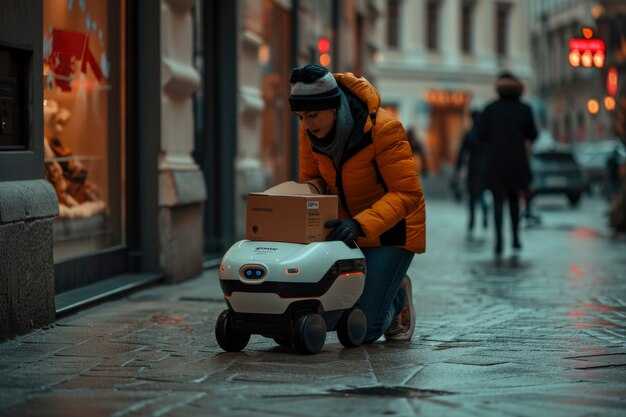
Recommendation: Limit sidewalk robot speed to 3 mph and keep at least a 1.5-foot buffer from walkers; use a soft beacon to show intent when stopping or turning. This approach, already tested in pilot zones on city streets this fall, keeps goods moving along miles of routes without disrupting foot traffic.
Safety systems are built into every unit: an accessible emergency stop on the board, a remote override by on-site staff, and multi-sensor protection that halts the unit before contact. City inspectors review the sensor stack and procedures, ensuring alignment with infrastructure plans and reducing emissions from detours and idle time, while maintaining reliable fulfillment for your orders.
Privacy by design limits data to navigation and obstacle detection, with no facial recognition and no audio capture beyond what is necessary for safety. Data retention lasts up to 30 days, access is restricted to the city agency, the board, and a small group of authorized personnel; this approach helps your neighborhood feel safe around the robots and supports responsible access to sidewalks.
Etiquette centers on pedestrian priority and predictable behavior: robots announce intent with a brief beep and stop if someone signals to pass. If you ride bikes or walk in groups, yield to the robot, pass single-file, and avoid crowds on shared corridors. The fleet operates alongside bikes, drones, vehicles, and other users, integrating with the city’s infrastructure to keep the streets calm and respectful for everyone who shops for food and essentials along the route.
The co-founders hail from Austin and have explained the program in local magazine features, showing how access to sidewalks can be harmonized with commerce. The goal is a seamless, safe, and equitable experience that supports your daily errands while reducing congestion on the streets and lowering overall city emissions through optimized routing and fulfillment.
| Aspect | Action | Rationale |
|---|---|---|
| Speed | Limit to 3 mph on sidewalks | Minimizes risk in crowded areas |
| Distance | Maintain 1.5 ft from pedestrians; yield when groups approach | Reduces contact and discomfort |
| Signals | Beep and LED indicators for turns and stops | Improves visibility and trust of users |
| Privacy | No facial recognition; 30-day retention; restricted access | Protects your privacy while enabling safe routing |
DC vs Dallas: Starship tech and street rollout contrasts
First, prioritize pedestrian safety when planning DC deployments: keep ground-based robots on sidewalks, yield to pedestrians, and maintain clear access to crossings.
In Washington, DC, councils emphasize careful testing and route approvals. Since early pilots, the program has moved through staged trials with explicit safety checks. источник indicates council reviews focus on safety margins, labeling, and allowed corridors, and that the operator must demonstrate compliance before expanding onto streets and sidewalks. Councilmember rawlings has pushed for tighter controls around snow testing to protect pedestrians.
- Regulatory posture: DC enforces tighter safety rules, with explicit testing requirements and limited, well-mapped sidewalk corridors; Dallas leans toward broader experimentation, fewer penalties for rapid iteration, and quicker scale in business districts.
- Operational footprint: in DC, crews map front entrances and narrow sidewalk pockets to minimize crowding on street-side walks; Dallas opens more streets and storefronts to dockless rounds, expanding the reach to more blocks in a wave of deployments.
- Partnerships and operators: DC schedules collaborative reviews with councils and a cautious onboarding for the operator; Dallas collaborates with Doordash as a key partner to accelerate deliveries and service in busy corridors.
- Program maturity and testing cadence: DC adopts longer testing cycles with seasonal checks (including snow) and transparent reporting; Dallas runs multiple programs simultaneously, testing ground-based units across varied zones and times of day.
- Pedestrian experience and rules: DC prioritizes visible cues and slower speeds on sidewalks, with strict rules to keep pedestrians clear of wheel paths; Dallas emphasizes speed and reliability for business deliveries, while maintaining accessibility on main sidewalks and crossing points.
Seasonality and snow conditions add a common risk layer: both cities require ground-based robots to handle slick sidewalks and limited traction. In practice, this means testing conducted since fall transitions to winter rounds, with adjustments to routes, speeds, and notification boards to keep pedestrians informed. The front-facing sensors and onboard warnings help pedestrians decide when to move aside, while the board and signage provide real-time updates for users and workers on the sidewalk network.
For operators planning the fall rollout, the key takeaway is to align program milestones with council expectations, document every testing result, and coordinate with local business districts to minimize disruption on streets and sidewalks. In DC, that means a careful, stepwise approach with strict rules and a focus on safety; in Dallas, expect faster iteration and broader dockless coverage, supported by Doordash and similar partners to sustain deliveries and grow the program across multiple neighborhoods. источник notes these trends as part of a broader effort to balance convenience with public safety on busy commercial corridors.
Recommended reading and next steps
Review city program data now to know what dockless, ground-based robotic deliveries have in store this fall.
Compare years of pilot results across neighborhoods to gauge miles of routes, inches of curb space, and how vehicles perform near food outlets while people observe changes in traffic and pedestrian interactions.
Read what data from city programs show about human-robot interactions, robotic deliveries to front doors, and how services balance safety with efficiency for them and their customers.
For residents and businesses, prepare a practical plan: designate ground pickup points at the front of stores or near docks, coordinate with their teams, and sign up for updates on programs and deliveries. Also, coordinate with vendors to share preferred contact points and times.
Also, stay informed by tracking what data portals publish, mapping miles and inches needed for curb space, and discussing with city officials how they will balance services with private operators while keeping safety a priority for people and neighborhoods.