



We started hearing it from clients in late 2025. Import costs were climbing faster than freight rates, and the old playbook of eating the full duty bill on arrival stopped working. In our work with importers across electronics, industrial equipment, and consumer goods, the same question kept surfacing: is there a legal way to delay when we pay tariffs to U.S. Customs and Border Protection? In most cases the answer is yes. A bonded warehouse is not a loophole, it is a federally authorized tool that CBP and EU customs law explicitly permit under 19 CFR Part 19. Searches for bonded warehouse solutions grew by 150% in 2025 according to Tradlinx. That single number tells you how many sourcing teams now treat duty deferral as a 2026 priority. This guide explains how the CBP framework works, what you get from it in dollars, and where the traps sit.
Key Takeaways
- A bonded warehouse lets you defer import duties for up to 5 years in the US under CBP rules in 19 CFR Part 19, and up to 3 years in the EU.
- You pay duties only on withdrawal, so under CBP rules the cash stays on your balance sheet until goods are sold.
- The duty rate is set by HTSUS on the withdrawal date, not the import date, so rate changes after 2026 cut both ways.
- Re-exported goods incur 0 US or EU import duties, which CBP treats as the cleanest use case.
- CBP permits sorting, cleaning, and repacking, but manufacturing belongs to a Foreign Trade Zone (FTZ), not a Class 1 to Class 11 bonded warehouse.
What Is a Bonded Warehouse and How Does It Work
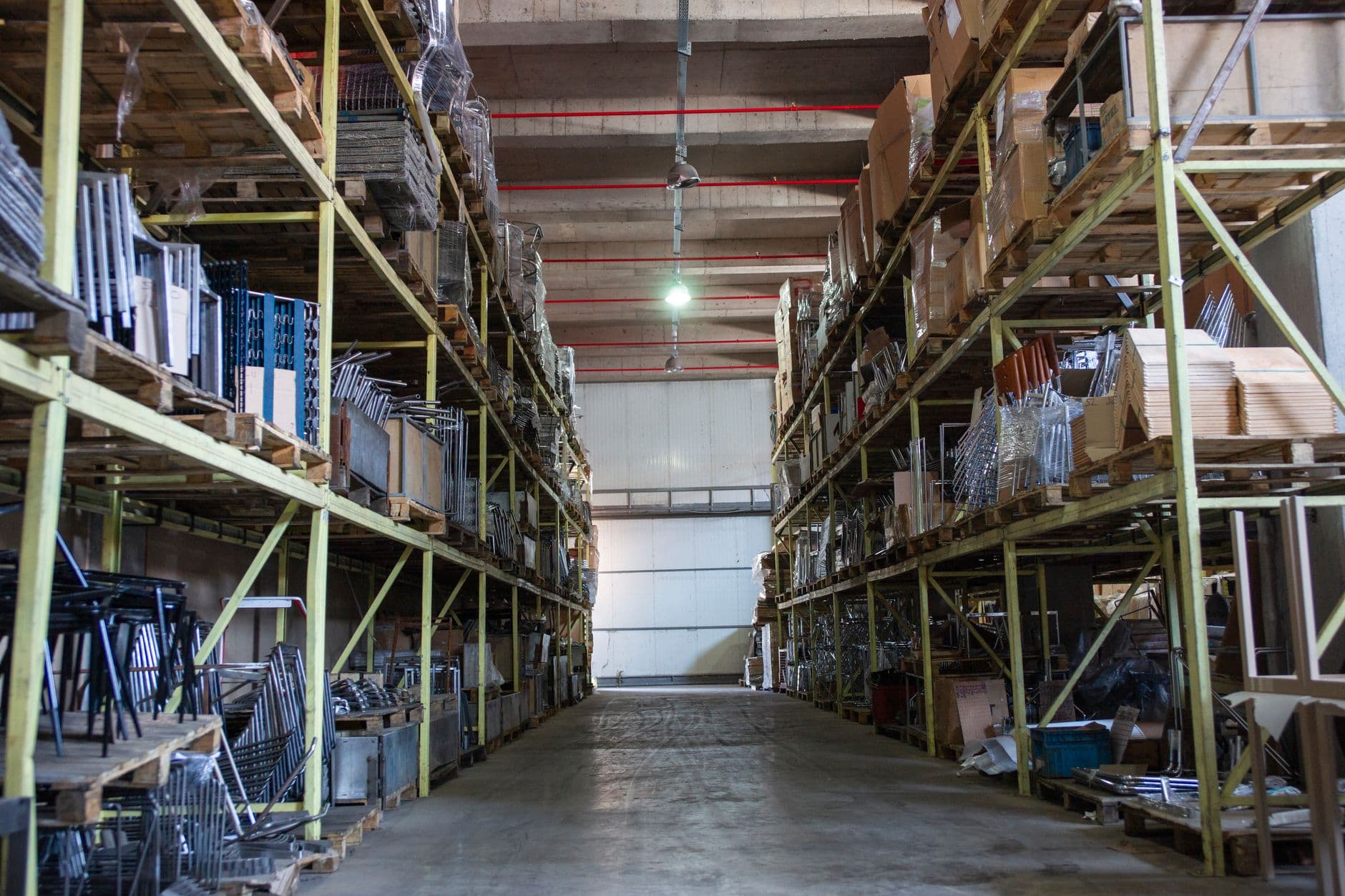
A bonded warehouse is a secure storage facility licensed by U.S. Customs and Border Protection (CBP) under 19 CFR Part 19. Imported goods can be held there without immediate payment of duties and taxes. The goods arrive on US or EU soil, clear entry documentation, then sit under CBP supervision for as long as 5 years. The clock starts on arrival, but the HTSUS duty bill does not.
CBP recognizes 11 classes of bonded warehouse, from Class 1 through Class 11, each tied to a defined storage or handling purpose. Importers can store goods for up to 5 years under 19 CFR Part 19 before duties must be paid. The European Union sets a shorter ceiling of 3 years under the Union Customs Code. Both frameworks share the same logic: duty payment is deferred until goods are withdrawn into free circulation. GEODIS and C.H. Robinson both describe this 5-year US window as the headline benefit for importers.
The mechanics turn on two CBP documents. When goods arrive, the importer files CBP Form 300, the warehouse entry, rather than a consumption entry on CBP Form 7501. CBP Form 300 tells the agency the goods are going into bond, not into commerce. The warehouse operator, who holds a customs bond with CBP, takes legal custody. From that point the goods are physically inside the US but legally still outside it for HTSUS duty purposes.
When the importer decides to release goods, in full or in batches, they file a withdrawal entry on CBP Form 7501 and pay duties at that point. That withdrawal decision is where the financial planning happens. You can release 500 units today under one CBP Form 7501, leave 2,000 in bond, and pull the remaining 1,500 six months later if demand shifts. CBP allows that batch granularity, which a single Form 7501 consumption entry does not.
Bottom line: a CBP-licensed bonded warehouse holds imported goods inside the US for up to 5 years while pausing the HTSUS duty clock, and you choose which batch leaves bond on which CBP Form 7501.
The Key Tax and Tariff Benefits, What You Actually Get
The core benefit is direct: you do not pay CBP duties on goods you have not yet sold. GEODIS describes bonded warehouses as a mechanism to defer duty payments for up to 5 years. That frees working capital that would otherwise sit locked as a CBP liability. Consider a company importing $2 million of goods. Even a 6-month deferral on a 25% rate represents $500,000 in cash. That $500,000 stays on the balance sheet instead of flowing to CBP on day 1.
That cash flow improvement compounds in 4 ways:
- Duty deferral tied to sales velocity. You pay CBP only when you withdraw goods for sale. If goods move in 60 days, you pay in 60 days. If they move slowly, you defer longer, up to the 5-year limit in the US under 19 CFR Part 19 or the 3-year limit in the EU.
- Re-export at 0 duty. If goods stored in a CBP bonded warehouse are re-exported to a third country, 0 US or EU import duties are ever paid. For importers with distribution across markets, that can mean avoiding HTSUS tariffs entirely on a slice of inventory. Tradlinx flags this re-export path as the route by which importers cut tariffs to 0.
- Working capital efficiency. A 5-year CBP deferral works like an interest-free deferral on the duty bill for the storage period. In a high-interest-rate 2026 environment, deferring $500,000 for 6 months has a measurable dollar value.
- Cash flow protection on arrival. The option to avoid paying CBP tariffs immediately on arrival gives importers a buffer. They can assess 2026 market conditions before committing capital to a CBP Form 7501 withdrawal.
C.H. Robinson categorizes bonded warehousing inside a broader tariff mitigation toolbox, alongside the FTZ and duty drawback. The emphasis is on timing CBP payments to align with actual cash inflows from sales. This is not tax evasion. It is cash flow management inside the 19 CFR Part 19 framework, the same framework CBP has run for decades.
Bottom line: the CBP deferral works like an interest-free loan for up to 5 years, and a 6-month delay on a $2 million shipment at 25% keeps $500,000 in your hands rather than at CBP.
A Critical Detail: Tariff Rates Are Not Locked at Import
Here is the part that catches importers off guard, important enough that CBP filers flag it first. When you place goods in a bonded warehouse, the applicable HTSUS duty rate is not fixed at the date you import. The rate that applies is the one in effect on the date you withdraw the goods from bond on CBP Form 7501 and enter them into free circulation.
This cuts in both directions. If HTSUS rates fall between your import date and your withdrawal date, you pay the lower rate, which rewards patience. If rates rise during the 5-year storage window, CBP collects the higher rate on withdrawal. The bonded warehouse does not lock in a favorable tariff, it only delays the moment CBP calculates the bill.
In the current US environment this matters, and the headline number is unusually unstable. Section 122 of the Trade Act of 1974 set a temporary baseline tariff of 10%, in effect from 24 February 2026 for a statutory 150-day window that runs to roughly 24 July 2026 absent a Congressional extension. It is also under legal challenge: the US Court of International Trade ruled the measure unlawful on 7 May 2026, but a federal appeals court stayed that decision, so CBP keeps collecting the 10% while the case proceeds. The rate you would withdraw against today might be struck down, might lapse in July, or might be extended, and nobody can tell you which in advance. CBP layered that Section 122 10% rate on top of elevated China-specific tariffs across 2025 and 2026. The practical lesson is that using a bonded warehouse to wait out the 10% is the wrong frame, because that specific rate may simply disappear, while a different and possibly higher duty may take its place. Bonded storage is a liquidity tool first, not a bet on any single rate.
Practical implications for planning:
- Model withdrawal at the current Section 122 10% baseline AND at 15% to 20% higher rates to stress-test your landed cost math against the HTSUS.
- Watch for new duties, not just movement in the 10%. In June 2026 the USTR proposed additional Section 301 tariffs of 10% to 12.5% on China and other origins; if adopted, they would apply at your withdrawal date on top of, or in place of, whatever the Section 122 baseline has become. Model a Section 301 layer, not only a Section 122 swing.
- Where origin or HTSUS reclassification could reduce duties, work with a licensed customs broker before withdrawal on CBP Form 7501, not after.
- For re-export plays the rate question is moot, because the duty is 0, which is why C.H. Robinson calls re-export the cleanest bonded case.
Bottom line: the bonded warehouse buys you time, not a fixed HTSUS rate, so model both a rate drop and a hike above the Section 122 10% baseline before you commit.
What You Can (and Cannot) Do with Goods in a Bonded Warehouse
Bonded warehouses are not inert storage units. CBP permits a defined set of activities on goods during the 5-year window under 19 CFR Part 19. Knowing what CBP allows shapes how you use the facility operationally across all 11 classes.
Permitted activities
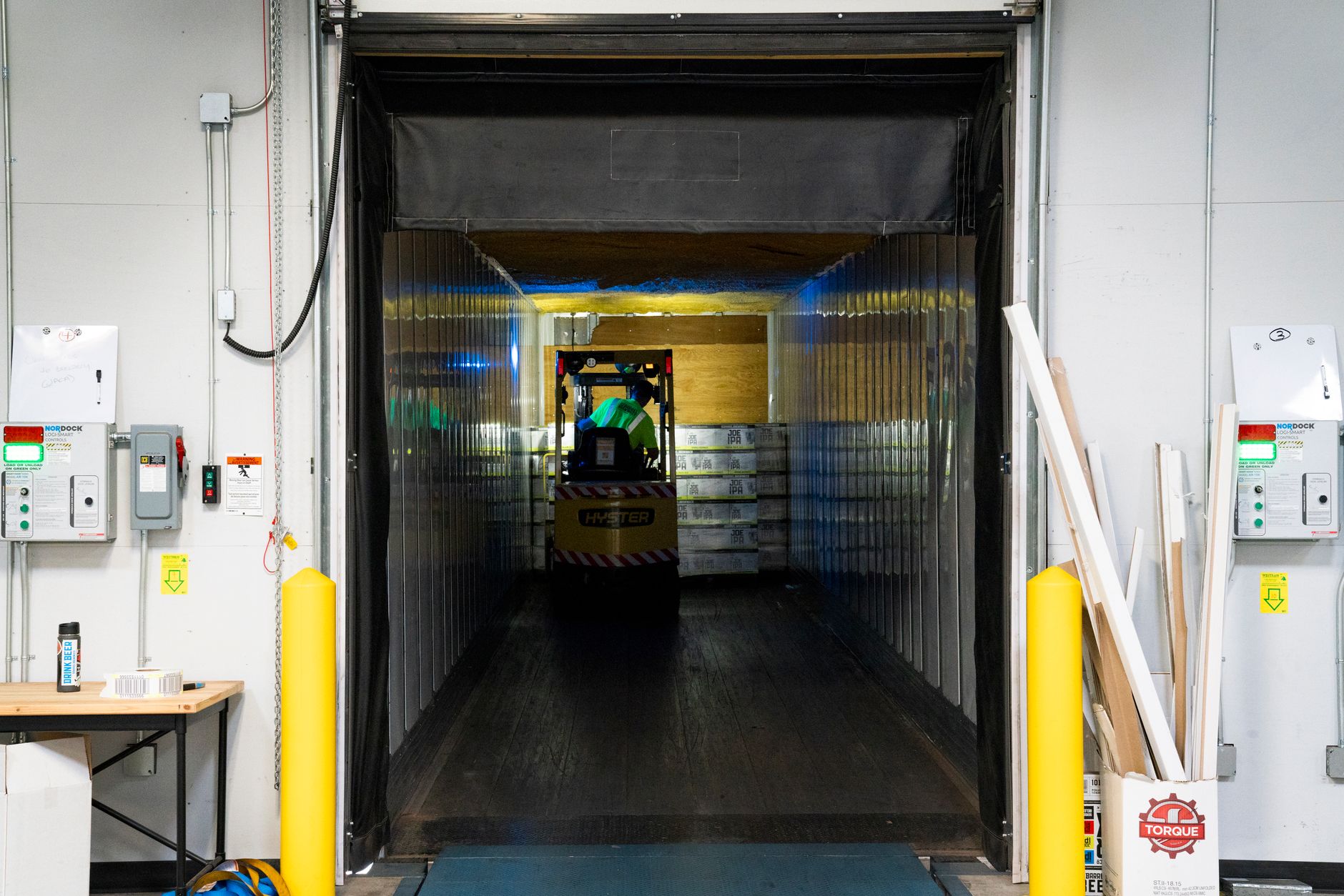
- Sorting and grading. CBP lets you separate a bulk shipment into SKUs, grade product quality, or organize inventory by destination or customer.
- Cleaning and repackaging. Goods can be cleaned, inspected, and repackaged into retail units, which helps importers who receive bulk and reformat for downstream customers.
- Marking and labeling. Adding country-of-origin marks, barcodes, or retail labels is allowed by CBP under 19 CFR Part 19.
- Manipulation for export. Goods can be combined with other bonded goods or repacked for re-export at 0 duty.
GEODIS notes that the data infrastructure around these permitted activities improved significantly by 2026. Real-time inventory tracking across bonded facilities, withdrawal scheduling tied to CBP Form 7501, and HTSUS duty liability forecasting are now built into leading TMS platforms. That tooling matters most when you run hundreds of lots through the same 5-year clock.
What is not permitted
- Manufacturing or substantial transformation. A bonded warehouse is not a production facility, that is the territory of a Foreign Trade Zone (FTZ), not a Class 1 to Class 11 warehouse.
- Selling goods directly from the bonded warehouse into US commerce. Goods must be withdrawn through a proper CBP Form 7501 entry before any domestic sale.
- Storing goods past the 5-year limit. CBP will compel abandonment or destruction of goods held beyond 5 years under 19 CFR Part 19.
The dividing line between permitted manipulation and impermissible manufacturing is not always obvious. We recommend getting a CBP ruling letter first, on any activity that combines components or alters the fundamental character of the goods, before you build a strategy around that activity. In our work, a single CBP ruling letter has saved clients from misclassifying an FTZ-grade operation as a Class 8 manipulation.
Bottom line: CBP lets you sort, clean, repack, and label in bond across all 11 classes, but you cannot manufacture or sell directly, and goods cannot sit past the 5-year US limit in 19 CFR Part 19.
Bonded Warehouse vs Foreign Trade Zone: Decision Framework
C.H. Robinson frames the bonded warehouse vs Foreign Trade Zone (FTZ) comparison as the central strategic question for importers building a tariff structure. Both tools defer or reduce CBP duties, but they serve different operational profiles, and the choice between a Class 1 to Class 11 warehouse and an FTZ usually comes down to whether you manufacture.
Foreign Trade Zones
An FTZ is a designated area, often co-located with a port or distribution center. Goods inside an FTZ are treated as outside US customs territory for CBP duty purposes. FTZs allow manufacturing and assembly, so you can import components, build finished goods, and pay duty only on the finished product, which may carry a lower HTSUS rate than the components. FTZ status is indefinite, with no 5-year clock. For companies with US assembly operations, an FTZ often delivers a structurally lower CBP bill over time.
The tradeoff is setup. The FTZ application runs through the Foreign-Trade Zones Board and requires a detailed operational plan. Activation often takes 12 to 18 months from application, and operating and compliance costs run higher than a 19 CFR Part 19 bonded warehouse.
Bonded Warehouses
Bonded warehouses are faster to access. Most major US logistics hubs have CBP-licensed bonded facilities you can use within weeks, with no FTZ Board application and no manufacturing plan. The bonded warehouse is the simpler instrument for 2 groups: importers who need to defer CBP duties on finished goods for domestic sale, and importers who need re-export flexibility at 0 duty across one or more of the 11 classes.
Decision checklist
- Do you assemble or manufacture in the US? FTZ is likely better than a Class 1 to Class 11 warehouse.
- Do you need CBP duty deferral on finished goods for domestic sale? A bonded warehouse fits.
- Do you regularly re-export a portion of inventory? A bonded warehouse fits, potentially at 0 duty.
- Is indefinite storage critical? FTZ only, since CBP caps the bonded clock at 5 years in the US and 3 years in the EU.
- Do you need to start quickly? A bonded warehouse activates in weeks, while an FTZ takes 12 to 18 months.
- Are component-level duty savings significant? An FTZ is worth the setup investment.
Bottom line: pick an FTZ if you manufacture in the US and can wait 12 to 18 months, pick a 19 CFR Part 19 bonded warehouse if you need CBP duty deferral or 0-duty re-export on finished goods within weeks.
Bonded Warehouse vs Duty Drawback: When Each Makes Sense
Duty drawback is a separate CBP instrument. You pay duties on import, then claim a refund of up to 99% of those duties when you re-export the goods, or goods substituted for them. The refund can arrive months after the fact, which means you finance the CBP payment in the interim rather than deferring it.
Bonded warehouse and duty drawback solve related problems from opposite directions. Drawback is a recovery mechanism: you pay CBP first and recover up to 99% later. Bonded storage under 19 CFR Part 19 is a deferral mechanism: you delay payment entirely for up to 5 years. For cash-constrained importers, or those with large CBP bills on goods destined partly for re-export, the bonded warehouse avoids the cash outlay that drawback only recovers later.
Drawback has 1 clear advantage. Goods that have already entered US commerce and been transformed or incorporated into manufactured products can still qualify for the 99% drawback refund. The bonded warehouse cannot reach back to goods already withdrawn on CBP Form 7501. So if your process involves domestic processing before export, drawback may be the only CBP option.
In our work we have seen clients use both at once. Goods they are confident will sell domestically go through a standard CBP Form 7501 consumption entry, then qualify for 99% drawback if export opportunities emerge. Goods with uncertain domestic demand, or goods bound for a third country, go into bond instead at 0 re-export duty.
Bottom line: use a 19 CFR Part 19 bonded warehouse to defer CBP payment up front for up to 5 years, use drawback to recover up to 99% of duties after goods you already imported are re-exported.
Step-by-Step: How to Start Using a Bonded Warehouse
Getting started is less complicated than the 19 CFR Part 19 framework might suggest. Here is the practical 7-step sequence we walk clients through.
- Identify a CBP-licensed bonded warehouse near your point of entry. CBP publishes a list of licensed bonded warehouses at each port of entry, sorted by the 11 classes. Most major freight forwarders hold relationships with bonded facilities, and some 3PLs operate their own. Proximity to your port reduces drayage costs and simplifies the CBP Form 300 paperwork chain.
- Engage a licensed customs broker. A bonded strategy involves CBP Form 300 warehouse entries, CBP Form 7501 withdrawal entries, and potentially re-export documentation. A licensed broker handles these filings and manages the CBP relationship. This is not optional, because the penalty exposure for 19 CFR Part 19 violations is significant.
- File warehouse entries at import. Instead of a standard CBP Form 7501 consumption entry (Type 01), your broker files a CBP Form 300 warehouse entry (Type 21). That Type 21 entry designates the goods as bonded at the moment of arrival.
- Establish inventory tracking for bonded goods. You need to know exactly what is in bond, when it arrived, and when the 5-year clock under 19 CFR Part 19 expires for each lot. GEODIS and similar platforms built bonded inventory tracking into their TMS by 2026. A spreadsheet works for small volumes, but for programs above a few hundred lots a dedicated system is worth the investment.
- Plan withdrawal schedules aligned with sales forecasts. The financial benefit comes from aligning CBP payments with revenue. Work with your finance team to model cash flow under withdrawal scenarios at the Section 122 10% baseline and above.
- File withdrawal entries as needed. When goods are ready for domestic sale, your broker files a CBP Form 7501 withdrawal for consumption, and duties are calculated at the then-current HTSUS rate. For re-export a different withdrawal type applies at 0 duty, and your broker specifies it.
- Monitor tariff rate developments. HTSUS rates at withdrawal determine your CBP bill, so tracking regulatory change is part of the strategy. Subscribe to CBP and USTR bulletins, and build relationships with trade counsel who can give early warning on Section 122 expiry or extension, new Section 301 proposals, or China-rate changes affecting your commodity codes.
Bottom line: the 7-step path runs from picking a CBP-licensed facility through engaging a broker, filing Type 21 CBP Form 300 entries, tracking the 5-year clock, and scheduling CBP Form 7501 withdrawals against your sales forecast.
FAQ
Q: Can you use a bonded warehouse to avoid tariffs?
A: Partially, yes, but under CBP the mechanism is deferral, not elimination, for domestically sold goods. You defer the HTSUS duty until withdrawal from bond, which can be up to 5 years in the United States under 19 CFR Part 19 and up to 3 years in the European Union. If goods are re-exported rather than sold domestically, 0 import duties are ever paid, and that re-export scenario is where bonded storage enables full avoidance. For goods sold domestically you will eventually pay CBP. The question is when, and whether the cash flow advantage during the 5-year deferral outweighs storage and administrative costs.
Q: How do bonded warehouses benefit importers?
A: The primary benefit is cash flow, because importers can receive goods into the US without immediately funding a CBP duty bill. That frees working capital for operations, inventory, or debt service. Secondary benefits number 3. First, re-export flexibility at 0 duty if goods leave the country. Second, the ability to stage CBP Form 7501 withdrawals in line with sales pace across the 5-year window. Third, access to permitted manipulation such as sorting, cleaning, and repackaging across the 11 classes before goods enter commerce. In the 2026 US tariff environment, the Section 122 10% baseline and elevated China-specific rates have materially raised import costs, so even a 90-day or 180-day CBP deferral represents real value.
Q: Are tariffs going into effect in 2026?
A: Yes, though the picture is fluid. In the United States the Section 122 baseline global tariff of 10% took effect on 24 February 2026 under the Trade Act of 1974, but it is temporary, a statutory 150-day measure expiring around 24 July 2026 unless Congress extends it, and it is contested: the Court of International Trade ruled it unlawful on 7 May 2026 before an appeals court stayed the ruling and let CBP keep collecting. Layered on top are substantially elevated tariffs on Chinese-origin goods, and in June 2026 the USTR proposed further Section 301 duties of 10% to 12.5% on China and other origins. The exact HTSUS rates and schedules keep evolving through CBP and USTR action, which is precisely why deferral tools like bonded warehousing, with their 5-year US window, draw importers who want flexibility on the timing, and the composition, of their duty exposure.
Closing Thoughts
Bonded warehousing has been a feature of US and EU customs law for decades, codified for CBP in 19 CFR Part 19. What changed by 2026 is the scale of tariff exposure, with the Section 122 10% baseline and elevated China rates that make the tool worth serious evaluation. In our experience, some importers treat bonded storage as a place to park goods and capture only a fraction of the benefit. The full value comes from integrating the 5-year window with CBP Form 7501 withdrawal scheduling, sales forecasting, and 0-duty re-export planning as one coordinated landed-cost strategy.
The rate-on-withdrawal rule is the single most important detail to internalize before committing to a bonded program. Under CBP, that rule is both a risk if HTSUS rates rise and an opportunity if they fall, so your planning has to account for both directions against the Section 122 10% baseline. The tool does not guarantee a lower CBP bill, it gives you up to 5 years of time and flexibility to manage one.
If you are filing CBP Form 7501 consumption entries on everything that crosses your border, the bonded warehouse question is worth putting to your customs broker in the next 30 days. The setup runs in weeks, the 19 CFR Part 19 framework is established, and the cash flow math in a 10% to 25% tariff environment is hard to ignore. C.H. Robinson and GEODIS both treat the 5-year US window as a default line item in any 2026 tariff plan, and so do we.