




Recommendation: Deploy MightyFly's second-generation eVTOL in a staged rollout focused on high-demand corridors to deliver 600-mile, same-day, door-to-door service. The strategy translates the afforded long-range capability into faster distribution, lowering cycle times for goods and boosting order fill for retailers and manufacturers.
In practice, the aircraft offers a 600-mile range, payload up to 2,000 pounds, and a cruise speed near 310 mph, enabling city-to-city and regional deliveries within hours. With modular batteries and optional rapid charging, regional hubs can complete a turnaround in under 60 minutes for a typical delivery cycle.
This unprecedented capability reshapes the distribution system and benefits everyone in the supply chain. By moving more goods directly from regional centers to final destinations, operators reduce last-mile costs, shrink stockouts, and improve service levels for manufacturers, retailers, and logistics partners.
Manufacturing and the chain of supply adapt through a distributed footprint: regional assembly lines, standardized modules, and a service network capable of rapid spare-parts support. This approach lowers risk and supports affordable fleets by cutting transport mileage and enabling higher asset utilization across the industry.
Governments can accelerate adoption by aligning safety standards with measurable benchmarks, enabling test corridors, and funding public-private pilots with clear milestones. A coordinated policy path helps fleets scale faster while maintaining safety and environmental targets.
Special use cases include time-sensitive medical shipments, high-value parts for manufacturing lines, and disaster-relief loads. The 600-mile door-to-door capability opens a new option for everyone in regional distribution, supporting a stronger industry and faster delivery for customers, suppliers, and service providers alike.
MightyFly: Second-Generation eVTOL and Cento Cargo Drone for Long-Range Express Logistics
Adopt MightyFly’s second-generation system for long-range express logistics, delivering up to 600 miles per leg to enable true door-to-door shipping with fewer hops and higher reliability.
Founded on safety and performance, mightyflys now deploy a two-platform strategy that covers complex missions and high-demand corridors. The first generation established the baseline, while the next level adds a dedicated Cento Cargo Drone to expand capacity without slowing the existing operation.
This approach creates a seamless chain across hubs, regional belts, and field sites. Express shipping benefits come from fewer transfers, simpler scheduling, and more predictable transit windows for time-critical shipments.
On the airframe side, the winged, high-efficiency design enables sustained flight on longer legs, while hover capability supports precise on-site pickup and landing in constrained urban and industrial environments. The Cento Cargo Drone complements this by handling heavy payloads on fixed-wing legs, allowing first-mile loads to begin their journey sooner and reducing bottlenecks in the belt between distribution centers.
From years of field testing and manufacturing collaboration, the two platforms work in lockstep to deliver a special value proposition: faster mission completion, expedited cargo handling, and a resilient supply chain that can scale with demand. The system also introduces a seed of continuous improvement, feeding real-time data back into route planning and maintenance schedules for ongoing innovation.
Meanwhile, companies taking the step toward this architecture gain a tangible benefit: a more resilient logistics chain that supports higher utilization of fleets, standardizes operations across regions, and enables rapid expansion into new markets without sacrificing safety or throughput.
MightyFly's Second-Generation eVTOL and Cento Cargo Drone: 600-Mile Same-Day Door-to-Door Delivery and FAA-Authorized Testing Roadmap
Implement the FAA-Authorized Testing Roadmap to validate a 600-mile, end-to-end service that links MightyFly's second-generation eVTOL with the Cento Cargo Drone, delivering a seamless, door-to-door option from airports to pickup points. A concrete plan accelerates approvals, reduces risk, and supports consecutive flight tests across varied routes and weather conditions.
The concept pairs a larger, longer-range eVTOL with the Centro-linked Cento Cargo Drone to cover both primary line-haul and last-mile capability. habib leads the test operations, ensuring the end-to-end workflow from ground handling to air traffic coordination remains smooth across different hubs and distribution centers. This approach enables both freight cycles and time-sensitive pickups while maintaining affordable costs for medium volumes.
Performance highlights focus on range, payload, and reliability. The platform targets a 600-mile range on a single mission, with a payload capacity sized for medium freight and expedited shipments. The powertrain relies on a modular belt-driven architecture that balances efficiency and torque at cruise, allowing pilots and operators to optimize energy use across consecutive legs. With multi-airport routing, the system weighs the tradeoffs between cargo density, turnaround time, and mission complexity to maximize benefit for businesses and logistics providers.
The Centro integration enables end-to-end logistics, combining air legs with ground transfers to minimize pickup times. By design, the solution supports seamless handoffs between drone and ground vehicles, reducing dwell at warehouses and airports while expanding coverage in suburban and urban corridors. This alignment helps airports, freight forwarders, and last-mile operators scale operations without sacrificing safety or compliance, enabling a more flexible distribution network.
To ensure a practical roadmap, the FAA-Authorized Testing Roadmap outlines phases that verify concept viability and mature into field operations. The sequence includes concept validation, rigorous tests, fly-by-wire validation, and controlled demonstrations at multiple sites. Administration involvement ensures proper airspace coordination, pilot training, and operator qualification, with a clear path to certification for sustained, day-to-day use. The plan emphasizes affordable milestones, continuous learning, and the ability to adjust as flight data accrues.
| Milestone | Focus | Timeline | Owner | Notes |
|---|---|---|---|---|
| Concept validation | range, payload, and powertrain feasibility | Q3 2025 | Habib-led team | Ground and wind-tunnel simulations included |
| Ground tests | material integrity and belt-driven powertrain checks | Q4 2025 | Engineering | Structural and thermal resilience verified |
| Tethered flight tests | stability and control in controlled airspace | Q1 2026 | Operations | Initial trajectory data collected |
| Limited flight trials | airworthiness demonstration at multiple airports | Q2 2026 | Regulatory and Operator teams | Consecutive test flights across centers |
| Operator training and logistics integration | end-to-end workflows and pickup coordination | Q3 2026 | Training and IT | Interface with Centro and Centro-related systems |
| Certification package submission | airworthiness and operational readiness | Q4 2026 | Administration | Documentation for both platforms |
| Commercial operations readiness | fleet deployment and market rollout | 2027 | Business development | Scalable for larger volumes and multi-site hubs |
600-Mile Range: Realistic City-To-City and regional delivery scenarios

Recommendation: target a 600-mile city-to-city corridor model that delivers door-to-door within a single business day by coupling rapid pickup, efficient flight, and swift ground delivery to the final destination.
Operate with regional hubs at strategic airports to move volumes efficiently, using through routes that optimize wind patterns and bring ground handling close to the end user. The approach relies on takeoff from accessible airports, a steady climb to a cruise regime, and precise landing in nearby airfields, then a fast pickup and ground handoff to final feet of delivery.
Realistic scenarios cluster around dense corridors and regional distribution centers. For example, Los Angeles to San Francisco (~380 miles) supports multiple small-package shipments per flight; Dallas to Houston (~235 miles) handles urgent components for manufacturing; Chicago to Detroit (~240 miles) covers high-value medical and time-sensitive documents; Boston to New York (~190 miles) moves critical samples or spare parts; Seattle to Portland (~170 miles) serves regional retail orders. Each route can complete in under four hours total, including ground pickup and final delivery, when load plans stay within a 600-mile envelope.
Payload strategy should balance volumes and weight, aiming for 400–800 pounds per flight where feasible and merging multiple packages within a single outbound mission. This enables higher utilization of wing and fuselage efficiency, accelerates delivery timelines, and preserves margins on high-priority logistics and supply chains that demand rapid replenishment.
Infrastructure alignment matters: ensure controlled ground handling at airports, secure parking and charging or quick-turn refueling, and robust courier pickup zones near corporate campuses or regional warehouses. Administration should allow staggered departures to maximize flight windows, reduce congestion, and synchronize with air-traffic flow, while airports build an efficient ground network that minimizes transfer times and preserves total mission time.
Operational constraints emphasize takeoff performance and range balance. Plan for winds aloft, variable visibility, and battery margins that keep flight times predictable. Develop flight profiles that accelerate to cruising speed quickly, hold efficient altitude bands, and minimize hold times, so the mission stays within the planned window and preserves payload integrity.
Lesson from early deployments: a disciplined routing framework and disciplined ground coordination cut total cycle time. Clear ground-to-air transitions, reliable pickup processes, and a streamlined handoff to final-mile teams reduce the risk of delays and improve predictability for everyone involved in the logistics chain.
Bottom line: a 600-mile range enables scalable, city-to-city and regional delivery that can be rolled out incrementally, leveraging existing infrastructure at airports and ground hubs. This footprint supports a strong logistics backbone, with room to increase coverage as capacity and airspace coordination improve, while maintaining fast, door-to-door performance for high-demand shipments.
Cento Payload and Cargo Handling Upgrades
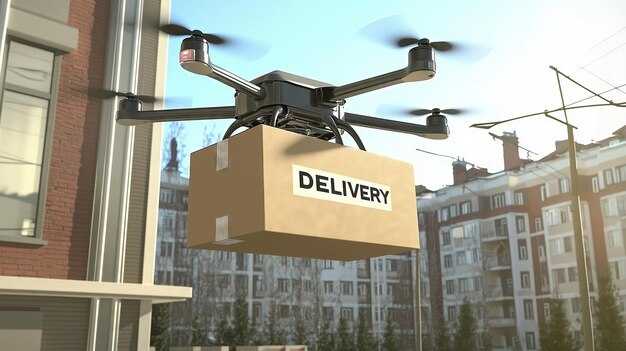
Adopt a two-module, swappable cargo bay system that can be exchanged on the tarmac in under 15 minutes, enabling seamless carry and autonomously supported load/unload across flights.
Two compact bays sit within the airframe retrofit plan, each module weighing about 40 kg and delivering up to 115 kg of payload, for a combined capacity of approximately 230 kg. Their dimensions fit the existing aircrafts clearance envelope while preserving the aerodynamics of the airframe. This approach keeps the center of gravity within target limits, reducing handling complexity over receiving and during flight.
Module interfaces use automotive-grade connectors and a plug-and-play harness, ensuring next-gen compatibility with mightyflys vtol platforms and their onboard power and data buses. Ground crews execute a 12–15 minute swap using standard tooling, which minimizes downtime and keeps flights on schedule. The process supports SBIR-backed sensors to verify weight, volume, and parcel integrity in real time, so the crew and the avionics stay aligned during every handoff.
- Modular bays and fast-latch design: Each bay features automated latching, a 0.25 m3 usable volume, and a 110–115 kg payload rating. The average swap cycle targets 12–15 minutes, including cargo manifest reconciliation and seal verification.
- Autonomously assisted loading: Integrated conveyors and robotic clamps secure parcels with a single touch, reducing manal handling by 40% and cutting dwell time on the ramp.
- Receiving and manifest integration: A digital manifest syncs with the airframe’s avionics and the company’s operations platform, ensuring everyone has real-time visibility over receiving and loading status.
- Climate control and ventilation: Two 120 mm cooling fans per bay maintain a stable environment for temperature-sensitive goods, while passive seals minimize cross-contamination between cargo holds.
- Weight and dimension verification: SBIR-enabled sensors validate parcel dimensions and total load before closure, preventing overloading and maintaining aircrafts balance.
- Security and compliance: Tamper-evident seals and a cryptographic log protect the carry data, ensuring traceability from receiving to delivery.
- Logistics workflow optimization: The process aligns cargo handoff with flight schedules, enabling next flights to depart on time and reducing bottlenecks at the receiving facility.
- Maintenance and reliability: Modular bays are designed for field swaps and routine inspection, with service intervals aligned to the airframe’s maintenance calendar.
- Data-driven iteration: Telemetry from the bays feeds the automotive-style control loop, informing future refinements to weight handling, bay capacity, and cooling efficiency.
To maximize value, the company should pilot the sbir-enabled sensor suite in a controlled environment, measure swap times, and monitor cargo integrity across multiple operating conditions. The result is a scalable capability that supports autonomously managed cargo segments, accelerates flights, and delivers a seamless experience for everyone in the supply chain. This approach also strengthens the company’s competitive edge by delivering reliable, compact payload solutions that integrate smoothly with the airframe and its onboard systems, enabling faster turnaround and broader market reach.
Express Logistics Workflow: Last-Mile and Middle-Mile Integration
Adopt a corridor-first, two-tier workflow: middle-mile eVTOL flights shuttle freight from regional distribution centers to urban hubs, while last-mile teams handle pickup and final delivery. Design the network to cover key corridors with a fully integrated timetable that reduces total door-to-door time and aligns with ground operations. Focus on volumes across peak hours to ensure both sides of the corridor have capacity to meet demand.
Hub design anchors the seed network: establish 4–6 regional hubs per area connected by flights, with a generation mindset that grows capacity as volumes rise. Operators founded on speed and reliability adopt this hybrid model; begin with a seed set of high-volume shippers and gradually add partners. Use recharging stations at each hub to keep propulsion systems ready, complemented by testing programs for wing and fans components. The approach reduces idle time and preserves affordable service while also cutting last-mile costs.
Operation flow: Origin pickups feed into the hub network; a middle-mile flight transports freight to urban distribution centers or directly to delivery corridors. Last-mile teams manage pickup from the hub and execute final delivery through ground routes optimized for urban density. This setup handles volumes efficiently and the combined effect yields higher on-time performance than ground-only approaches.
Equipment and propulsion: Use a hybrid propulsion system to balance energy use and reliability; wings and fans are designed with lightweight composites and robust cooling. The 600-mile range of the second-generation eVTOL supports long corridor hops with fewer refueling stops, reducing recharging downtime. Ensure testing of autonomous alignment with ground crews and also maintain redundancies for freight handling. This supports area coverage with minimal disruption to regulatory oversight and safety requirements.
Performance metrics and governance: Track volumes per corridor, on-time delivery rates, and total cost per package to ensure affordable service. Governments have a role in approving corridors, providing testbed support, and aligning safety standards. Use ground truth data from pilots to refine routing, while operators have to maintain safety margins and both sides of the system stay synchronized across the area.
FAA Certificate of Authorization: Scope, Conditions, and Expected Test Windows
Recommendation: implement a tightly scoped FAA COA with a staged, seamless test process that advances from ground checks to short autonomous flights under supervision, then to longer missions that mirror real operations. habib from the FAA liaison team will oversee safety criteria and inspection cadence, ensuring clarity on requirements and review timelines. The COA should define clear success criteria for each phase and a repeatable handoff between operator, air traffic, and maintenance teams.
Scope: The COA covers operations within a defined airspace corridor around the test field, enabling door-to-door delivery concepts up to the maximum payload. It specifies takeoff and landing sequences, enforces load configurations for loaded missions, and accounts for a hybrid propulsion system that can switch between electric-tilt and fast cruise while maintaining control margins. It requires a robust infrastructure plan, including ground handling, charging, and secure comms to sustain a seamless command-and-control loop.
Conditions: Weather minima, NOTAM coordination, airspace coordination, and maintenance windows create a safe operating environment. The COA sets a process for supervision, with human-in-the-loop overrides and autonomous segments limited to pre-approved missions. It requires a safety case, failure-mode analysis, and data-sharing protocols that load mission data before each window. It also specifies data and telemetry reporting to support ongoing aviation certification and operator accountability.
Expected test windows: The plan schedules windows across specific seasons with daylight-hour operations, each window lasting several days for ground, taxi, hover, and initial flights, followed by longer-range legs if performance meets milestones. The cadence supports faster validation of go/no-go criteria for cargo missions, enabling larger cargo legs and more efficient delivery. habib will publish the window calendar for stakeholders, including infrastructure partners and local businesses, to minimize disruption while documenting safety margins, weather constraints, and airspace usage. Since the COA emphasizes cargo operations, the program will demonstrate autonomously loaded missions taking off, traversing corridors, and delivering with unprecedented reliability.
Testing Roadmap: Proving Ground, Safety Checks, and Deployment Milestones
Adopt a three-phase cadence: prove in a controlled proving ground, validate with staged airport tests, and move to final deployment across international routes with a clear authorization path.
Phase one, the proving ground, secures propulsion and combustion stability across temperature and wind. Record speed profiles and map a 600-mile range with a representative payload, and validate recharging, handling, and fault-tolerance across five configurations totaling at least 120 flight hours and 40 consecutive tests. Meanwhile, we build a data-rich baseline for final certification and area-specific performance plans.
Phase two emphasizes safety checks and authorization: create a system-level safety case with redundancy, fail-safe modes, and robust hazard analysis. Validate emergency procedures for both pilots and ground crews; compile the authorization package for regulators and airports; test with a dedicated safety force and three consecutive reviews, including special risk scenarios.
Phase three establishes deployment milestones: start with pilot routes at three airports across two international regions, delivering just-in-time logistics in real operations; assign crews with feet on the ground for hands-on rollout, then expand to additional hubs and corridors, achieving consecutive milestones each quarter. Ensure fans and customers see the capability in news releases and live demonstrations while maintaining strict handling and recharging standards at every site.
Performance metrics for the second-generation platform guide decision-making: track propulsion efficiency, speed, and final delivery times; map area coverage, confirm recharging timelines, and log handling times. Define KPIs such as 95% on-time recharging and 99% successful deliveries over a three-month window, with data fed into weekly reviews for logistics teams and stakeholders in the international network.
Everyone involved–from pilots and engineers to logistics staff and customers–will benefit from transparent progress updates. The cadence aligns with a robust force of safety and operations, and the news cycle will communicate milestones as the adoption expands beyond cars toward aerial, just-in-time delivery on the move.