


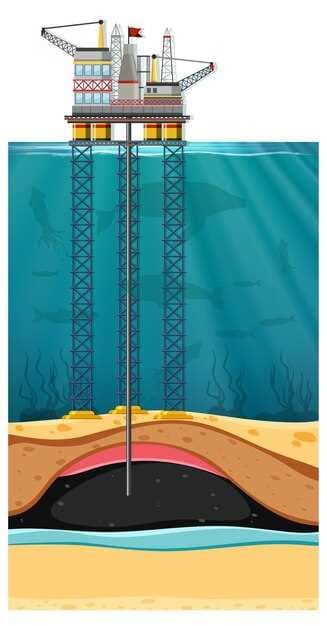

When assessing the world's largest offshore platforms, the most useful starting point is a side-by-side comparison of deck area, total tonnage, and helipad capacity. These three measures, taken together, give a realistic picture of scale and daily operational footprint. Operator websites and government authority filings are the most reliable primary sources for this kind of data, and in our experience coordinating supply runs and crew logistics for offshore clients, the figures published there are far more consistent than third-party aggregators.
A grounded assessment also requires mapping each platform's location and structural type. The waters surrounding a platform, including access routes, support vessel schedules, and shore-based supply lines, shape everything from maintenance windows to emergency response times. Spec sheets and government safety records are worth cross-checking against industry databases, particularly when confirming deck counts, structural mass measured in thousands of tons, and the helipad dimensions that matter most when weather closes in. Where figures conflict, note the discrepancy and flag the data source.
Comparing operating models reveals a further layer of complexity. Some platforms sit close to established port infrastructure; others are genuinely remote, which makes crew changes and maintenance campaigns considerably more demanding to plan. Government inspection cycles and emergency drill requirements vary by jurisdiction, and domestic supply chains supporting day-to-day operations differ in maturity across the North Sea, the Gulf of Mexico, West Africa, and the Browse Basin. Digital tools that visualize weather windows and deck utilization have become standard planning aids for operators managing these variables.
The practical takeaway from reviewing all five platforms is this: prioritize assets with proven backup power arrangements, multiple decks allocated to critical systems, and a helipad configuration that supports evacuation under realistic storm conditions. For anyone preparing investor materials or operational reviews, the metrics that carry most weight are area efficiency, heavy-lift capability, and the ability to integrate new equipment without interrupting production. These five platforms, taken as a group, illustrate how the industry balances safety, throughput, and long-term asset reliability.
How is "biggest" defined for offshore platforms: capacity, displacement, and operational footprint?
For meaningful comparisons, rank offshore platforms by production capacity first, then use displacement to reflect structural scale, and finally assess operational footprint to understand site impact.
Capacity means daily throughput, measured in barrels per day (bpd) or barrels of oil equivalent per day (boe/d). In practice, field-scale platforms range from a few thousand bpd on smaller tiebacks to hundreds of thousands of bpd on the largest processing decks. Integrated field developments may report a combined capacity approaching the high end when multiple platforms and FPSOs operate as a single system, which is why siting decisions and processing train configuration drive output figures as much as raw platform size.
Displacement expresses the total mass of the platform structure and its attached equipment, typically stated in tonnes. Large fixed jackets, gravity-based structures, and heavy topsides routinely reach hundreds of thousands of tonnes, while floating systems add mooring lines and additional modules that push the total higher still. Giant fields can hold tens of billions of barrels of oil equivalent or trillions of cubic feet of gas, and the scale of an asset tends to show up in its displacement as directly as in its production numbers.
Operational footprint blends physical deck area with subsea complexity, well count, and the extent of near-site facilities. It also accounts for support vessel traffic, helicopter movements, and the combined length of risers and umbilicals. A larger footprint generally means more subsea equipment and a corresponding increase in inspection and maintenance work. In cold-water regions, iceberg risk adds another dimension, requiring additional safety margins and dedicated monitoring programs that operators factor in during site planning.
To compare reliably, build a three-metric view drawing on public filings, annual reports, field data sheets, and shipyard summaries. Review each data point for completeness and note any gaps; outdated figures or inconsistent regional reporting are common sources of error. Track production changes from debottlenecking, field expansions, or new well connections, and flag reserve revisions as they occur, since these can shift rankings. The World Bank Logistics Performance Index and similar analytical frameworks emphasize applying a consistent methodology across sites and time periods to avoid skewed comparisons, a principle that holds equally well for offshore asset benchmarking.
In many cases, operators disclose capacity in bpd and displacement in tonnes within the same annual report, and platforms tied to multiple development areas within a single field are increasingly monitored through drone surveys and remote inspection systems that feed into regular update cycles. The role of major shipbuilding centers, particularly in South Korea, underpins the construction of the largest jackets, topsides, and substructures, and public technical reviews frequently cite fabrication yard data to explain how a platform's size was achieved.
Automated sensors and drone-based surveys now support maintenance through regular condition assessments, reducing wear-related damage and improving throughput reliability over the asset's life. Public data sets can reveal how capacity gains translate into real-world production improvements and how environmental factors influence projected asset longevity.
Capacity remains the leading indicator of "biggest," with displacement and footprint providing essential context. A guided review using public sources, careful cross-checking, and attention to data completeness is the most reliable path to credible comparisons across sites.
Where are the five platforms located and what unique design choices enable their scale?
The five largest platforms cluster in five distinct regions: the North Sea off Britain's coast, the Gulf of Mexico, the Santos Basin offshore Brazil, West African waters, and the Browse Basin off northwestern Australia. Each site reflects a hull-to-topsides approach built for very large capacity, with regional supply chains shaping module sizes and maintenance regimes.
North Sea installations rely on fixed jackets anchored to a strong seabed, with multi-level topsides that group processing, utilities, and living quarters into a compact core. These platforms depend on redundancy across power, water treatment, and safety systems to withstand frequent storms and near-freezing conditions. Heavy crane capacity and well-designed access systems allow crews to move modules and conduct evacuation drills without stopping production, even during winter campaigns. Designers extend fatigue life through thick-walled structural members and continuous inspection programs supported by major operators and regional training centers.
Gulf of Mexico platforms mix fixed and floating concepts, using spars, semi-submersibles, and heavy-duty jackets tied to subsea wells. Dynamic positioning on some FPSOs maintains stability during heavy seas, while subsea tiebacks allow fields to scale capacity quickly. Processing trains are laid out in modular blocks to ease maintenance and upgrades, with gas treatment, dehydration, separation, and export facilities concentrated into a compact plant footprint. This configuration supports frequent weather windows and fast crew rotations, with safety and emergency egress features integrated into every module.
The Santos Basin in Brazil centers on turret-moored FPSOs and large semi-submersibles designed to handle pre-salt giants and deepwater wells. Floating systems store production and transfer oil to shuttle tankers, while subsea networks extend to long tiebacks from multiple wells. Hulls are sized for extreme dynamic loads, and the topsides pack high-volume separation and gas-lift systems into fewer, larger modules. These choices address the particular complexity of pre-salt field geometry while maintaining clear evacuation routes.
West African projects commonly use turret-moored FPSOs or large fixed platforms supported by extensive subsea infrastructure. Modular topsides allow reconfiguration as wells mature, and interconnected processing units reduce the number of offshore transfers required. Long subsea pipelines and umbilicals feed production from multiple fields, boosting overall capacity and system resilience. Safety systems include multiple lifeboat stations, dedicated escape routes, and well-defined rescue plans shaped by regional equipment availability and workforce training programs.
In northwestern Australia, the Browse Basin hosts the most distinctive example: a floating LNG concept that combines a full LNG processing plant, storage tanks, and production machinery on a single hull. Turret mooring and integrated power, cooling, and flare systems keep the facility stable in open ocean conditions while processing and storing large volumes of natural gas liquids. The design reduces the frequency of platform transfers and uses an offshore export approach aligned with regional demand and long-term development economics. These scale-enabling choices rest on a mature supply chain, advanced corrosion protection, and rigorous offshore safety doctrine, with ongoing technical updates shaping maintenance cycles and operator training across the region.
What are the top engineering challenges and safety systems that keep these mega platforms running?
The most effective approach is a three-layer redundancy covering power, data, and safety controls, backed by digital twin technology that simulates real-time loads from waves and currents. This shortens repair windows, informs pre-emptive maintenance, and allows modular equipment to be introduced without disrupting operations. The strategy has been proven across multiple deployments and has demonstrably reduced unplanned outages. In our experience arranging logistics for offshore maintenance campaigns, even a single valve or pipe joint can trip a system if it falls outside the monitoring envelope, which is why tracking critical components through live dashboards matters as much as the redundancy architecture itself.
Engineering challenges on the seafloor and platform structure
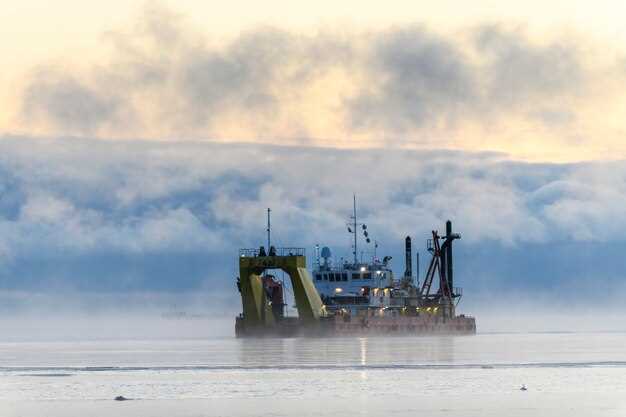
The seafloor presents highly variable loads from currents and sediment movement, demanding careful mooring design, riser management, and fixed structural arrangements suited to local pipe configurations. Pipes and risers must resist corrosion, fatigue, and chemical exposure from produced fluids throughout an asset life that can span decades. Maintaining lane separation for electrical cables and fiber-optic lines, with redundant power systems capable of switching within minutes, is a baseline requirement to prevent blackouts in remote locations. Each platform type uses a tailored combination of blowout preventers, dynamic positioning, and integrated safety systems, so designers plan multiple contingency routes and maintain spare parts inventories across the facility.
Teams inspect joints and coatings during short operational windows, balancing the demands of ongoing production against the scheduling of inspection crews and equipment. Federal and international standards govern this work, and traceability requirements for components, particularly where supply chain sourcing is complex, have become a standard part of procurement planning. Helipad readiness for medical evacuation remains a non-negotiable element of platform design, and compatibility checks with existing systems are completed before any new equipment is commissioned.
Safety systems and response workflows
Safety architecture spans detection, containment, and rapid response. Fire and gas detection systems, blowout preventers, and emergency shutdown systems form a layered defense that is tested at regular intervals. Redundant power and communication lines maintain control capability if any single component fails. Quick helipad access supports medical evacuation and crew changes when weather permits, and this access is designed into the platform layout from the outset rather than retrofitted.
Operational dashboards deliver real-time status to offshore supervisors and onshore control rooms simultaneously, enabling informed decisions without delay. Regular drills, conducted on documented schedules, build the procedural familiarity that matters when alarms activate. Interface design for different roles, from floor workers to shift supervisors, takes human factors and fatigue into account. Federal regulators require documented drill records and traceable corrective actions given the high-consequence nature of offshore incidents. Before any new equipment arrives on deck, technicians verify compatibility with existing systems, test interfaces under realistic conditions, and confirm a fixed integration plan with suppliers and service teams.
What direct and indirect economic benefits do host communities receive (jobs, suppliers, and tax revenue)?
Prioritizing local hiring and procurement is the most direct way to maximize benefits for host communities. The following breakdown covers the practical value generated by the five offshore developments, spanning both floating and fixed platforms.
Direct employment and job quality: Host communities support roughly 20,000 to 35,000 direct jobs annually across design, construction, and operations, covering white-collar and blue-collar roles alike. Operators embed accountability through local-content rules and capacity-building programs established before project start.
Supplier networks and procurement: Local suppliers provide equipment, maintenance, catering, transport, and specialist services. Annual local procurement across the five platforms can range from $0.5 billion to $2.0 billion, with a meaningful share flowing to firms based in coastal towns and urban centers near the operating areas.
Tax revenue and fiscal implications: Taxation, royalties, and production-linked fees support municipal and regional budgets, funding health and education outcomes. Across these platforms, host communities may see $0.3 billion to $1.0 billion annually in tax receipts directed toward clinics, schools, and infrastructure maintenance.
Policy and governance: Transparent reporting terms help ensure benefits remain within the host region. HSEI metrics track progress through local employment shares, supplier spend, and revenue generation after project commencement, providing concrete signals for policy adjustment over time.
| Benefit type | Typical magnitude (range) | Key drivers and notes | Local impact example |
|---|---|---|---|
| Direct employment (jobs) | 20,000–35,000 annually | Includes white-collar and blue-collar roles; built through local hiring and training; driven by local-content rules | Shifts from temporary construction to long-term operations, boosting household income |
| Local suppliers and procurement | $0.5–2.0 billion annually | Comprising equipment, maintenance, catering, transport; terms favor local firms when possible | Spins off additional jobs in service sectors tied to platform activity |
| Tax revenue and royalties | $0.3–1.0 billion annually | Includes corporate taxes, royalties, indirect taxes; depends on local regulations and production volumes | Funds clinics, schools, and roads in host municipalities |
| Infrastructure and social programs | $0.3–1.5 billion (upfront and ongoing investments) | Roads, ports, water, and power facilities built to support production; often under joint funding terms | Improved access to markets, services, and resilience of local communities |
| Training and capacity-building | 2,000–8,000 participants trained annually | On-site and off-site certification; supports advancement in white-collar and skilled trades | Higher local employability sustains longer-term economic resilience |
How do these platforms affect global energy markets, policy decisions, and downstream economies?
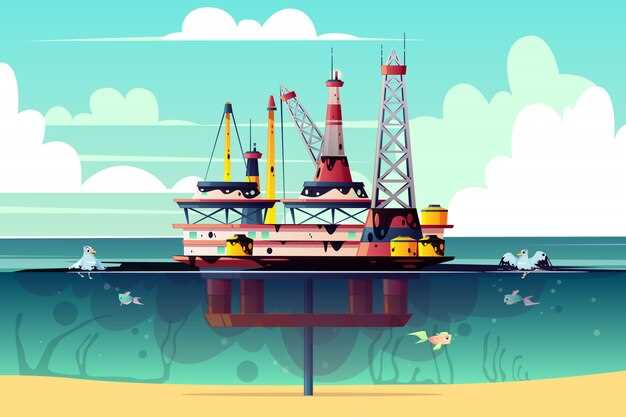
Coordinating cross-border pricing, investing in resilient facilities, and diversifying transport links are the practical levers for dampening volatility and supporting policy stability. The following points explain how the five platforms drive results across energy markets, governance, and downstream activity. FreightWaves has covered the broader relationship between offshore production swings and freight market pricing in general terms, and the dynamics described below are consistent with that picture.
- Impact on global energy markets
- Scale and price signals: offshore platforms set benchmarks by influencing production expectations, guiding refinery scheduling and storage decisions.
- Operational interdependence: shared data on throughput and transport flows allows traders to adjust hedges and shipment timing, reducing price spikes.
- Resilience design: facilities must withstand severe weather and mechanical stress to keep critical energy supply flowing; downtime costs escalate quickly.
- Logistics efficiency: workflow improvements, port yard optimization, and ongoing transport innovation raise loading, transit, and unloading performance.
- Berkut example: the Berkut program demonstrates how automated inspection and predictive maintenance reduce downtime and extend productive uptime.
- Policy decisions and governance
- Transparency and reporting: regulators require clear throughput and safety performance metrics to guide policy and maintain investor confidence.
- Permitting and safeguards: environmental standards, local content requirements, and decommissioning plans shape platform timelines and financing terms.
- Strategic reserves and imports: policy coordination aligns stock levels with platform output and seasonal demand patterns.
- Investment windows: licensing rounds attract private capital while maintaining core safety and environmental requirements.
- Right-sized regulation: the focus falls on critical transport corridors, energy security, and proven safety protocols.
- Downstream economies and local impact
- Employment and skills: local workforce training programs expand capability in operations, maintenance, and safety; they also prepare staff for on-site tasks and extended maintenance cycles.
- Economic spillovers: port throughput, logistics services, and supplier networks grow in nearby yards and industrial zones.
- Supply chain resilience: diversified suppliers reduce single-point failures for equipment and spare parts.
- Community partnerships: long-term collaboration with host communities improves local services and sustains social acceptance of operations.