


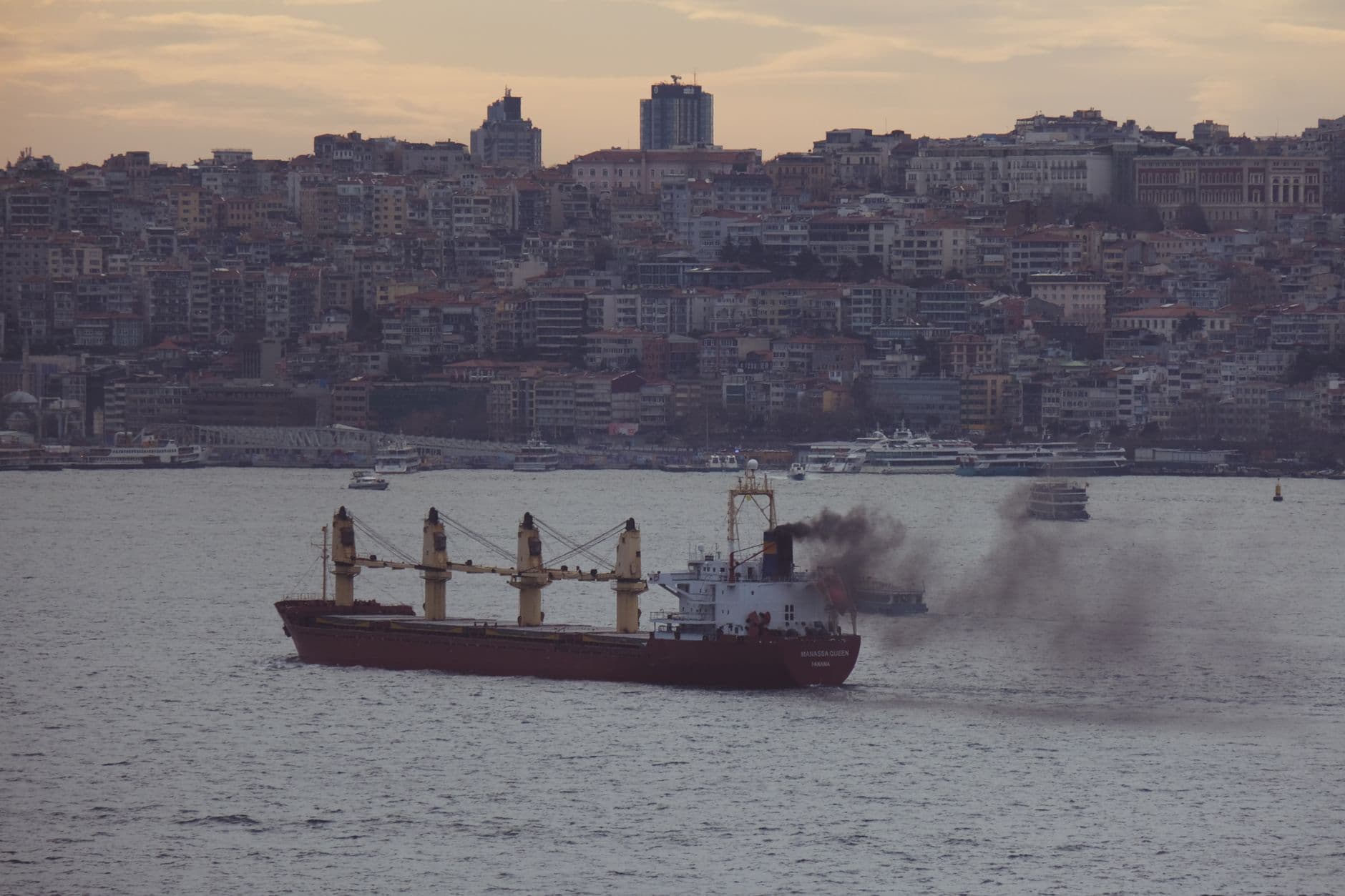

Every few weeks an ocean freight client asks us some version of the same question: "There is a global carbon rule coming for ships, do we need to do anything about it now?" We book a lot of EU and trans-ocean container space, so we track this closely, and the honest mid-2026 answer is more interesting than a yes or no. The International Maritime Organization approved a Net-Zero Framework in April 2025 that would put the first-ever global carbon price on shipping. Then, in a turn almost nobody outside the room expected, the session meant to formally adopt it in October 2025 broke up without agreement, and the decision was pushed to a resumed session on 4 December 2026. So the rule that will reshape ocean freight economics is approved in principle, stalled in practice, and still worth planning around. This guide explains what it actually says, why it stalled, and what an ocean freight buyer should do while the politics resolve.
What the IMO Net-Zero Framework Actually Is
The Marine Environment Protection Committee approved the framework at its 83rd session, held from 7 to 11 April 2025. It is the first measure in the world to combine a mandatory emissions limit and a greenhouse-gas price across an entire global industry. Two mechanisms sit at its core. The first is a Global Fuel Standard that forces ships to cut the greenhouse-gas intensity of the energy they use, year over year. The second is a pricing mechanism that charges vessels which miss their targets.
It applies to large oceangoing ships above 5,000 gross tons. That sounds narrow, but those ships emit roughly 85 percent of the total carbon dioxide from international shipping, so the framework covers almost everything that moves your containers on a deep-sea leg. If your cargo crosses an ocean in a box, the vessel carrying it is in scope.
The Targets and the Carbon Price
The Global Fuel Standard sets a declining limit on greenhouse-gas intensity measured against a 2008 baseline. According to the IMO, ships must cut intensity by 17 percent by 2028 and 21 percent by 2030, with the curve steepening toward the stated goal of net-zero around 2050. A vessel that beats its target earns surplus units; one that misses has to settle the gap.
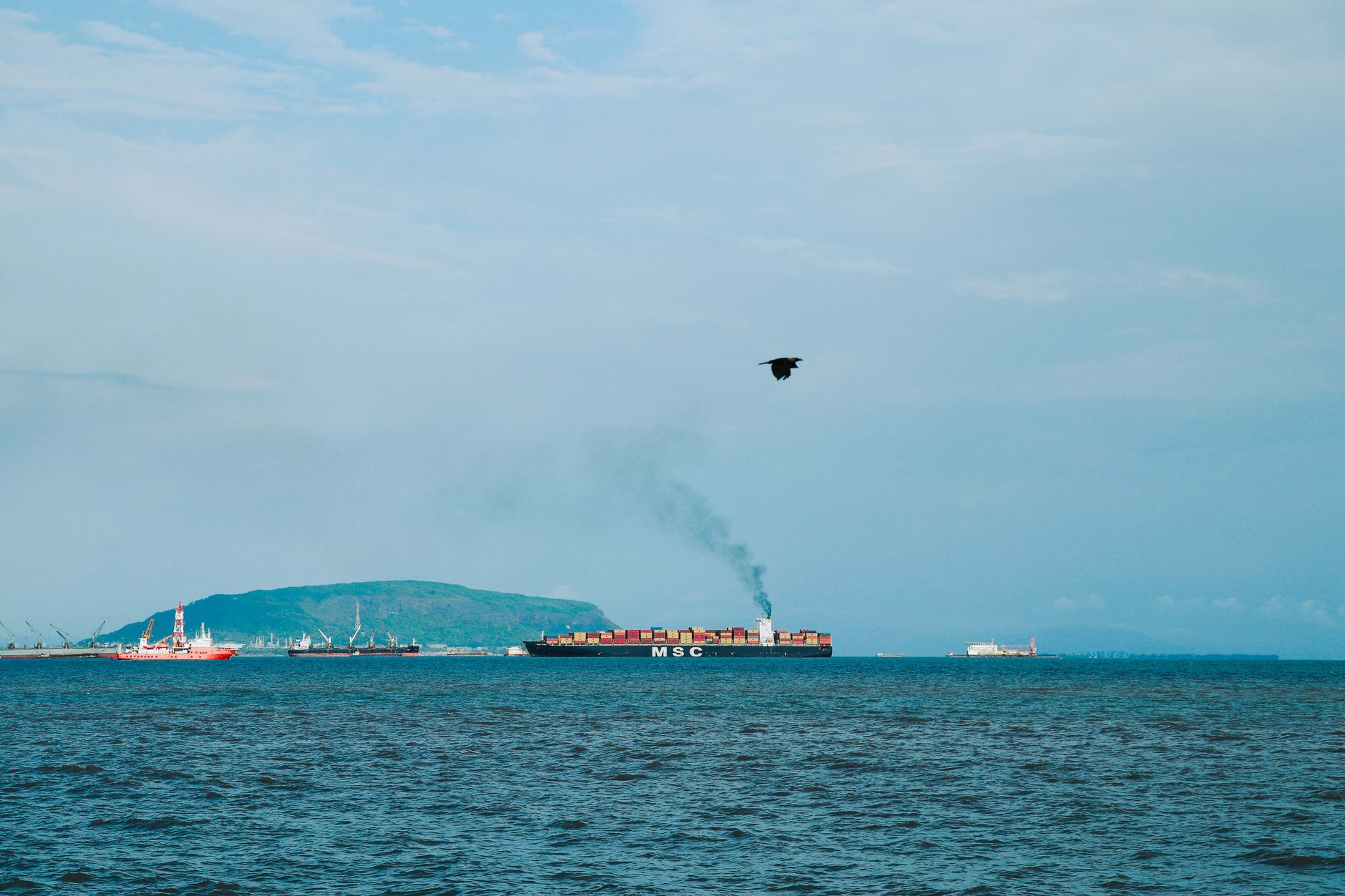
The price is where it bites. For the 2028 to 2030 period, a ship that misses the stricter Direct Compliance Target pays 100 US dollars per tonne of CO2 equivalent on the shortfall, and a ship that misses the looser Base Target pays 380 US dollars per tonne. Those payments flow into an IMO Net-Zero Fund that recycles the money into fuel innovation, infrastructure, and support for developing maritime states. Note what the framework is not: it is not a flat carbon tax on every tonne a ship emits. It is a penalty on the gap between a ship's actual fuel intensity and the standard, which is why two ships on the same route can carry very different compliance costs.
Why It Stalled in October 2025
The framework was approved in April 2025 and scheduled to be formally adopted as a new chapter of MARPOL Annex VI in October 2025, with entry into force planned for 1 March 2027. That adoption did not happen. The extraordinary MEPC session in October 2025 adjourned without reaching agreement after heavy political pressure, with the United States openly opposing the measure and branding it a global carbon tax. It did not die there. At MEPC 84 in the spring of 2026 the pendulum swung back, with most states reaffirming support for the framework approved in 2025, and the decision was scheduled for a resumed extraordinary session on 4 December 2026, around the regular MEPC 85 meeting in late 2026.
For a freight buyer, the practical reading is this. The technical design is settled and well documented; the political ratification is not. The 1 March 2027 entry-into-force date that you will still see quoted is contingent on an adoption that has slipped at least a year. So the correct planning posture for 2026 is neither to ignore the framework nor to budget hard numbers against the old 2027 date. It is to treat a global ocean carbon price as a when, not an if, while accepting that the start date and the final figures may move.
How It Differs From EU FuelEU Maritime
Buyers conflate this with FuelEU Maritime, and the distinction matters for planning. FuelEU is a European Union regulation, already in force from 1 January 2025, that prices the GHG intensity of fuel on voyages touching EU ports. The IMO Net-Zero Framework is global, covering deep-sea voyages worldwide regardless of the EU, and is not yet adopted. They use different baselines, different formulas, and different price levels, and a ship trading into Europe could eventually face both at once.
That overlap is the real cost risk for 2027 and beyond: a vessel on an Asia-to-Europe rotation sitting inside FuelEU on the European leg and the IMO framework globally. Carriers will price both into their rates, and the buyers who understand that the two regimes stack will read carrier surcharges more accurately than those who assume one rule covers the field.
What Ocean Freight Buyers Should Do in 2026
- Treat it as a confirmed cost, not a confirmed date. Plan for a global ocean carbon price arriving in the late 2020s, but do not hard-code the 1 March 2027 date into contracts while adoption is unresolved until at least the 4 December 2026 session.
- Ask carriers how they will pass it through. The 100 and 380 dollar per tonne figures will reach you as surcharges, not as a line you pay the IMO directly. Ask each carrier on your key lanes how they intend to itemise IMO compliance, and whether it stacks on top of their existing FuelEU and ETS surcharges.
- Score carriers on fleet fuel intensity now. The penalty falls on ships that miss the intensity target, so a carrier running modern, efficient, or alternative-fuel tonnage will carry a structurally lower compliance bill than one running old steamers. That difference will show up in rates. Ask for fleet age and fuel strategy the same way you ask about schedule reliability.
- Watch the 4 December 2026 resumed session. That meeting decides whether the framework is adopted, amended, or delayed further. It is the single calendar item that turns this from a planning scenario into a dated obligation.
- Do not over-invest in compliance machinery yet. Unlike FuelEU, which has live deadlines, the IMO framework has no enforceable date for you to miss in 2026. The work this year is intelligence and carrier selection, not paperwork.
FAQ
Q: Is the IMO Net-Zero Framework in force in 2026?
A: No. It was approved at MEPC 83 in April 2025 but the October 2025 session adjourned without formally adopting it, and the decision moves to a resumed session on 4 December 2026. The previously planned entry-into-force date of 1 March 2027 depends on an adoption that has not yet happened, so as of mid-2026 there is no enforceable obligation on you or your carriers under this framework.
Q: Which ships does it cover?
A: Oceangoing ships above 5,000 gross tons, which produce roughly 85 percent of international shipping's carbon dioxide. Practically every deep-sea container, bulk, and tanker vessel on a major trade lane is in scope, so the framework reaches almost all ocean freight rather than a niche of large vessels only.
Q: How much will it cost?
A: The framework prices the shortfall between a ship's fuel intensity and the standard, not every tonne emitted. For 2028 to 2030 the rates are 100 US dollars per tonne of CO2 equivalent for missing the Direct Compliance Target and 380 dollars for missing the Base Target. For a buyer, that arrives as a carrier surcharge whose size depends on how efficient the specific vessel is, so it varies by carrier and lane rather than being a flat per-container fee.
Q: Is this the same as FuelEU Maritime?
A: No. FuelEU is an EU regulation in force since January 2025 covering voyages to and from EU ports. The IMO framework is a separate, global, not-yet-adopted measure. A ship trading into Europe could face both, so treat them as two stacking costs rather than one rule.
The Practical Takeaway
The IMO Net-Zero Framework is the clearest signal yet that ocean freight is heading for a global carbon price, and the design is detailed enough to plan against: a fuel-intensity standard tightening to 21 percent below 2008 by 2030, and penalties of 100 to 380 dollars per tonne on the gap. What it lacks in mid-2026 is a firm start date, because the politics stalled in October 2025 and the decision now falls at a resumed session on 4 December 2026. We tell ocean buyers to hold both facts at once: the cost is coming and worth scoring carriers against today, but the date is not bankable yet. The buyers who lose here are the ones who either dismiss it as years away or who lock multi-year rates as if the old 2027 date were certain. Track the 4 December 2026 session, ask your carriers how they will pass the charge through, and weight fleet fuel intensity in your next tender.