


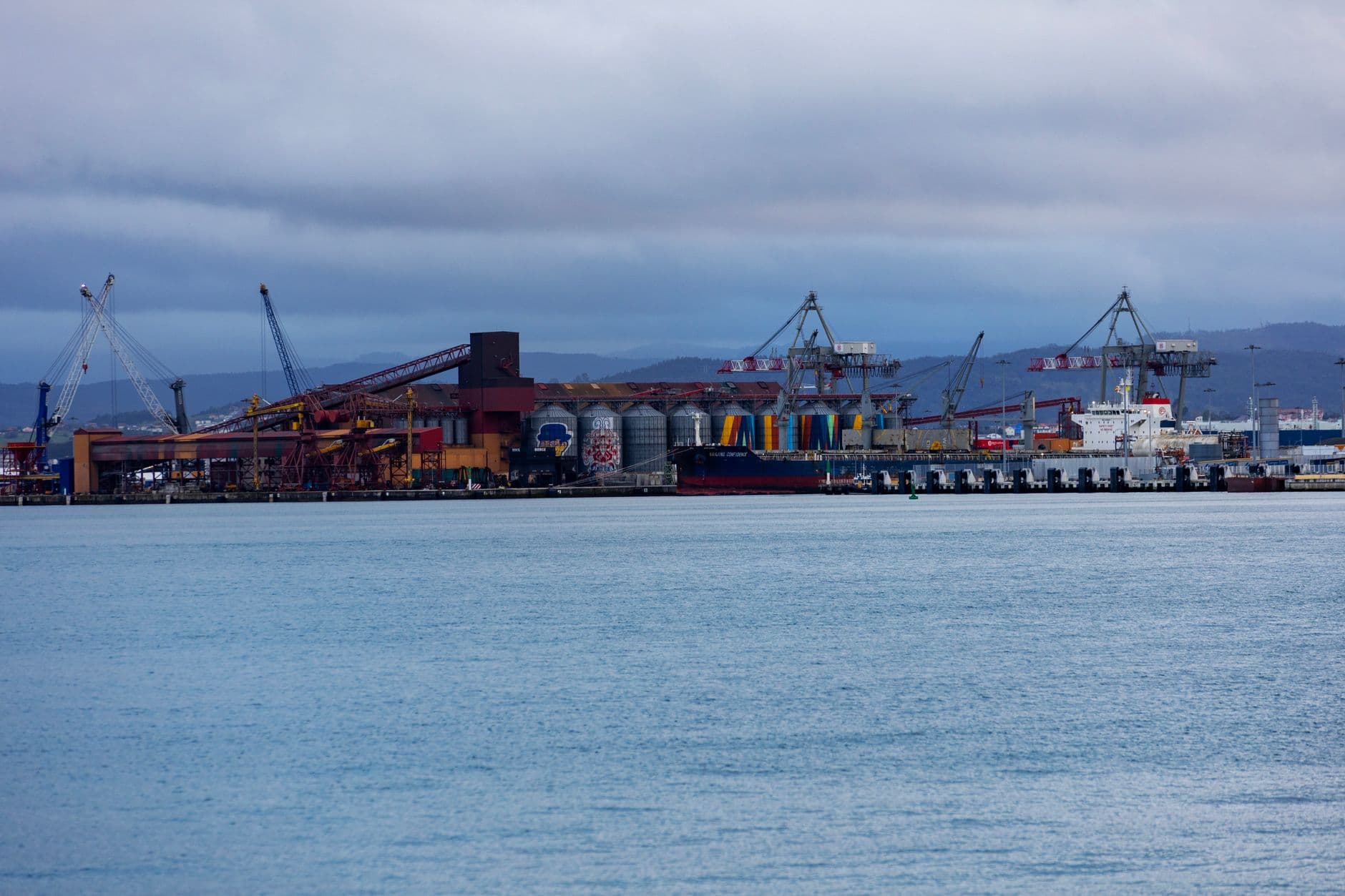

Argentina's Gran Rosario complex is now the world's largest grain export hub, shipping 75.7 million tonnes of grain, oils, meals as well as by-products in 2025 against 74.8 million tonnes for New Orleans and 60 million for Santos. The Rosario Exchange published that ranking on 29 May 2026, and it reverses the order most reference tables still show.
Grain moves on marketing years, not calendar years, and each origin sets its own. Ukraine closed 2025/26 on 30 June 2026. France's Rouen campaign ends the same date. Argentina's wheat year runs to November 2026. I have built this list with the reporting period stated for every entry, because mixing a season total with a calendar quarter is the fastest way to publish a ranking that is quietly wrong.
The largest grain export ports and hubs in 2026
| # | Hub | Country | Grain volume or share | Reporting basis |
|---|---|---|---|---|
| 1 | Gran Rosario, Up-River | Argentina | 75.7 million tonnes of grain, oils, meals and by-products | Calendar 2025, Rosario Exchange, published 29 May 2026 |
| 2 | New Orleans, Mississippi Gulf | United States | 74.8 million tonnes; 51 percent of US grain shipments, 78 percent of corn | Calendar 2025 |
| 3 | Santos | Brazil | 60 million tonnes across grain, vegetable oils, protein meals | Calendar 2025 |
| 4 | Greater Odesa: Odesa, Chornomorsk, Pivdennyi | Ukraine | Over 90 percent of 36.86 million tonnes of grain and pulses | 2025/26 season, closed 30 June 2026 |
| 5 | Pacific Northwest, Columbia-Snake | United States | 28 percent of US grain shipments, 60 percent of wheat exports | Calendar 2025 shares |
| 6 | Novorossiysk | Russia | Two grain terminals rated at 8.5 and 7.1 million tonnes a year, both halted on 12 August 2026 | Installed capacity, current status |
| 7 | Rouen, HAROPA | France | 8.4 million tonnes, more than half of French seaborne grain | 2025/26 campaign to 30 June 2026 |
| 8 | Constanța | Romania | Grain terminal capacity around 5 million tonnes, record 29.4 million tonnes of grain in January-October 2023 | Capacity plus historic peak |
The top three are river complexes rather than single terminals, and that is not a technicality. About 60 percent of US grain exports reach Gulf elevators by barge down the Mississippi system, so the New Orleans figure is really a measure of an inland waterway, a subject we cover in the ranking of the busiest inland waterways and river ports. Gran Rosario works the same way on the Paraná, where roughly 70 to 80 percent of Argentine grain, oilseed, oil and by-product exports are loaded.
Argentina took first place, and 2026 looks stronger still
The 2025 result was not a one-off. Argentina's 2025/26 export programme is put at 105.1 million tonnes of grains, oilseeds, oils and by-products, of which grains and oilseeds account for 64.7 million tonnes, with corn heading for 45 million tonnes worth around 9 billion dollars and wheat at 18.5 million tonnes for the year to November 2026. In the first five months of 2026 the country shipped a record 50.4 million tonnes of agro-industrial product.
One shipment in that flow matters out of proportion to its size: the first Argentine corn cargo to China in about a decade, at 34,000 tonnes. A single Panamax does not move a market, but it opens a destination, and Chinese demand reaching the Paraná would pull tonnage away from the US Gulf on exactly the lane where New Orleans lost first place by 0.9 million tonnes.
Rouen had a genuinely strong campaign
HAROPA's Rouen terminals shipped 8.4 million tonnes of grain in the campaign ending 30 June 2026, up 61 percent on the previous year's 5.2 million tonnes, with milling wheat at 5.6 million tonnes and barley at 2.6 million. That total sits above the ten-year average of 7.4 million tonnes and ranks among the port's best campaigns on record.
Both facts deserve to travel together. The percentage is inflated by a weak base, and the level is still strong, so the honest reading is a good campaign that looks spectacular in percentage terms. Rouen's structural distinction is share: it handles more than half of France's seaborne grain shipments, unusual concentration for a country with several entries on our list of the biggest ports in Europe.
Ukraine's season closed lower, and the Danube kept shrinking
Ukraine finished 2025/26 at 36.86 million tonnes of grain and pulses, down 9.27 percent on the previous season. Corn led at roughly 20 million tonnes and wheat followed at about 13 million, with barley well below both.
The routing story matters more than the total. Greater Odesa carried more than 90 percent of seaborne exports, while the Danube ports of Izmail, Reni and Ust-Dunaisk are projected at roughly 5 million tonnes in 2026, a fall of about 44 percent against 2025. Danube capacity was a wartime workaround, and with the maritime corridor operating, draught limits and rail costs make the river route uncompetitive. Any forwarder still quoting Danube capacity as a hedge should check current rates before promising it.
Novorossiysk went offline on 12 August 2026
Two of the largest grain terminals at Novorossiysk, rated at 8.5 and 7.1 million tonnes a year, suspended operations on 12 August 2026 after drone attacks. Russia is a top wheat exporter and Novorossiysk is its main deep-water grain outlet, so an outage there is a global supply event rather than a local one.
How long it lasts is the variable nobody can price yet. A shipper can still check where displaced tonnage goes: Black Sea wheat buyers reroute to Constanța and to Ukrainian ports first, and Constanța's grain terminals are rated near 5 million tonnes, which is not enough headroom to absorb a prolonged Russian outage. Chartering follows, since these vessels are drawn from the same pool serving coal, ore, fertiliser cargoes, which is why the operators in our review of the largest dry bulk shipping companies reposition tonnage within days of an event like this.
Brazil is adding grain capacity fastest
Santos moved 186.4 million tonnes of all cargo in 2025, 3.6 percent above the 179.8 million tonne record set in 2024, and posted 59.3 million tonnes in the first four months of 2026, up 6.6 percent. Soybean shipments from the port rose 79.6 percent in January 2026 against January 2025.
The capacity behind that is new. COFCO has commissioned a terminal rated at 8 million tonnes a year, designed to reach 14.5 million, and separately took delivery of 23 locomotives and 979 wagons to move 4 million tonnes of grain and sugar a year through Santos from 2026, a programme put at 1.2 billion reais. Brazil is buying rail and berth at the same time, which is what an origin does when it expects to hold volume rather than borrow it for one season. The wider port picture is in our review of the busiest ports in Latin America.
How to read a grain port number without being misled

- Check the marketing year. Ukraine's 36.86 million tonnes covers July 2025 to June 2026. Comparing it to a calendar-2025 figure from another origin shifts the comparison by a full harvest.
- Separate capacity from throughput. The 8.5 and 7.1 million tonne figures at Novorossiysk are terminal ratings, and Constanța's 5 million tonnes is the same kind of number, not what moved last season.
- Watch total-cargo totals. Santos at 186.4 million tonnes includes containers as well as fuel and fertiliser, so it is not comparable with its 60 million tonne grain and oilseed figure.
- Read percentage jumps against the base. Rouen's 61 percent increase came off 5.2 million tonnes, and the 8.4 million tonne level is the more useful number.
- Follow the inland leg. With 60 percent of US grain arriving by barge and 60 percent of US wheat exports moving through the Columbia-Snake system, river conditions set export capacity more often than elevators do. That system shipped 3.46 billion dollars of corn and 3.01 billion dollars of wheat in 2025.
- Track disruption separately from trend. A terminal outage like 12 August 2026 changes flows for weeks without changing any origin's annual capability.
Common questions
Which port exports the most grain? Gran Rosario in Argentina, at 75.7 million tonnes across grain, vegetable oils, protein meals plus assorted by-products in 2025, ahead of New Orleans at 74.8 million and Santos at 60 million. All three are river complexes of many terminals, which is why they rarely appear in single-port rankings.
Is Ukraine still a major grain exporter? Yes. The 2025/26 season closed at 36.86 million tonnes, down 9.27 percent, with corn near 20 million and wheat near 13 million tonnes. Volume now flows through Greater Odesa rather than the Danube, which is heading toward roughly 5 million tonnes in 2026.
What does the Novorossiysk outage mean for prices? Two terminals rated at 8.5 and 7.1 million tonnes a year stopped on 12 August 2026, and Russian wheat is the largest single origin in world trade, so the near-term effect is on Black Sea freight and basis rather than on annual supply. The size of the effect depends entirely on the length of the outage.
Why do grain port figures conflict between sources? Because seasons, cargo definitions and units differ. One source counts grain and pulses, another adds oilseeds and meals, a third reports the whole port. The Rosario ranking counts grain plus oils and meals, which is why its 75.7 million tonne figure for Gran Rosario is not comparable with Argentina's 105.1 million tonne national programme.
The conclusion that survives the definitional noise is geographic. Two river systems, the Paraná and the Mississippi, sit behind the largest export volumes, and their constraint is water depth and barge availability rather than berth capacity. Rouen's 8.4 million tonnes and Constanța's terminals are large in European terms and small next to either.