


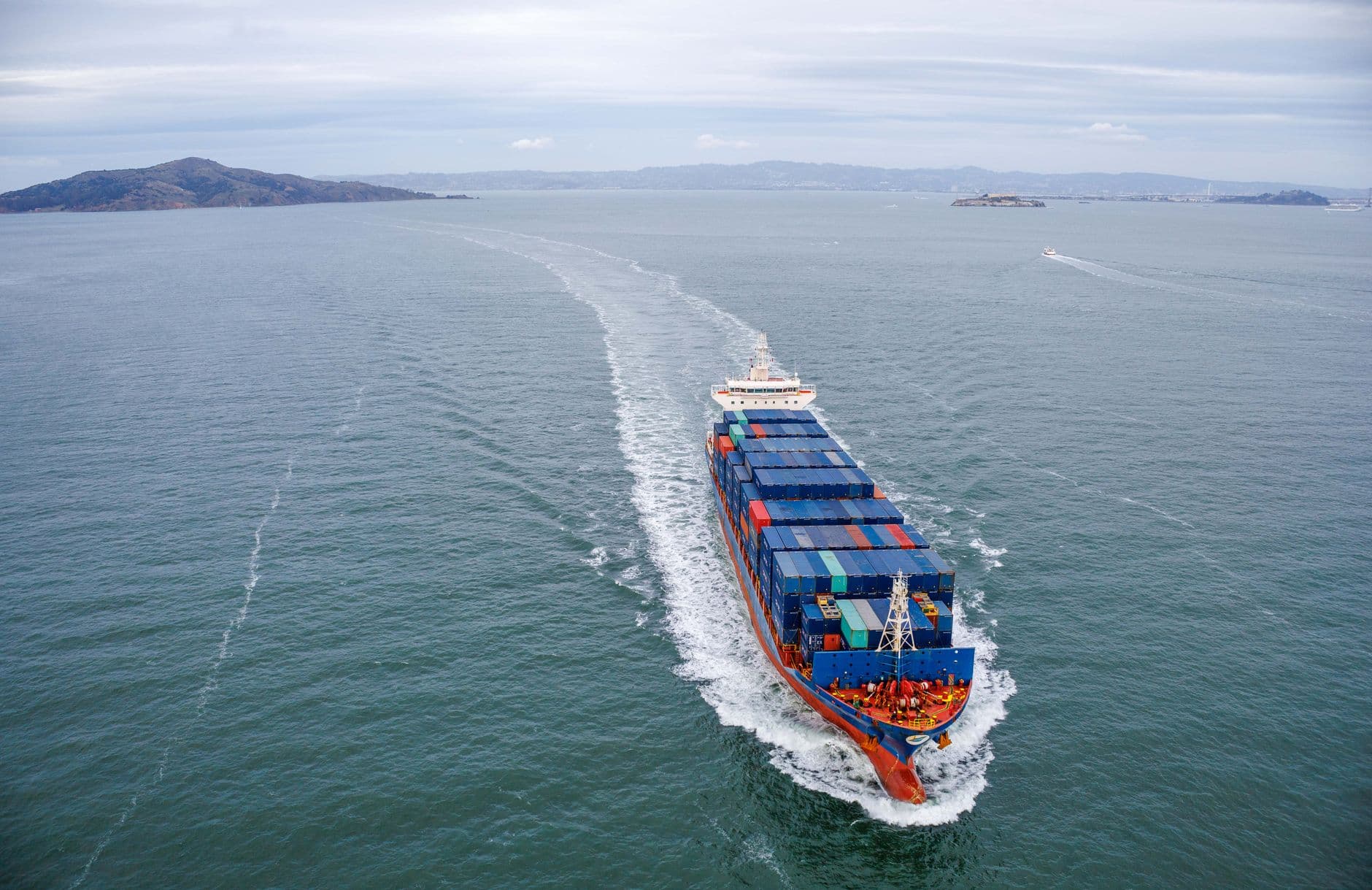

When a shipper asks our freight desk how to move boxes from China into Mexico, Peru or Brazil in 2026, the routing answer is no longer "via a US hub and a feeder." Container lines have been wiring Asia straight onto Latin America's west coast, and the map that used to bottleneck everything through Los Angeles, Long Beach or a Caribbean transshipment is being redrawn lane by lane. The headline change is direct service, and it is showing up in real bookings, not just press releases.
GetTransport.com has matched carriers on Pacific lanes long enough to know the difference between a slide-deck route and one that actually sails on schedule. So what follows is the operational read on the new Asia to Latin America ocean network: which direct loops launched, why Chancay in Peru and the west-coast Mexican ports are pulling cargo, and the transit-time and routing trade-offs a shipper sourcing from or selling into the region has to weigh before committing a programme.
The pivot is real, and it has a direction
For two decades the default Asia to Latin America container move went the long way: across the Pacific to a North American or Caribbean gateway, then onto a feeder. That worked when LATAM was an afterthought on the trade map. It stopped working as sourcing and sales flows pivoted toward the region, pushed by nearshoring into Mexico, Asian automakers building out production and dealer networks across South America, and tariff turbulence that has importers redrawing their supplier maps.
The result is a wave of fresh direct loops, and three sub-regions are emerging as the anchors. Mexico's Pacific coast is the nearshoring magnet. Northern Brazil and the broader east coast are absorbing redirected export flows. The Andean west coast, fed by Chancay, is becoming a Pacific gateway in its own right. The common thread is that lines are cutting out the intermediate hub and calling these markets head-on.
Mexico's west coast is the nearshoring front line
Manzanillo is the clearest proof. It is Mexico's busiest container port and the first port of call for most Asian cargo arriving on the Pacific, and the volume tells the story. Contecon Manzanillo, the port's main terminal operator, crossed the 12 million TEU cumulative milestone in early 2026, and Asian imports through the port have grown by more than 70 percent over the past four years. The port opened 2026 strongly, handling more than 354,000 TEU in January with growth around 8 percent year on year, and the first four months of the year ran about 12.9 percent ahead of the same period in 2025. Manzanillo now handles close to 70 percent of the Asian imports entering Mexico through the Pacific. Demand is running ahead of capacity on price as well, with the Asia to Mexico rate for a 40-foot container jumping about 55 percent month on month in May 2026 to around 5,140 dollars and forecasts pointing above 7,500 dollars. Contecon is answering with money, pouring 527 million dollars into a fourth expansion phase that lifts the terminal toward 2.4 million TEU a year by the end of 2026.
Carriers have responded by dedicating loops to the country rather than treating it as a side call. CMA CGM reshuffled its Far East to West Coast network and turned its M2X service, the Mexico Express, into a fully dedicated Mexico run. Its 2026 rotation runs Shekou, Ningbo, Shanghai, Tianjin, Qingdao and Busan, then Manzanillo, Lazaro Cardenas and Ensenada before returning via Yokohama, with the Colombian call at Buenaventura dropped so the string stays focused on Mexico. CMA CGM is not alone. MSC is launching a new service it calls Dahlia in August 2026, running from Shekou through Xiamen, Shanghai and Busan to Manzanillo and Lazaro Cardenas, and the WSA2 string now works through the Contecon terminal at Manzanillo to tie Asia to the west coast of South America. A dedicated Mexico loop matters because it removes the schedule drag that comes from sharing a vessel string with a dozen other markets, and it gives the central-Mexico manufacturing corridor a cleaner inbound clock.
Chancay flips the Andean coast into a gateway
The single biggest map change sits in Peru. Chancay, the deep-water port about 60 kilometres north of Lima, is a roughly 3.5 billion dollar build, 60 percent owned by Cosco Shipping and 40 percent by Peru's Volcan. Its natural draft of 17.8 metres lets it take vessels above 18,000 TEU, the class that simply could not call older Peruvian ports. Phase one is sized for around 1 million TEU and 6 million tonnes of cargo a year.
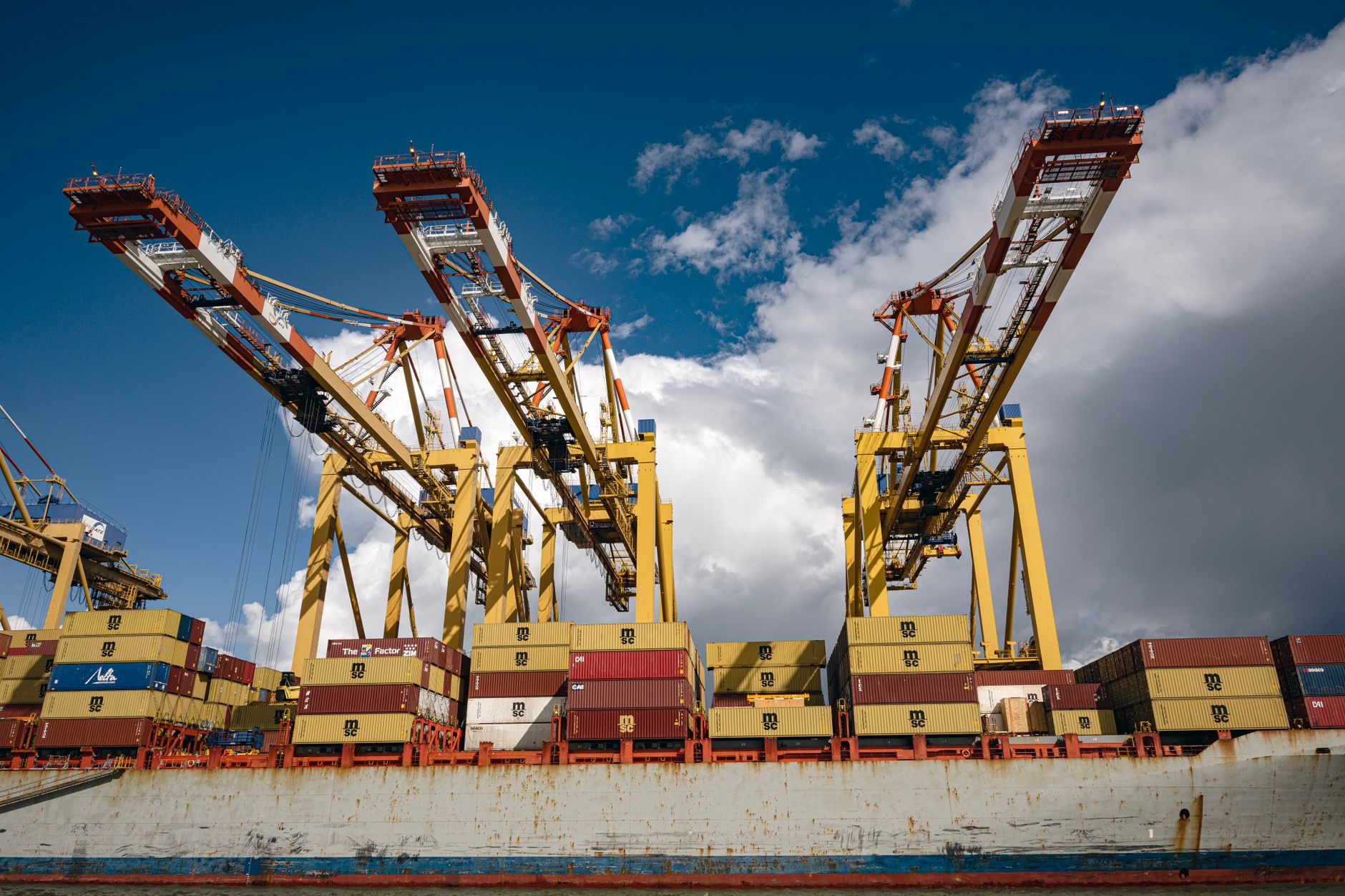
The number that reorders shipper math is transit time. A direct Shanghai to Chancay sailing runs roughly 23 days, against the 35 to 40 days a traditional indirect routing through other hubs took. Cosco and Peruvian officials estimate logistics costs could fall by up to 20 percent on some lanes. That is the kind of compression that moves a sourcing decision, and it is why a chunk of Chancay's throughput is already being redistributed by feeder to Chile, Ecuador and Colombia rather than staying in Peru. We unpacked the full picture in our guide to how the Chancay megaport reroutes Pacific trade, and it is worth reading alongside this if your cargo touches the Andean coast.
Chancay is not a standalone, either. CMA CGM's ACSA1 service threads it directly into a transpacific loop, rotating Busan, Shanghai, Ningbo, then San Antonio in Chile, Chancay, Callao and Posorja in Ecuador before returning to Yokohama. The first sailing left Busan in May 2025. So the port is not just a Peru gateway, it is a node in a Pacific string that now serves the whole west coast of South America in one rotation.
One loop now stitches Mexico to the Andes
The route that best captures where the network is going is CMA CGM's M2A loop. Its rotation runs Dalian, Ningbo, Shanghai, Qingdao, then Ensenada, Manzanillo and Lazaro Cardenas in Mexico, on to Buenaventura in Colombia, Guayaquil in Ecuador and Chancay in Peru, before heading back to Shanghai and Dalian. The first departure sailed from Dalian in May 2025.
Read that rotation slowly, because it is doing something new. A single Asia loop now calls Mexico's Pacific coast and the Andean ports on the same string. For a shipper that sources from China and sells into both Mexico and the Andean markets, that means one carrier relationship and one schedule can cover what used to take two separate routings and a transshipment. The trade-off is that a multi-call loop is slower port to port than a dedicated two-stop run, so the M2A is a coverage play, while the M2X is a speed play. Picking between them is a real decision, not a formality.
Brazil and the Southern Cone pull from the east
The east coast of South America is moving on a different axis but the same logic. Lines are adding weekly capacity into Santos, Paranagua and Buenos Aires on Asia to East Coast South America strings, with automotive flows a big driver as Asian carmakers ship parts, kits and finished vehicles into the region. Santos remains the centre of gravity: in January 2026 Maersk handled 66,462 TEU there for about a 30 percent share, MSC moved 47,058 TEU, and CMA CGM 32,400 TEU.
The catch on the east coast is the canal. Asia to East Coast South America strings that route via Panama live and die on slot availability, and the 2026 booking rules and draft limits make that a live planning variable rather than a background detail. We walk through the slot mechanics in our Panama Canal 2026 booking-window guide, and any shipper running Asia to Brazil should be reading the canal advisories the way a west-coast shipper watches Chancay sailings. The honest framing is that the east coast gained density in 2026, but it did not gain the same routing simplicity the Pacific gateways did.
The trade-offs a shipper actually has to weigh
Direct does not automatically mean better for every box. Here is how we frame it on the desk:
- Speed versus coverage. A dedicated loop like M2X is faster to Mexico, while a multi-call loop like M2A covers more markets per sailing but adds days. Match the string to whether your priority is clock or reach.
- Direct call versus feeder reliability. A direct Chancay or Manzanillo call removes a transshipment, but if your exact origin or inland destination is off the loop, a feeder leg reappears and the headline transit time no longer applies to your door.
- West coast versus canal exposure. Pacific gateways sidestep the Panama bottleneck, while east-coast Brazil strings carry canal slot and draft risk into the schedule.
- New-service teething. A loop launched last year is still finding its rhythm, so early reliability can wobble before it settles.
The point of a marketplace view is that these trade-offs are answered by who is actually sailing your lane this month at a workable rate, not by the prettiest network map. A rotation on a carrier's website is a promise; a quote from an operator running the loop now is a plan.
What it means if you source from or sell into LATAM
If you import from Asia into Mexico, the dedicated Pacific loops and Manzanillo's growth mean you can build a programme on a tighter, more predictable inbound clock than two years ago, provided you confirm the loop actually calls your gateway. If you source into or out of the Andean coast, Chancay has put a genuinely faster Pacific option on the table, and the 23-day Shanghai number is real where a direct sailing exists. If your flows run to Brazil or the Southern Cone, the capacity is there, but the canal is the variable that decides your reliability.
The strategic read this year is that Latin America has stopped being the tail end of someone else's transpacific service and started being a destination lines design around. That is good news for shippers, as long as you treat each new loop as a specific, checkable routing rather than a general promise that Asia to LATAM is now easy.
Frequently asked questions
Which new direct Asia to Latin America services launched recently?
CMA CGM reshuffled its Far East to West Coast network and now runs several relevant strings. The M2X is a dedicated Mexico loop calling Manzanillo, Lazaro Cardenas and Ensenada, with its Colombian call dropped for 2026 to stay Mexico-focused. The M2A loop stitches Mexico's Pacific coast to the Andean ports, rotating Ensenada, Manzanillo and Lazaro Cardenas through to Buenaventura, Guayaquil and Chancay. The ACSA1 threads Chancay, Callao and Posorja into a transpacific string. MSC is adding its own Dahlia service to Manzanillo and Lazaro Cardenas in August 2026, and carriers keep adjusting rotations as demand shifts, so confirm the current string before you book.
How much faster is Chancay for Asia to South America cargo?
A direct Shanghai to Chancay sailing runs roughly 23 days, against the 35 to 40 days a traditional indirect routing through intermediate hubs typically took. Cosco and Peruvian officials estimate logistics costs could fall by up to 20 percent on some lanes. The 23-day figure depends on a direct sailing existing on your origin lane, so it is worth confirming your carrier actually runs a direct Chancay call rather than a feeder connection.
Why is Mexico's west coast attracting so much Asian cargo?
Nearshoring into central Mexico's manufacturing corridor is the main driver, and Manzanillo sits at the front of it as the first Pacific port of call. Asian imports through Manzanillo have grown more than 70 percent over the past four years, the first four months of 2026 ran about 12.9 percent ahead of the same period in 2025, the port crossed 12 million cumulative TEU at its main terminal, and it handles close to 70 percent of Mexico's Pacific Asian imports. That demand is why carriers are dedicating whole loops to the country.
Is the west coast routing better than going via Panama to Brazil?
It depends on where your cargo is going. Pacific gateways like Manzanillo and Chancay let you avoid the Panama Canal bottleneck entirely, which is an advantage for Mexico and the Andean coast. For Brazil and the Southern Cone, the east-coast strings gained capacity in 2026 but still carry canal slot and draft risk, so reliability there hinges on booking the canal correctly rather than on the ocean leg alone.
If your cargo touches the Andean coast, read this together with our guide to the Chancay megaport, because the new direct loops and the gateway port are two halves of the same shift, and planning them as one chain is what keeps the transit time honest.