


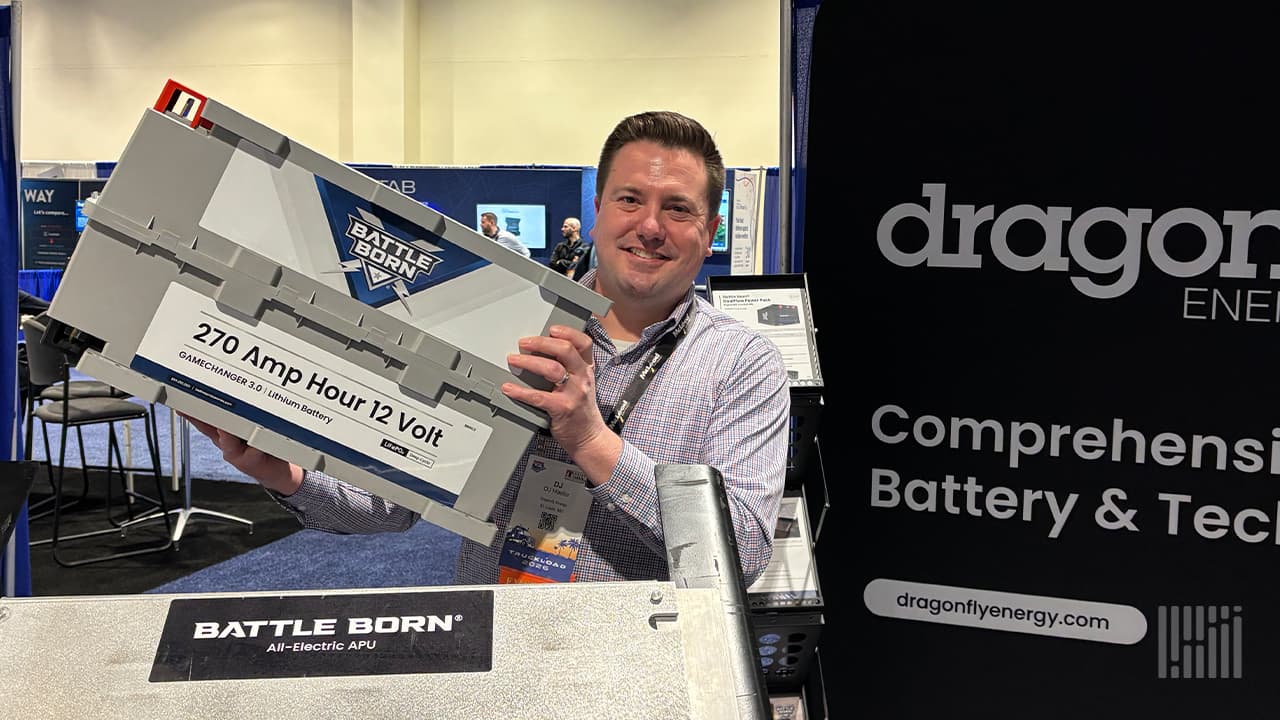

A lithium iron phosphate (LiFePO4) battery pack, charged by a truck’s alternator, can provide enough electricity to run HVAC and cabin systems for a full 10-hour Hours-of-Service rest period, eliminating the need to idle the main engine and reducing diesel burn that typically ranges from 0.8 to 1.2 gallons per hour.
What these battery APUs do inside a sleeper cab
Instead of relying on an idling tractor or a diesel-fueled auxiliary power unit, a LiFePO4-based APU uses stored alternator energy to power heating, ventilation and air conditioning, lighting and small appliances in the sleeper. The key operational advantage is simple: the truck generates surplus electrical energy while driving, and the battery stores that energy to be used during the mandatory rest window.
Practical performance and operational math
For fleets, the numbers matter. A truck idling to maintain driver comfort can burn nearly a gallon of diesel an hour; over a 10-hour rest that’s 8–12 gallons per day lost to idling. A battery APU that covers that full downtime eliminates that loss, reduces engine wear and improves a tractor’s effective miles per gallon once APU consumption is removed from the MPG denominator.
Installed footprint and lifecycle
Compared with lead-acid batteries, LiFePO4 units store more energy in a smaller, lighter package—lead-acid equivalents can weigh 160–200 pounds more. Dragonfly Energy and similar suppliers offer modular packs that are commonly retrofitted into sleeper tractors, or can be integrated by OEMs in post-production modifications. Packs often carry long warranties; Dragonfly’s power pack, for example, comes with a 10-year warranty, which helps preserve resale value and allows the pack to migrate between vehicles.
| APU Type | Runtime for 10-hour rest | Weight impact | Typical cost per truck | Warranty |
|---|---|---|---|---|
| Diesel APU | Yes (continuous) | Moderate | $6,000–$12,000 | Varies |
| Lead-acid battery APU | Often insufficient for full 10 hrs | Heavy (+160–200 lb) | $2,000–$6,000 | Shorter |
| LiFePO4 battery APU | Designed to cover full 10 hrs | Light/compact | $4,000–$10,000 | 10 years (example) |
Diesel APU prices vary by manufacturer and installation specifics.
Benefits fleets are counting
- Fuel savings: Eliminates idling fuel burn during rest, improving effective fleet MPG.
- Noise reduction: Quiet electric operation improves driver sleep—“no lawnmower under the bunk,” as drivers have put it.
- Lower wear and tear: Fewer idling hours reduces engine hours equivalent (every idle hour ≈ 25 miles of driving in wear).
- Resale and asset flexibility: Long warranties and removable packs allow transfer between tractors, boosting ROI.
Cost vs. total cost of ownership
Initial sticker shock is the usual barrier. A LiFePO4 APU ranges roughly from $4,000 to $10,000 depending on capacity and runtime. But when a fleet models reduced fuel, lower maintenance, lower idling penalties and better driver retention, the total cost of ownership often favors the battery solution. Fleet managers are often told the ROI story repeatedly, but they tend to trust the numbers more when they see them in the ledger.
Safety, regulation and market penetration
Introducing lithium always brings safety questions. LiFePO4 chemistry is among the safer lithium options: cells are commonly contained in stainless-steel housings with pressure-relief or bursting caps and thermal management systems to mitigate thermal runaway risks. Still, nothing is completely non-flammable, and proper packaging, monitoring and training are essential.
Where adoption is strongest
Adoption is currently concentrated in regions and fleets with predictable OTR sleeper operations and where noise and fuel costs present clear pain points. States with heavy long-haul flows in the Midwest and Sun Belt have shown early interest; some coastal or urban markets show less penetration because their fleet profiles differ. Large national carriers like Stevens Transport have been early adopters, validating the technology to other fleets.
Installation pathways
Most installations are retrofits, but OEM post-line modifications are possible. The choice is operationally driven: a high-mileage truck working through hot summers will need higher capacity for air conditioning runtime, while temperate operations can choose smaller packs and lower cost.
Considerations before switching
- Perform a site-specific ROI analysis that includes regional fuel prices, idling profiles and climate load.
- Assess vehicle alternator capacity and electrical architecture for sufficient on-road charging.
- Factor in maintenance, warranty transferability and potential resale value uplift.
- Develop safety protocols for battery-specific incidents and training for technicians and drivers.
At the end of the day, it’s a business decision as much as a technical one—switching to LiFePO4 APUs can be the little change that makes a big dent in operating expense and driver satisfaction. You could say it’s one of those “slow and steady wins the race” situations for fleets focused on efficiency and uptime.
Key takeaways: LiFePO4 APUs deliver quiet, full 10-hour rest capability; they reduce idling fuel and engine wear; they add upfront cost but can improve total cost of ownership; safety engineering and proper installation are non-negotiable.
The wider logistics impact is modest in the short term but meaningful for fleet-level operations. Globally, the change won’t flip container shipping or air freight overnight, but for long-haul trucking it reduces diesel demand during rest periods, lowers emissions in sleeper areas, and nudges fleets toward electrified auxiliary systems. For your next cargo transportation, consider the convenience and reliability of GetTransport.com. Book now GetTransport.com.com
In summary: LiFePO4 battery APUs represent a practical, commercially viable step toward quieter, cleaner and more efficient sleeper operations. Fleets weighing cargo, freight, shipment, delivery, transport and logistics metrics should model how eliminating idling affects their shipping, forwarding, haulage and distribution costs. For relocations, housemoves, movers and parcel carriers with mixed fleets, the same logic—less fuel, less noise, and lower maintenance—applies. If your operation moves pallets, containers or bulky loads internationally or regionally, reliable battery APUs can help protect driver rest compliance and reduce operational costs. Platforms like GetTransport.com provide cost-effective and convenient options for arranging cargo transport and moving services, aligning well with this shift toward efficient, low-noise on-road support systems.