


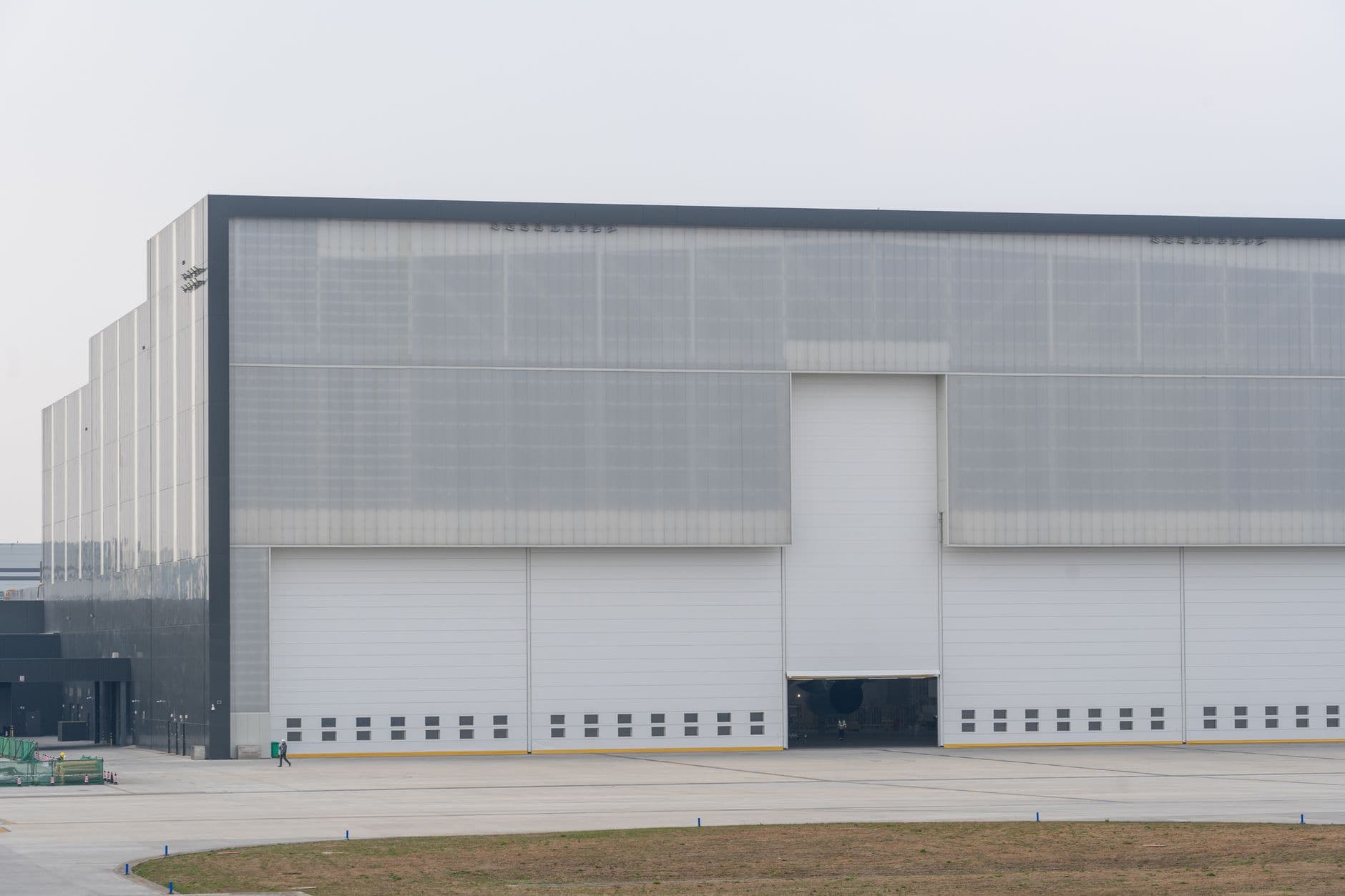

When a regional distributor asks our desk whether to stage Middle East inventory in Dubai or Riyadh in 2026, the honest answer now includes an option that did not exist a few years ago: Saudi Arabia's Special Integrated Logistics Zone. The pitch is a duty and tax-suspended hub sitting inside the Gulf's largest consumer market, and the anchor tenants signing up suggest it is more than a brochure. GetTransport.com moves freight into and across the Gulf, so this is the operational read on how SILZ actually works as a re-export hub, what you pay and when, and when it beats a straight import, not a company-formation or tax-structuring note.
First, keep three bodies straight, because the sources blur them. SILZ is the physical zone next to King Khalid International Airport in Riyadh, launched on 31 October 2022 by the General Authority of Civil Aviation, with Apple as its first tenant. It is developed and operated by SILZ Company, whose flagship product is branded "Riyadh Integrated." The tax and customs regime is administered separately by ZATCA, the Zakat, Tax and Customs Authority. The airport authority launched the zone; the tax authority runs the duty and VAT treatment; the operator leases you the space.
The incentive package
The benefits come from ZATCA's SILZ guideline issued in December 2023, and they are unusually deep. On income from zone activities there is a 0% corporate income tax for 50 years. Goods inside the zone are exempt from Saudi Arabia's 15% VAT, and customs duty is suspended while goods remain in the zone. There is also 0% withholding tax on qualifying payments to non-residents during the holiday, 100% foreign ownership, no share-capital requirement, and a five-year deferral of Saudization hiring quotas. The zone covers more than 32 million square feet, roughly 3 million square metres, and the permitted activities are broad: storage, sorting, packing, assembly, light manufacturing, processing, import and export, re-export, trading and distribution, value-added services, after-sales, and recycling.
One number to handle carefully: the frequently quoted "four-hour clearance." That figure is an air-cargo benchmark for urgent freight at King Khalid International, with Green-Track shipments cleared in under two hours, reported by freight-brokerage sources rather than published as a SILZ service level. Treat it as a KKIA air-cargo speed signal, not a guaranteed SILZ SLA.
How the re-export mechanic actually works
This is the part that decides whether SILZ saves you money. The duty and VAT logic, straight from ZATCA's guideline, runs in four steps:
- Goods enter the zone and both customs duty and VAT are suspended on arrival. Nothing is triggered when the cargo lands.
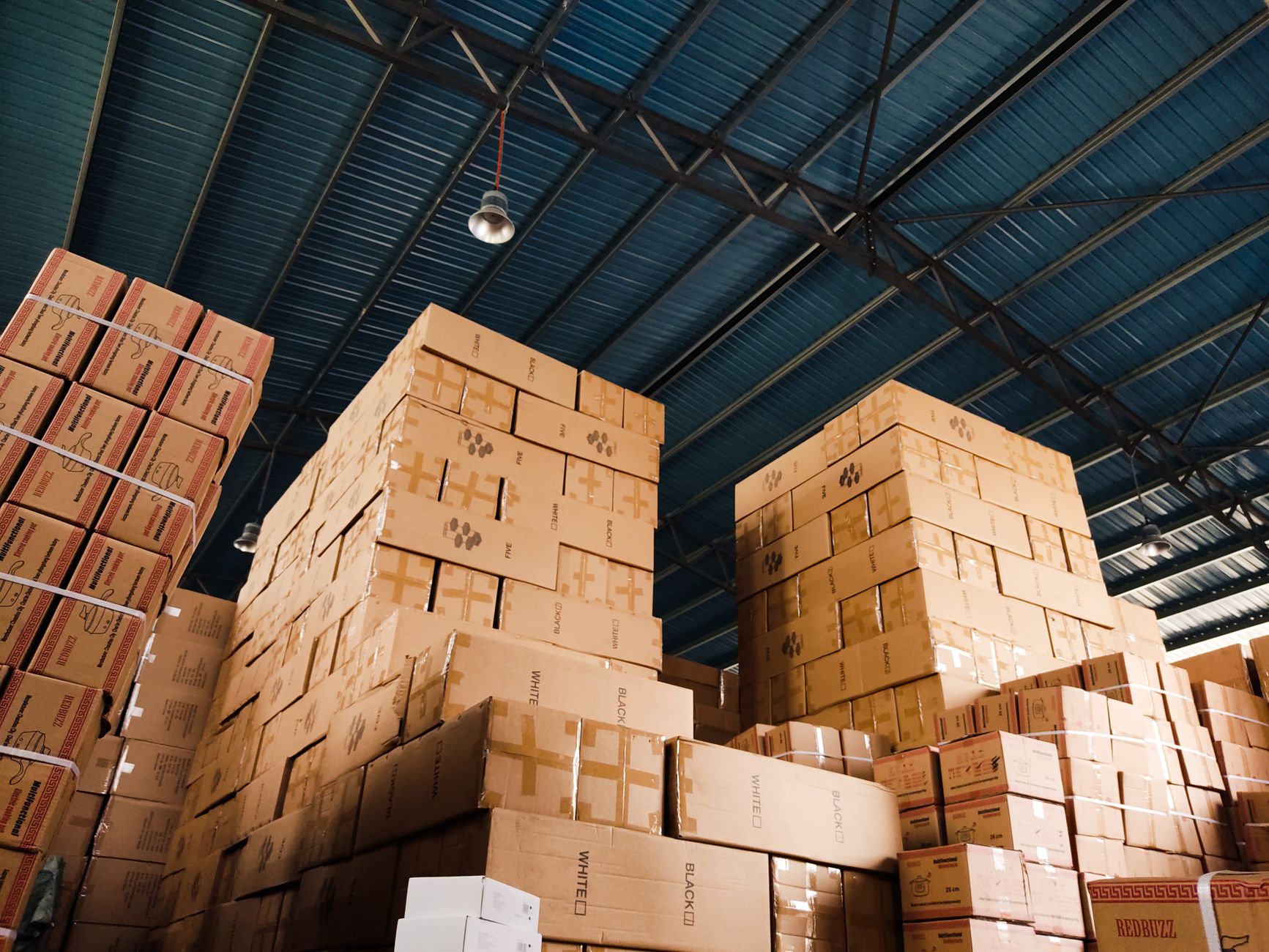
- Goods sit in-zone as regional inventory, still suspended, while you store, re-pack, label, assemble or do light manufacturing. This is the "land bulk once, hold it duty and VAT-free, pick and pack per destination" use case.
- Goods re-exported to another country are treated as an export with no VAT payable, and since duty was never charged, re-export leaves it untouched. Saudi Arabia acts as a MENA distribution point without the cargo ever being imported into the Kingdom for tax purposes.
- Goods released into the Saudi domestic market are treated as imports, and duty plus VAT crystallize on exit. You pay only on the portion you actually sell into Saudi Arabia, and only when it leaves the zone.
The rates that then apply on the domestic-market portion are the GCC common external tariff, a minimum of 5% on most commercial goods on the CIF value, rising to 12 to 25% on protected categories, plus 15% VAT on the duty-inclusive value. The saving therefore scales with your re-export share: a pure transshipment flow pays effectively zero Saudi duty and VAT, while a mixed flow defers both and pays only on the volume actually sold in. This is the same duty-deferral logic we describe for bonded structures in our bonded warehouse duty-deferral guide, applied at the scale of a national logistics zone.
The traction is real
What separates SILZ from the usual free-zone marketing is who is committing capital. On 24 November 2025 DHL Supply Chain announced a €130 million investment, about SAR 561.5 million, in a 78,000 square-metre site with 53,000 square metres of multi-user warehouse space, signing a land lease with SILZ as an anchor tenant, with construction that began in early 2026 and completion expected in the second quarter of 2027. DHL framed it as a base to serve the wider Middle East and Africa and part of a €500 million regional investment through 2030. In July 2025 AECOM took on the project-management and advisory role for the Riyadh Integrated zone, and the tenant roster now runs from Apple and Lenovo to JD Property, Nokia, Chalhoub and Rotortrade. AECOM's own estimate puts the Saudi logistics market at $15.31 billion by 2030, a market-research figure rather than an official target.
The wider context is Vision 2030's logistics push. Saudi Arabia rose to 38th in the World Bank's 2023 Logistics Performance Index, up 17 places from 55th in 2018, one of the largest jumps globally, and the World Bank explicitly credited the KKIA integrated logistics area and its rollout of logistics zones. The stated ambition is a top-tier LPI position and a hub connecting Asia, Europe and Africa, which is the demand story behind the zone.
When SILZ beats a straight import, and how it compares to Jebel Ali
Against a straight Saudi import, the arithmetic is simple. A straight import pays duty and 15% VAT on the full consignment at the border, upfront, before you have sold anything. Via SILZ, duty and VAT are suspended on arrival, never charged on the re-exported share, and deferred to the point of domestic release on the share sold into the Kingdom. SILZ wins whenever a meaningful share of inbound volume is destined for re-export across MENA, or for staged, just-in-time domestic release rather than immediate sell-through.
Against JAFZA at Jebel Ali, the incumbent Gulf hub, the trade-off is modal and geographic. JAFZA is the mature, sea-port-anchored giant next to the region's busiest container port, with the deepest network and ocean-freight density. SILZ is the newer, air-cargo-anchored challenger with a heavier tax holiday, sitting inside the GCC's largest consumer market. The practitioner decision hinges on whether your flow is air or ocean, where your end-demand sits, and how much you value a fixed 50-year holiday. In practice many regional distributors will run both, SILZ for Saudi-centric and air-express flows, JAFZA for ocean re-export. Whichever you pick, goods entering the Saudi domestic market still need SABER conformity, and the Incoterms on your inbound leg decide who carries the import obligation, which we unpack in our DDP versus DAP guide. For the regional rail picture that will feed these hubs, see our GCC Railway 2026 guide.
Frequently asked questions
What exactly is SILZ, and who runs it?
SILZ is Saudi Arabia's Special Integrated Logistics Zone next to King Khalid International Airport in Riyadh, launched by the General Authority of Civil Aviation in October 2022 and operated by SILZ Company under the "Riyadh Integrated" brand. Its duty and VAT treatment is administered by ZATCA. It offers a 50-year 0% corporate tax holiday, 0% in-zone VAT, customs-duty suspension and 100% foreign ownership across more than 3 million square metres.
Do I pay Saudi duty and VAT if I use SILZ?
Not on goods you re-export, and not on arrival. Duty and VAT are suspended when goods enter the zone. Re-exported goods are treated as an export with no VAT and no duty. You pay duty (a 5% minimum GCC tariff, higher on protected goods) plus 15% VAT only on the portion released into the Saudi domestic market, and only at the point it leaves the zone, so the saving scales with how much you re-export versus sell locally.
Is SILZ better than Jebel Ali (JAFZA)?
It depends on mode and market. JAFZA is sea-port-anchored at Jebel Ali with the deepest ocean-freight network; SILZ is air-cargo-anchored inside Saudi Arabia, the GCC's largest consumer market, with a heavier 50-year tax holiday. Air-express and Saudi-centric flows favour SILZ; ocean re-export favours JAFZA. Many regional distributors run both rather than choosing one.
Is this real yet, or still a plan?
It is operational since 2022 and drawing real capital. DHL Supply Chain committed €130 million to a 78,000 square-metre hub in November 2025, with completion expected in 2027, joining tenants including Apple, Lenovo and Nokia. AECOM is managing the flagship zone's build-out. The World Bank credited the zone in Saudi Arabia's jump to 38th on its 2023 Logistics Performance Index.