


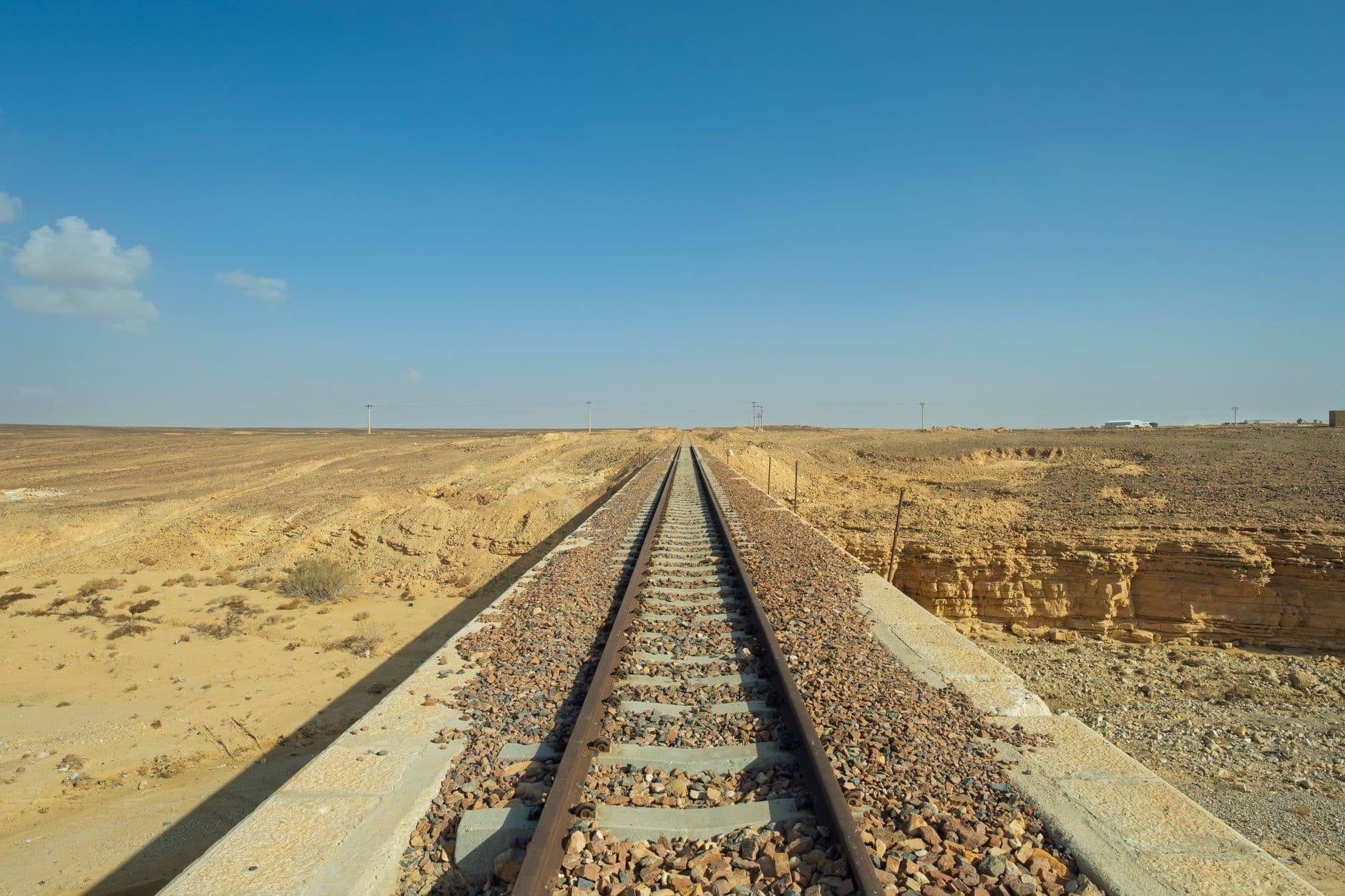

When a shipper asks our freight desk whether the Gulf can be crossed by rail yet, the honest 2026 answer is "halfway." The GCC Railway, the 2,177 kilometre line meant to join all six Gulf states into one network, passed the 50 percent completion mark this year according to Khaleej Times reporting, with full operation still targeted for 2030. That is not a finished corridor we can put on a quote sheet today, but it is no longer a render either. Real track is carrying real cargo across the UAE, the first cross-border link is under construction between the UAE and Oman, and Saudi Arabia has just opened five logistics corridors. For anyone moving freight in the Gulf, the planning question has changed from "if" to "what do I do before the through-line arrives."
GetTransport.com matches carriers across road, sea and rail in the Gulf every week, so this is the operational read on the GCC Railway rather than the brochure version. What follows is what the network actually is, where the steel currently ends, and what a cargo owner should set up now so the day Gulf rail becomes a line on a quote, the move is already half planned.
What the GCC Railway actually is
The plan is straightforward to describe and hard to build. A single standard-gauge railway, 1,435 millimetre track, running roughly 2,177 kilometres from Kuwait in the north, down through Saudi Arabia, with spurs to Bahrain across the causeway and to Qatar, then on through the UAE and finishing in Oman. The Gulf Cooperation Council has costed the full programme at around US$250 billion, and each of the six states builds and pays for the section inside its own borders, which is why the country lengths vary so much. The UAE carries about 684 kilometres, Saudi Arabia 663, Oman 306, Qatar 283, Kuwait 145 and Bahrain just 36.
The freight ambition behind those numbers is large. The network is projected to move roughly 201 million tonnes of cargo and serve 6 million passengers a year by 2030, rising toward 271 million tonnes by 2045. Whether those figures land on schedule is another matter, but the direction is clear. The Gulf is trying to take a meaningful share of its bulk and container freight off the road and out of pure coastal shipping, and onto a spine that runs the length of the peninsula.
Where the steel actually ends in 2026
This is the part that matters for planning, because "50 percent complete" hides a very uneven map. The progress is not spread evenly across six countries. It is concentrated in two national networks that are already real, plus one cross-border link being built between them.
The most advanced piece is Etihad Rail in the UAE. Its 900 kilometre freight network has been operational since 2023 and now runs across all seven emirates, linking four major ports and seven logistics hubs with a fleet of more than 1,000 wagons. It is not a pilot. During one nine-day stretch reported in 2026, Etihad Rail moved over 459,000 tonnes of cargo and roughly 7,900 containers. At full integration the UAE network is engineered for close to 60 million tonnes a year. If you are shipping inside the Emirates between Khalifa Port and an inland industrial city, rail is already a live option, not a future one.
The second real network is in Saudi Arabia, where Saudi Arabia Railways operates roughly 5,330 kilometres of track today, including a 2,750 kilometre northern line and the eastern freight line from Dammam port toward Riyadh. In 2026 SAR launched five new logistics corridors under the Vision 2030 transport strategy, connecting Gulf ports to the central and northern regions and out toward Jordan. Its northern freight line alone carries the bulk of the kingdom's rail tonnage, dominated by minerals such as phosphate and bauxite.
Hafeet Rail: the first border the train will cross
The single most important development for cross-border freight is Hafeet Rail, the joint venture between Etihad Rail, Oman Rail and Mubadala. It is the first integrated railway designed to connect two Gulf states directly, a 238 kilometre line running from Sohar Port in Oman to Abu Dhabi by way of Al Ain. The project is costed at around US$2.5 billion, of which roughly US$1.5 billion was raised as project finance debt from a consortium of 17 banks, making it the first cross-border rail financing of its kind in the GCC.
The engineering tells you this is a serious piece of infrastructure rather than a symbolic link. The route includes about 60 bridges, some standing up to 34 metres tall, and tunnels reaching 2.5 kilometres in length. Freight trains will run at up to 120 kilometres per hour, connecting five ports and several industrial zones along the way. As of the latest reporting it had passed 40 percent completion, with more than 27 million cubic metres of earthworks done. When Hafeet opens, the Gulf gets its first true international rail freight lane, the proof of concept the rest of the network is waiting on.
For a forwarder, the practical signal is this. The UAE-Oman pairing is where cross-border Gulf rail becomes bookable first, ahead of the full Kuwait-to-Oman spine. A shipper moving containers between Sohar and Abu Dhabi industrial zones should be watching Hafeet's commissioning the way Middle Corridor shippers watched the Caspian ports.
What cargo the network is built for
Gulf rail is, first and foremost, a freight project dressed up with passenger headlines. The cargo profile already running on Etihad Rail tells you exactly what the wider network is for: aggregates, sulphur, petrochemicals, construction materials, food commodities and containerised goods. This is bulk and industrial freight, the kind of high-volume, weight-heavy cargo where rail beats road decisively on cost per tonne over distance.
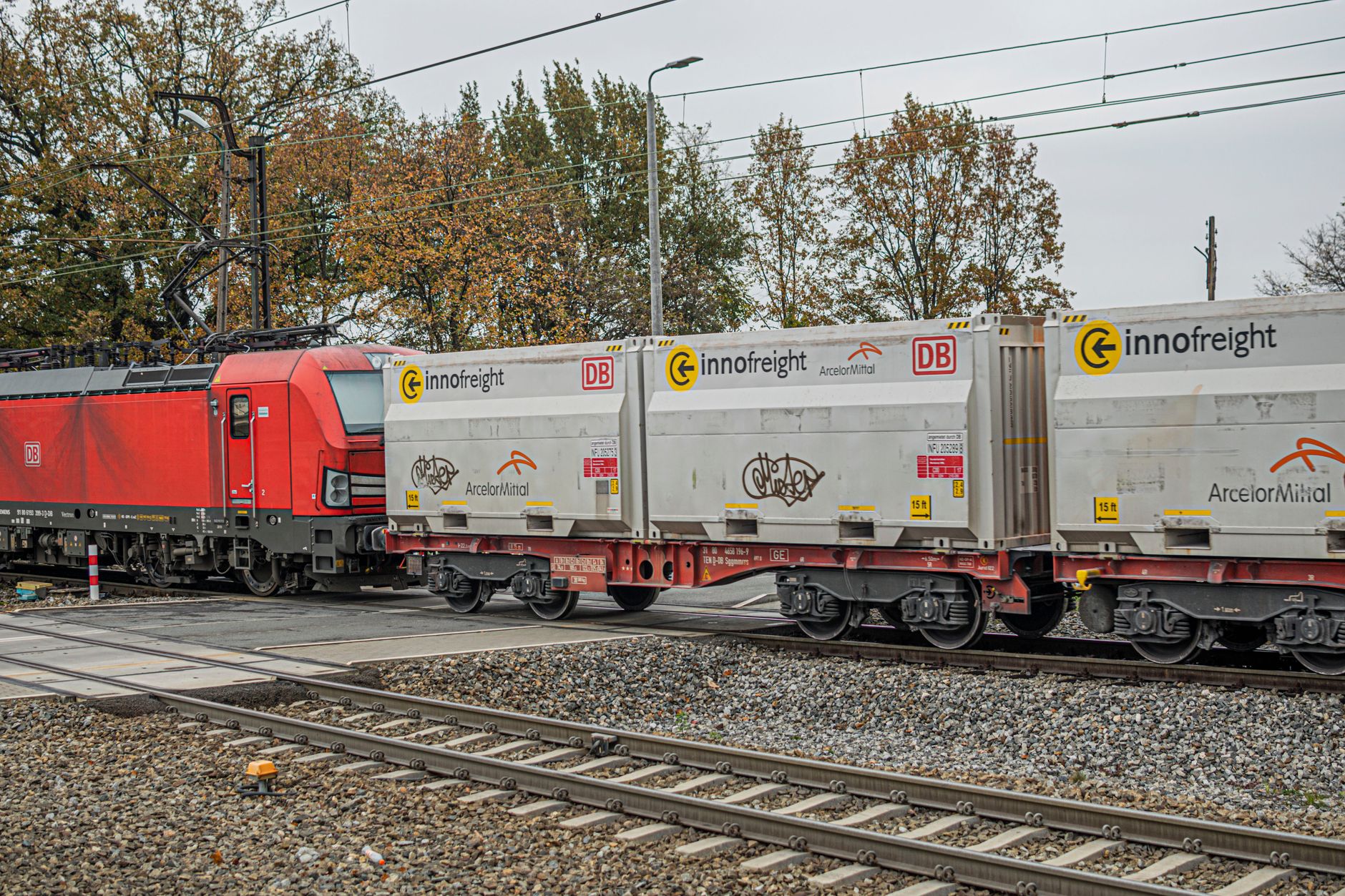
That shapes who benefits. If you move project cargo, building materials, chemicals or palletised consumer goods between Gulf industrial clusters, the network is being built around your flows. The other quiet driver is decarbonisation. Etihad Rail projects cutting more than 8 million tonnes of CO2 a year by 2050 by pulling freight off trucks, and that emissions math increasingly shows up in the tenders of multinational shippers who now score carriers on carbon.
The friction that decides the timeline: customs
Track is the visible problem. Paperwork is the real one. A train can be built faster than six sovereign customs regimes can be harmonised, and that gap is the single biggest risk to the 2030 date. Analysts at ORF Middle East have flagged that the network's supranational nature demands intense coordination on customs, technical standards and border control, and that this policy work has not kept pace with the construction.
What needs to exist is a joint customs system that lets cargo enter the bloc at a single point and move under one tariff regime, plus a shared digital platform and mutual recognition of standards. The GCC already operates a customs union and an integrated tariff framework, so this is not starting from zero. But rail-specific cross-border clearance, the ability to run a sealed train from Saudi Arabia into the UAE without unpicking it at the line, is the harmonisation that will make or break the corridor's value. A through-railway that still stops every train for a full national inspection at each border is just an expensive road.
This is familiar territory for anyone who imports into the region. The compliance layer in the Gulf is already demanding, and rail will sit on top of it rather than replace it. If you are bringing goods into Saudi Arabia, the same certification logic applies whether the cargo arrives by truck, ship or train, and our guide to the SABER and FASAH import certification system is the place to start. Across the wider Gulf, conformity goes well beyond one platform, which we cover in our breakdown of GCC conformity from ECAS to SASO to the G-Mark. Moving cargo and clearing it remain two different problems, and rail does nothing to merge them.
How it reshapes ports, zones and the lane math
The GCC Railway is not really competing with sea freight for the long haul out of the Gulf. Its job is the middle leg, the connective tissue between ports, free zones and industrial clusters that today moves almost entirely by truck. A container landing at Khalifa Port or Sohar can, increasingly, continue inland by rail instead of being trucked, which changes the cost curve for heavy and high-volume loads and eases pressure on congested road corridors.
It also raises the value of being sited near a railhead. Zones and industrial cities plugged directly into Etihad Rail or SAR will quote differently from ones that still need a final truck leg, and that distinction will start showing up in warehouse and land decisions. For shippers, the near-term play is to ask, on any Gulf domestic lane, whether a rail leg already exists. On many of them, it now does.
When Gulf rail becomes a real line on the quote
Here is the honest marketplace verdict for 2026. The full GCC Railway is not yet something we quote as a single through-service, because the spine between several countries is still under construction and the cross-border customs framework is unfinished. But the pieces are bookable in sequence. Inside the UAE, rail freight is already a genuine alternative to road for the right cargo. Inside Saudi Arabia, the SAR corridors are live. And the first international link, Hafeet between the UAE and Oman, is the one to watch, because it converts the whole project from a national-network story into a cross-border one.
So the realistic timeline a shipper should plan against is staged, not a single 2030 switch. Treat UAE and Saudi domestic rail as available now, the UAE-Oman cross-border leg as the next genuine option, and the full Kuwait-to-Oman through-corridor as a late-decade prospect that depends as much on customs harmonisation as on track. Plan the network the way it is actually arriving, in pieces, and you will be using Gulf rail well before the ribbon-cutting on the complete line.
A planning checklist for Gulf rail in 2026
- For any UAE-internal lane, ask whether an Etihad Rail leg already exists, because for bulk and containerised cargo it often does and it changes the cost per tonne.
- If you move freight inside Saudi Arabia, check the five new SAR logistics corridors before defaulting to road, especially Dammam to Riyadh and the Red Sea routes.
- Watch Hafeet Rail's commissioning if you ship between Oman and the UAE, since it will be the first bookable cross-border Gulf rail lane.
- Match the mode to the cargo, treating rail as the strong option for aggregates, chemicals, construction materials and palletised volume rather than urgent small parcels.
- Keep your import certification in order regardless of mode, because rail clears the same SABER, FASAH and conformity gates as road and sea.
- Factor proximity to a railhead into warehouse and zone decisions, as a final truck leg will increasingly be a quotable cost difference.
The headline of a 2,177 kilometre Gulf railway is the easy part of the story. The corridor will be won or lost in the customs harmonisation, the section-by-section commissioning and the question of which railhead your cargo actually sits next to, which is exactly where a marketplace view of who is moving what this quarter beats a map that shows one unbroken line by 2030.
Frequently asked questions
How long is the GCC Railway and when will it be finished?
The planned network runs about 2,177 kilometres across the six GCC states, from Kuwait in the north through Saudi Arabia, Bahrain, Qatar and the UAE to Oman, built to 1,435 millimetre standard gauge. As of 2026 it has passed roughly 50 percent completion according to Khaleej Times, with full operation targeted for 2030. That date depends heavily on customs and regulatory harmonisation across the six states, not just on laying track, so a staged rollout is the realistic expectation.
Can I already ship freight by rail in the Gulf?
Yes, within two national networks. Etihad Rail in the UAE has been running freight since 2023 across roughly 900 kilometres, linking four ports and seven logistics hubs, and Saudi Arabia Railways operates around 5,330 kilometres and launched five new logistics corridors in 2026. What is not yet available is a single through-service across all six countries, because the cross-border links and the unified customs framework are still being built.
What is Hafeet Rail and why does it matter?
Hafeet Rail is the 238 kilometre line being built between Sohar Port in Oman and Abu Dhabi, a joint venture of Etihad Rail, Oman Rail and Mubadala costed at about US$2.5 billion. It is the first integrated railway designed to connect two Gulf states directly, so it is the proof of concept for cross-border Gulf rail freight. When it opens, it becomes the first bookable international rail lane in the network, ahead of the full Kuwait-to-Oman spine.
What kind of cargo will the GCC Railway carry?
It is built primarily for bulk and industrial freight. The cargo already moving on Etihad Rail includes aggregates, sulphur, petrochemicals, construction materials, food commodities and containerised goods, and the wider network is projected to carry around 201 million tonnes a year by 2030. It is strongest for heavy, high-volume loads over distance between ports and industrial zones, and it is not intended to replace road or air for small, urgent or high-value parcels.