


Lineage is the largest cold storage operator in the world with 2,981,000,000 cubic feet of temperature-controlled space, ahead of Americold at 1,445,000,000. Between them those two companies hold 58.1 percent of all the capacity in the Global Cold Chain Alliance's 2026 Top 25, a list whose members together operate 7.76 billion cubic feet, or 219.7 million cubic metres. Getting into the top 25 at all now requires 40 million cubic feet.
Those numbers describe an industry. They do not tell you where to store a pallet of frozen shrimp, and I have watched shippers pick the biggest name on the list only to discover that the nearest site to their port of entry belonged to somebody ranked fifteenth. Capacity is a supplier-side measure. What follows is the ranking, and then the metrics that actually decide a cold chain.
The largest cold storage operators, ranked
| # | Operator | Capacity | Footprint | Distinguishing feature |
|---|---|---|---|---|
| 1 | Lineage | 2.98 bn cu ft | Global | Largest network, heavy build pipeline |
| 2 | Americold | 1.45 bn cu ft | Global | Retail and food-producer integration |
| 3 | NewCold | Over 2 m pallet positions | 26 sites, three continents | Fully automated high-bay model |
| 4 | US Cold Storage | Top-five by GCCA capacity | United States | Producer-adjacent US network |
| 5 | Emergent Cold LatAm | Top-five by GCCA capacity | Latin America | Largest temperature-controlled network in the region |
The GCCA published this list on 28 April 2026. Note that the operators report in different units: the two leaders in cubic feet, the automated specialists in pallet positions, which is the first hint that a single ranking cannot answer a storage question.
Two companies, 58 percent of the capacity
A market where the top two members of a 25-company list hold 58.1 percent between them is unusually concentrated for warehousing. It is the product of a decade of acquisitions, and it has a specific consequence for buyers: on a national tender in North America you are frequently choosing between two networks and a set of regional specialists, not running an open field.
Lineage's build pipeline shows the concentration continuing. The company has around 24 facilities under construction or ramping up, representing more than a billion dollars of previously invested capital. That is a scale of forward commitment nobody outside the top two can match, and it lands in a market the operator itself expects to see industry capacity decline in.
Scale has not protected either leader from the cycle. In April 2026 Barclays downgraded Lineage and Americold on the same day, citing structural problems in the sector rather than company-specific missteps, which is a useful signal for a buyer: the pressure in this market is on the landlords, not on the tenants.
Cubic feet is the wrong unit for a shipper
Volume is how operators describe themselves because it is how they finance themselves. It is a poor proxy for what your cargo needs. Four measures matter more.
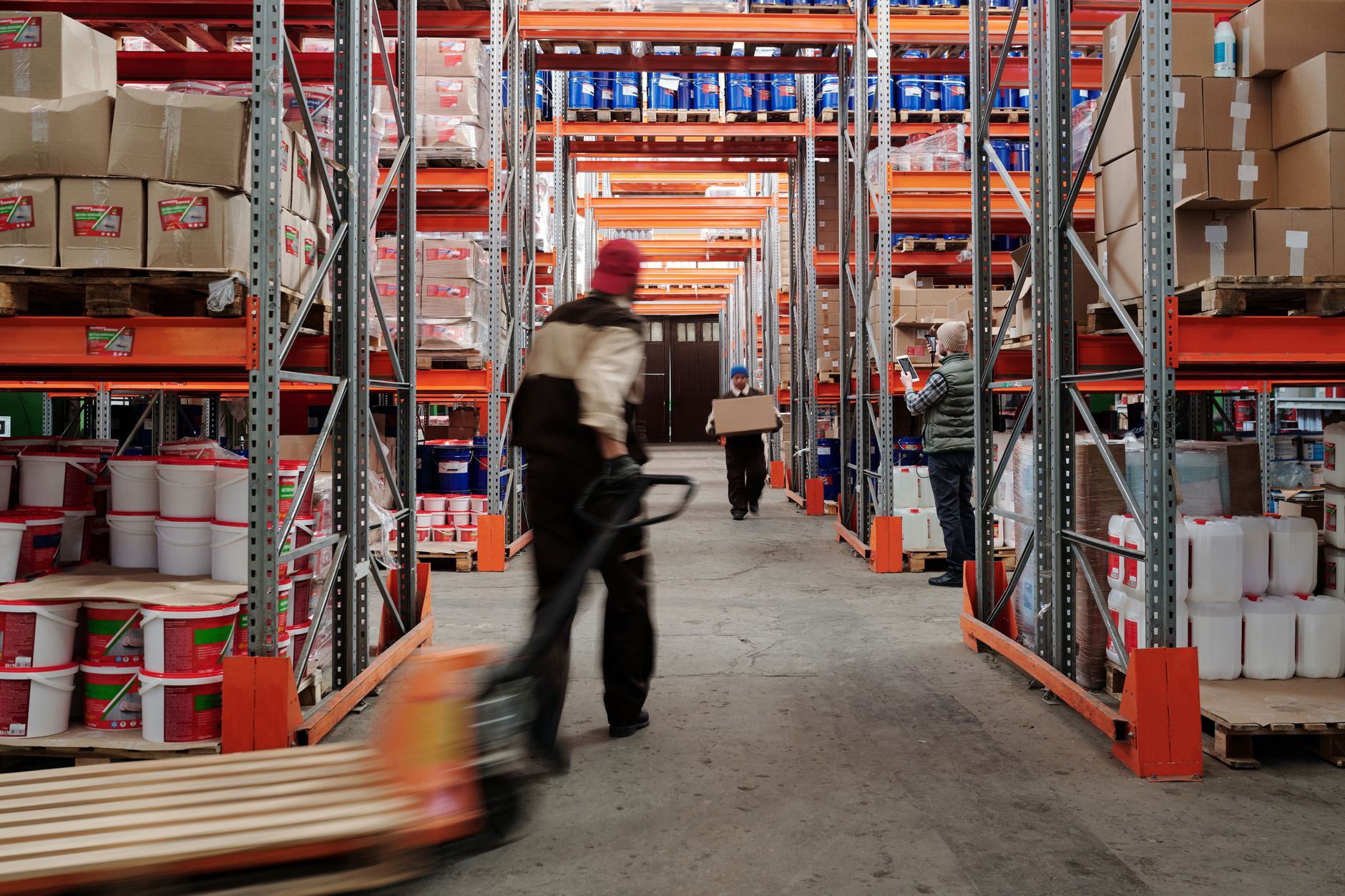
Pallet positions come first, because that is what you actually rent. A high-bay automated building holds far more pallets per cubic foot than a conventional racked freezer, so two sites of identical volume can differ substantially in how many pallets they take. NewCold's model illustrates the point: 26 automated warehouses carrying more than 2 million pallet positions between them.
Temperature band comes second. Frozen at −25 °C, chilled at 2 to 4 °C and controlled ambient are different assets with different energy costs, and a site's headline capacity rarely tells you the split. Third is throughput: a distribution-oriented site turning stock weekly is a different business from a long-hold freezer for seasonal catch or harvest, and pricing follows the difference. Fourth is location relative to your inbound, which for imported perishables means proximity to the port and to a plug for the reefer while it waits.
Automation is changing what a big site means
The automated high-bay freezer is the most consequential development in this sector. Buildings go taller and narrower, forklifts largely disappear from the cold space, and the energy cost per pallet falls because you are refrigerating less air per unit stored. NewCold's McDonough campus in the United States shows the pattern: a first North American ambient facility with 85,000 pallet positions completed in 2024, and a frozen expansion adding 125,000 pallet positions in 2026.
For a shipper the practical differences are mixed. Automated sites are excellent at high-volume, uniform, palletised flows and less forgiving of irregular loads, mixed pallets and last-minute manual picking. Ask which of your SKUs the building was designed for before assuming automation is an unqualified upgrade.
Where the capacity is actually growing
The six-year growth figures are more revealing than the ranking. Since 2021 the Top 25's capacity has grown 41.2 percent overall, but Europe has grown 90 percent, Latin America 67.2 percent and North America only 25.1 percent. In absolute terms North America still dominates with 5.26 billion cubic feet against Europe's 1.6 billion and Latin America's 634.2 million.
Latin America's growth is the one to watch if you import perishables. Emergent Cold LatAm has been adding capacity across Mexico, Colombia, Guatemala, Chile, Peru and Uruguay, including a Guadalajara hub with 12,000 pallet positions across 81,000 cubic metres and an Apodaca expansion that added 3,900 positions to reach 17,500 pallets. In Peru it doubled capacity by acquiring Frialsa, and in Colombia it runs seven warehouses with 57,984 pallet positions and a further site planned for Cali. That build-out sits directly behind the export gateways we ranked in the busiest ports in Latin America, and it is what makes the region's fruit and protein exports schedulable rather than opportunistic.
The oversupply cycle nobody advertises
Here is the part that does not appear in a capacity ranking. Cold storage went through a heavy building cycle, and the market has been working off the resulting oversupply. Lineage's own reading of 2021 to 2025 is that new capacity grew about 14.5 percent against demand growth near 5 percent, leaving the market roughly 10 percent oversupplied, with US vacancy at a 20-year high and the surplus expected to persist into 2027 at least. That is why the leading operator can simultaneously report a billion dollars of projects in progress and expect industry capacity to decline: some of what was built is being absorbed, repurposed or taken out.
An oversupplied market is a buyer's market, and it is the right moment to renegotiate. Storage rates, handling-in and handling-out charges, and the free-time allowance before storage starts are all more negotiable when vacancy is elevated than they were three years ago. The mistake is to treat the published capacity growth as a sign that space will be cheap everywhere, because the surplus is regional and highly specific to temperature band.
How to choose an operator
- Match unit to need. Get quotes in pallet positions and pallet-days, not cubic feet, and confirm the temperature band each position sits in.
- Count the network, not the total. A regional specialist with three sites where your cargo lands beats a global network whose nearest freezer is 400 km inland.
- Ask about blast capacity. Freezing incoming product is a different service from holding it frozen, and blast tunnels are the constraint that shows up in harvest season.
- Check the plug count. Reefer plugs at the dock decide whether a container can wait without a genset, and how the yard prices that wait.
- Read the handling tariff. Cold storage economics live in handling and value-added services more than in the storage line itself.
- Confirm the compliance paperwork. Food-safety certification, audit history and traceability records travel with the cargo, and a gap here fails an inspection later.
The comparison with dry warehousing is instructive: the biggest dry sheds in the world are ranked by floor area, as we set out in the biggest warehouses, because in dry storage area is a fair proxy for capability. In cold storage it is not, and that difference is the whole argument of this article. If your flow starts in a reefer container, the upstream half of the problem is equipment rather than buildings, which we covered in reefer container capacity and rates, and the domestic leg is set out in our guide to temperature-controlled freight in the USA.
Frequently asked questions
Who is the largest cold storage company in the world?
Lineage, with 2,981,000,000 cubic feet of temperature-controlled space in the GCCA's 2026 Global Top 25. Americold is second at 1,445,000,000 cubic feet, and the two together hold 58.1 percent of the list's capacity.
How much cold storage capacity exists worldwide?
The GCCA Global Top 25 operate 7.76 billion cubic feet, or 219.7 million cubic metres, up 6.3 percent year on year and 41.2 percent since 2021. That covers the largest members rather than the entire market, and the threshold for inclusion is now 40 million cubic feet.
Is automated cold storage always better?
For high-volume uniform palletised flows, generally yes: more pallets per cubic foot and lower energy cost per pallet. For mixed pallets, irregular case picking and frequent manual intervention, a conventional racked freezer is often the better fit.
Which region is adding cold storage capacity fastest?
Europe, up 90 percent over six years, followed by Latin America at 67.2 percent. North America grew 25.1 percent over the same period but remains much the largest in absolute terms at 5.26 billion cubic feet.
Capacity figures are from the Global Cold Chain Alliance's 2026 Top 25 lists, which cover member companies and are self-reported, so they are a ranking of the largest participants rather than a census of the market. Operators report in cubic feet, cubic metres or pallet positions depending on their model, and those units are not directly convertible without knowing rack height and configuration.