


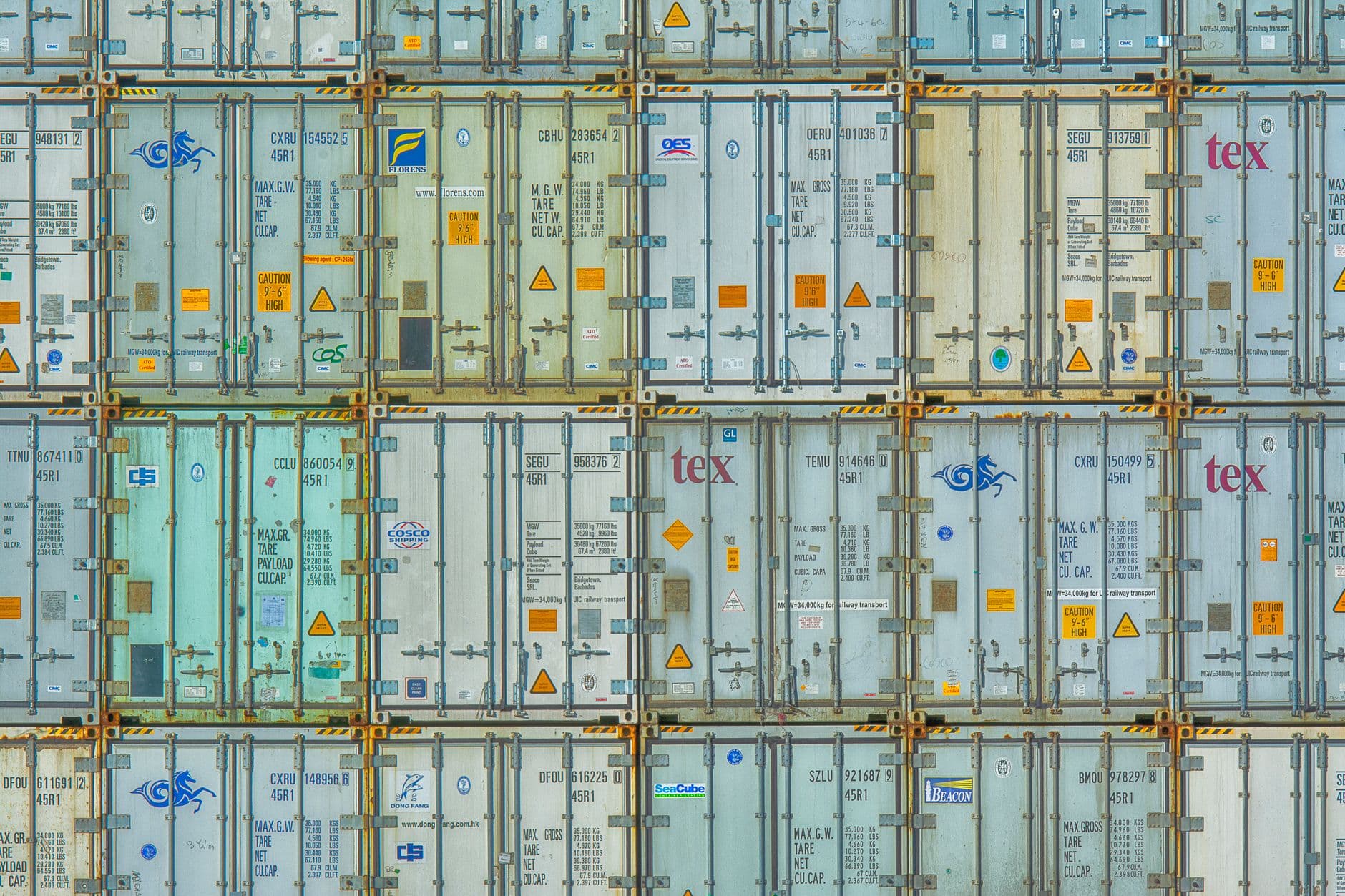

Every year our freight desk sees the same reefer squeeze arrive before the shippers who need it most have finished budgeting for it. A pharma client or a produce exporter calls in March asking for a July slot at a rate they saw quoted for a dry container, and we have to explain, again, that reefer capacity does not work like dry-box capacity. The global reefer fleet is a smaller, specialized pool, roughly 3.87 million TEU as of 2024 according to industry fleet tracking, against a world container fleet many times that size, and Drewry's own forecasting has the reefer fleet breaching 4 million TEU around 2026, equivalent to about 2 million 40-foot units. That pool chases a demand curve that spikes hard around specific harvests and holidays, and the plug is often a bigger constraint than the box.
GetTransport.com matches temperature-controlled cargo with carriers, so this is the operational read on the reefer market: what the real numbers say about capacity and rates, what actually moves availability and price, and how the shippers we work with plan around it instead of getting caught by it.
The fleet and trade numbers behind the squeeze
Start with scale. CIMC, the largest reefer box maker, sold about 92,000 TEU of refrigerated containers in the first half of 2025 alone, up 105.82% year on year, and it accounts for roughly 40.5% of global reefer container output, supplying fleets operated by Maersk, COSCO, and other major lines. Output has been running historically high on strong demand and tight utilization. When one manufacturer's factory schedule slips, a meaningful share of next year's reefer supply slips with it.
On the trade side, Drewry has forecast global seaborne reefer trade at around 156 million tonnes, growing near 3.7% annually after two consecutive years of decline (down 1.5% and then 0.7%). That swing from shrinking to growing trade, layered on a fleet that only grows a few percentage points a year, is what produces the tight sailings our desk sees every peak season. A standard 40-foot high-cube reefer holds about 66.6 cubic meters of usable space, roughly 21 standard pallets or 25 Euro-pallets, and up to 28,350 kg, so the physical unit has not changed much in a decade. What has changed is how many harvests are trying to move through it at once.
Plug capacity is the part shippers underestimate most. Across the top ten reefer container operators, the aggregate deployed fleet runs about 4.33 million TEU across 767 ships carrying roughly 557,750 reefer plugs in relevant trades, typically rated 16 to 63 amps depending on the vessel's age and design. A fully loaded reefer draws around 6 kW at steady state and can spike to 15 kW during pull-down, when it is first cooling a warm load to setpoint. That plug-to-vessel ratio is fixed at build time. A carrier cannot bolt on extra sockets mid-voyage the way it can, in theory, squeeze a few more dry boxes into a restack, and when a sailing is "full" for reefer purposes it can still have dry capacity to sell, since the two pools are not interchangeable.
Why reefer capacity behaves differently from dry capacity
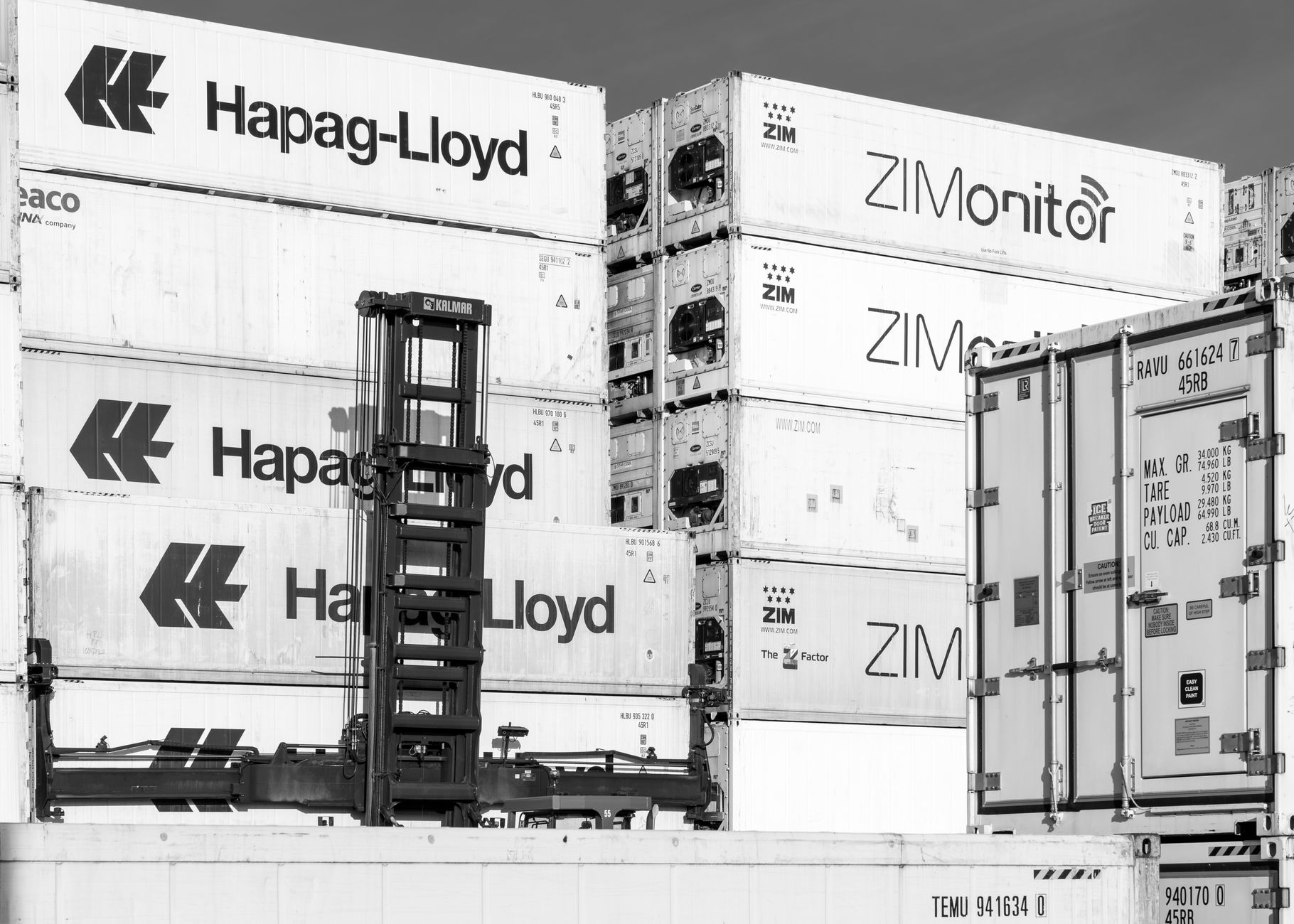
The same logic applies on land and at the terminal. Ports have a finite number of reefer racks (plugged yard positions for stacking loaded reefers awaiting vessel loading or inland pickup), and depots have a finite number of pre-trip inspection (PTI) bays and gensets (generator sets that power a reefer on a chassis when it is not plugged into fixed yard power). A completed PTI is typically valid for 30 days on many carrier programs, though some lines extend validity up to 180 days depending on their internal standard, and during peak weeks the bottleneck can shift from "is there a physical container" to "is there a PTI bay free to test it before the cutoff."
The seasonal calendar that actually sets the peaks
Reefer demand is agricultural before it is anything else, and the 2025/26 Southern Hemisphere season gave our desk a clean illustration of just how sharp these swings can be.
- Chilean cherries, December through early February. The 2025/26 season shipped roughly 561,130 tonnes (about 112 million boxes), with more than 90% destined for China, and ASOEX put the China-bound volume near 650 million kilograms, up about 6% year on year. The fastest scheduled sea services now run 21 to 22 days direct from Chilean ports to China, versus 20 to 40 days on standard non-express sea routings, which is why carriers run dedicated "cherry express" strings for exactly this window and nothing else.
- South African citrus, May through September. The 2025 season was the largest on record: 203.4 million cartons, about 3.05 million tonnes, up 22% year on year and the first time South African citrus exports topped 3 million tonnes. A large share of that volume moves to the EU, and concentrating a record crop into a five-month window is what pushes European citrus-lane reefer rates well above the annual average.
- Peruvian avocados and blueberries, roughly April through October. Peru's Hass avocado exports jumped again in 2025, with industry estimates putting the season well above 700,000 tonnes after around 523,000 tonnes in 2024, and blueberry exports were tracking toward roughly 400,000 tonnes for the 2025/26 season on continued double-digit growth. October is the peak overlap month for both crops, which is also when Peru's west-coast ports compete hardest for reefer slots with Chilean grape and stone fruit volumes moving on adjacent services.
Because harvest timing shifts year to year with weather, not the calendar quarter carriers plan capacity around, these peaks are predictable in shape but not fixed in date. Shippers who book against last year's calendar and miss the actual harvest window by two weeks can find themselves negotiating for space in the worst part of the peak instead of just ahead of it. Given the volume growth in these three lanes alone in the 2025/26 season, that miscalculation is more costly than it was even two years ago.
Positioning imbalances and the Red Sea effect on transit
Reefers are expensive, specialized assets, and carriers do not want them sitting empty or moving empty any longer than necessary. Reefer units tend to be positioned where the carrier expects export demand, which is often not where the next inbound perishable shipment needs one. Unlike dry-container imbalances, which carriers can partially smooth out with leasing and interchange, reefer fleets are smaller and costlier to reposition empty, so imbalances persist longer and show up as availability problems rather than just cost problems.
Layered on top of that since 2024 has been the Red Sea diversion. With most container traffic rerouted around the Cape of Good Hope instead of the Suez Canal, Asia-Europe transit times have extended by roughly 10 to 14 days on average, and by as much as 25 days on some strings, with industry estimates putting the associated freight premium at 25% to 35% above pre-diversion levels. For reefer cargo, every extra day at sea is a day the setpoint has to hold and any equipment fault has a longer window to turn into a spoiled load. A banana held at the standard +13.3°C setpoint has a useful transit window of about 28 days in regular packaging, or up to roughly 40 days in modified-atmosphere "Banavac"-style packaging; add 10 to 14 unplanned days to a route already running close to that ceiling and the margin for error disappears.
How reefer rates and surcharges behave differently from dry
Dry container rates move mostly on a supply-demand curve tied to blanked sailings, alliance capacity decisions, and general trade volume. Reefer rates respond to those same forces but add a layer that dry rates do not carry, and rate benchmarking platforms like Xeneta typically track dry and reefer rates as separate line items for exactly this reason.
- A base reefer rate premium exists structurally. The equipment costs more to own, maintain, and repair than a dry box, and requires monitoring and power throughout the voyage. This premium persists in stable markets, not just tight ones, so a shipper should expect a gap versus dry rather than treating it as gouging.
- Genset and PTI fees are typically itemized separately. A PTI cycle checks the compressor, fans, sensors, and controller logic before the unit is released for loading, and a failed PTI can pull a unit out of the pool for repair with little notice during a peak week when every bay is already booked.
- Peak season surcharges on reefer lanes track the harvest and holiday calendar, not the general peak season. A carrier's dry-cargo surcharge calendar, often tied to pre-holiday retail restocking in the autumn, can be entirely out of sync with the reefer peak on the same lane, whether that is South African citrus in June or Chilean cherries in December.
- Detention and demurrage exposure is higher and less forgiving. A delayed reefer sitting past free time is not just a fee risk, it is a cargo-loss risk if power or monitoring lapses, so carriers and terminals enforce reefer detention more tightly than dry.
Booking tactics that actually move the outcome
Given plug scarcity is structural and the 2025/26 season showed double-digit volume growth on three major Southern Hemisphere lanes at once, timing is the highest-leverage tactic, not negotiating after the fact. Here is what consistently helps the shippers we work with.
Book against the harvest or demand calendar, not the shipping calendar
If a lane has a known seasonal peak, such as the May-to-September South African citrus window or the December-to-February Chilean cherry window, the booking should go in as soon as volumes and dates are reasonably firm, ideally four to six weeks before the harvest ramps, not on a standard one-to-two-week dry-box lead time. Carriers allocate reefer plugs on their sailings well ahead of the rush precisely because they know the plug count will not flex once the peak hits.
Confirm pre-trip inspection and genset availability, not just the box
A confirmed reefer booking that lacks a confirmed PTI slot or genset can still slip. Ask the carrier or forwarder for written confirmation of the PTI validity window on the assigned unit (30 days is the common baseline, though it varies by line up to 180 days) and for genset availability on any wheeled leg, separate from the container booking itself.
Match the setpoint and atmosphere to the cargo, and confirm it on paper
Reefer units typically operate across a wide range: deep-frozen cargo around -18°C (with some pharma products specified as cold as -25°C), chilled pharmaceuticals in the +2°C to +8°C band, and produce like bananas at +13.3°C. Many reefers also support controlled or modified atmosphere settings that slow ripening on long voyages, which is what allows a banana shipment to stretch from a 28-day baseline toward 40 days when needed. Getting the setpoint, humidity, and ventilation percentage confirmed in writing before loading prevents disputes later about whether a temperature excursion was equipment failure or a wrong instruction.
Plan transit time with a buffer, especially across transshipment or a Cape of Good Hope routing
Reefer transit times on major perishable lanes are often a narrow band for direct services, such as the 21-to-22-day Chile-to-China cherry express strings, but transshipment adds handling risk, and any routing diverted around the Cape of Good Hope carries roughly 10 to 14 extra days versus the pre-diversion Suez routing. Shippers on affected lanes should build that buffer into their cargo's shelf-life math before booking, not discover it mid-voyage.
What does not move reefer availability
It is worth being explicit about what does not help, because we see shippers spend effort here that would be better spent on timing. Paying a rush premium after a peak has already started rarely conjures plugs that do not exist on a given sailing; it mostly reshuffles who gets the existing allocation among the roughly 557,750 plugs spread across the major operators' fleets. Switching forwarders late in the process does not create carrier-side plug capacity either, since the constraint sits with the vessel and terminal, not the intermediary. Requesting a non-standard setpoint or atmosphere configuration at the last minute can also backfire, since not every reefer on a sailing supports every configuration, and doing so shrinks the pool of compatible units right when you need the largest possible pool.
Cargo terms matter here too. Being clear on who owns the transport leg and its risk at each stage affects who has standing to chase down PTI and plug confirmations before a delay becomes a loss. Our related guide on Incoterms DDP vs DAP and who pays the tariff covers that responsibility split, a useful companion read when a reefer shipment also carries tariff exposure.
Frequently asked questions
How far in advance should I book reefer capacity for a seasonal peak?
For a lane with a known harvest peak, such as South African citrus running May through September or Chilean cherries running December through early February, we generally advise booking four to six weeks ahead of the harvest ramp, well before the standard one-to-two-week dry-box lead time. The 2025/26 season saw South African citrus volumes up 22% and Peruvian avocado volumes up 38% year on year, so lanes that were merely tight in prior years are tighter now, and the total plug count on any sailing is fixed at the vessel's build regardless of how much you are willing to pay once the peak starts.
Why is my reefer quote so much higher than a dry container quote on the same lane?
Part of the gap is a structural premium reflecting the higher cost of owning, maintaining, and monitoring equipment that draws roughly 6 kW at steady state and up to 15 kW during pull-down. Quotes also typically itemize PTI and genset fees separately, since those are tied to the specific move rather than to general freight rates, and if the quote lands inside a seasonal peak window, a harvest-linked surcharge can add another layer that would not show up on a general dry-cargo rate index.
How has the Red Sea diversion affected reefer cargo specifically?
Vessels rerouted around the Cape of Good Hope are running roughly 10 to 14 days longer on Asia-Europe strings, and up to 25 days longer on some routings, with freight premiums estimated at 25% to 35% above pre-diversion levels. A commodity like bananas, held at +13.3°C with a roughly 28-day transit ceiling in standard packaging, has far less margin to absorb an unplanned two-week extension, which is why shippers on affected lanes should rebuild their transit buffer and confirm PTI and monitoring before booking, not after a delay is already underway.
Can controlled atmosphere settings extend how far I can ship perishable cargo?
Yes, within limits tied to the commodity. Controlled or modified atmosphere settings manage oxygen and carbon dioxide levels inside the container to slow ripening, which is why banana shipments in specialized packaging can stretch from a roughly 28-day standard window toward 40 days when needed. Not every reefer unit or carrier service supports every atmosphere configuration, so this needs to be confirmed as part of the booking rather than assumed.