


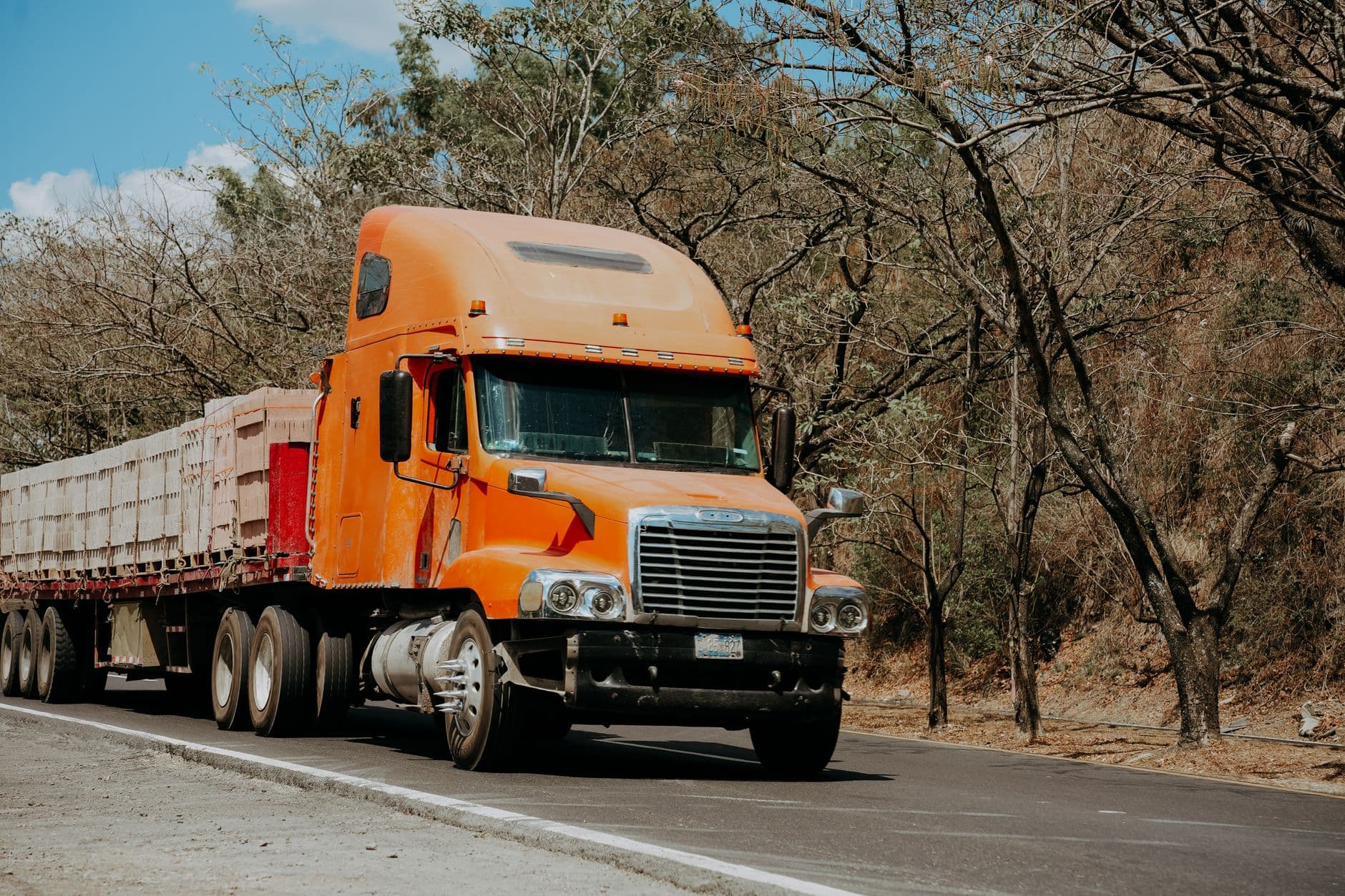

More of the shippers we work with now arrive with a carbon-reporting requirement attached to the RFP. It used to be a line item buried in a sustainability appendix. In 2026 it is often the first question on the call: can you give us emissions data by transport chain element, not just a per-shipment average pulled from a spreadsheet. That question has a standard answer now, and the answer is ISO 14083:2023.
GetTransport.com moves freight across road, sea and rail, so this is the operational read on transport emissions accounting, not a consultancy pitch. We are not auditors and we do not issue certifications. What follows is how the standard actually works, where it overlaps with the GLEC Framework, and what a shipper needs to ask a carrier before trusting a number on an invoice.
What ISO 14083:2023 actually is
ISO 14083:2023, titled "Greenhouse gases: Quantification and reporting of greenhouse gas emissions arising from transport chain operations," was published in 2023. It is the first ISO standard that gives a single, mode-agnostic method for calculating and reporting the greenhouse gas emissions of a freight or passenger movement across road, rail, sea, inland waterway, air, pipeline, and the hubs that connect them. Before it existed, the closest thing to a common method was EN 16258, a European standard from 2012 that covered energy consumption and GHG emissions in transport services but had gaps and inconsistent adoption outside the EU. According to ISO 14083:2023, the standard replaces that patchwork with one calculation logic that a logistics buyer in Rotterdam and a logistics buyer in Singapore can both point to when they ask a carrier for a number.
The standard did not appear out of nowhere. It formalizes work that the Smart Freight Centre had already been running through the Global Logistics Emissions Council, known as GLEC. The GLEC Framework, first published in 2016 and updated multiple times since, was the de facto industry method for logistics emissions accounting before ISO picked it up. Smart Freight Centre released GLEC Framework version 3.0 in September 2023, explicitly aligned to ISO 14083, and has continued to update it since, with version 3.2 following in October 2025 and broadening the method to cover air-pollutant emissions such as NOx, SOx, particulate matter and black carbon alongside greenhouse gases. The practical result: GLEC is now the accessible, worked-example companion to the more formal ISO text, and most calculation tools on the market describe themselves as "ISO 14083 / GLEC compliant" as a single claim rather than two separate ones.
The misconception we hear most: tailpipe is not enough
The misconception we hear most on calls with shippers is that a tailpipe number is enough: liters of diesel burned times an emissions factor, done. ISO 14083 does not work that way. It requires well-to-wheel (WTW) accounting, which is the tank-to-wheel (TTW) emissions from combustion plus the well-to-tank (WTT) emissions from producing, refining and delivering the fuel in the first place. A truck burning diesel is not just a tailpipe. Extracting crude, refining it into diesel, and trucking that diesel to the fuel station all carry an emissions cost before the truck ever moves a container. Under the GLEC Framework, WTT emissions are typically a meaningful share of the total for fossil fuels, and for electricity, WTT can be almost the entire story depending on the grid mix behind the plug. Leaving WTT out understates the footprint of fossil-fuel modes and, just as importantly, understates the real advantage of switching to lower-carbon energy, because it hides the difference between grid electricity and, say, renewable diesel.
How the calculation is actually structured
ISO 14083 breaks a shipment's journey into transport chain elements (TCEs). Each TCE is either a transport operation, which is movement, or a hub operation, which is everything that happens while the cargo is standing still: a port terminal, a rail yard, a cross-dock, an airport apron. Each transport operation is assigned a transport operation category (TOC), and each hub operation is assigned a hub operation category (HOC). These categories exist because emissions intensity varies enormously by mode and by hub type, and TOCs/HOCs give the standard consistent buckets to attach emissions intensity factors to. An intensity factor, expressed as grams of CO2-equivalent per tonne-kilometre for line-haul or per tonne of throughput for a hub, gets multiplied against the activity data for that leg. Chain the TCEs together and you get a chain-level total instead of a single blended average.
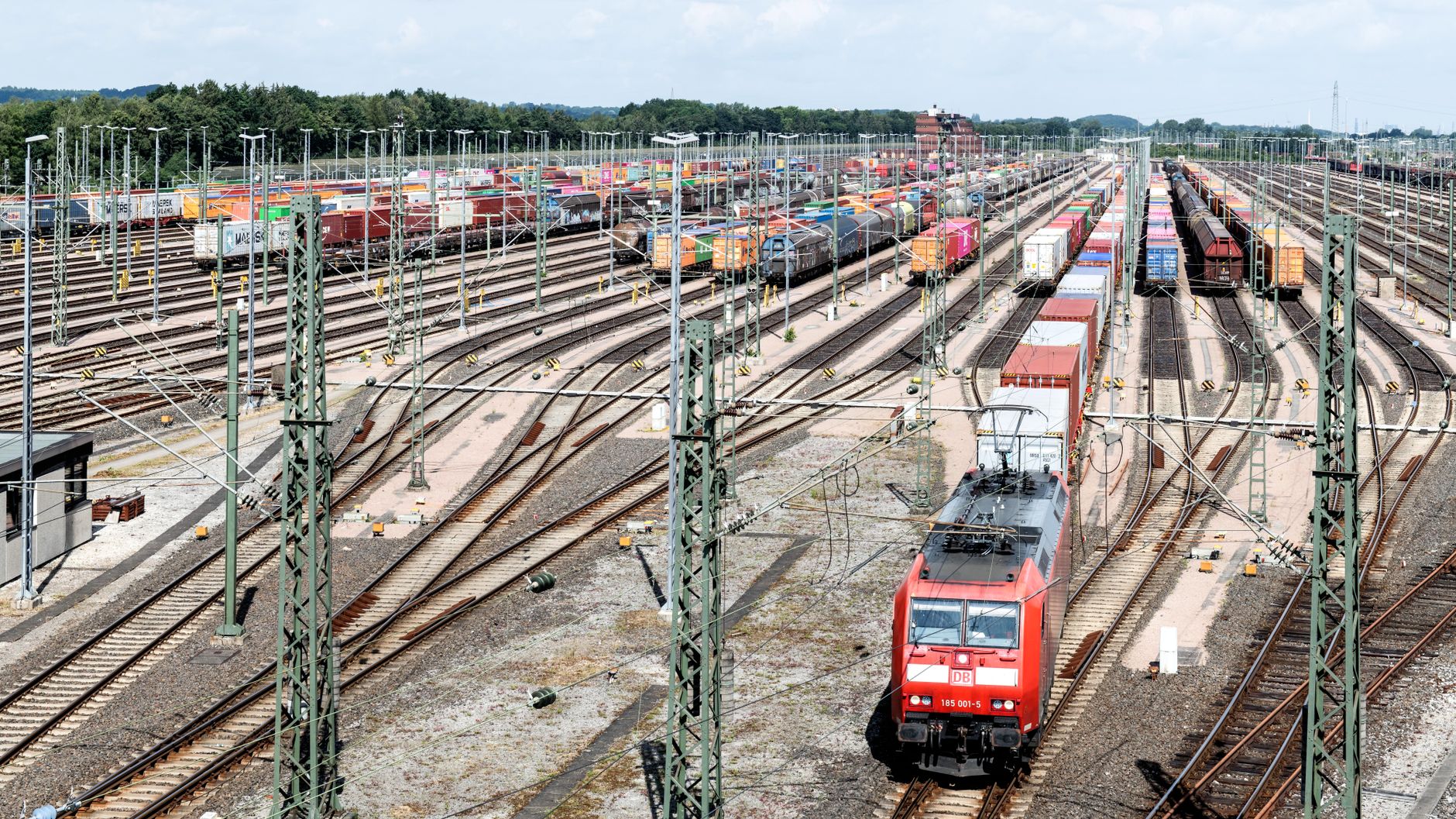
This matters in practice because a single door-to-door shipment might touch four or five TCEs: a drayage truck, a port hub, an ocean vessel, a rail hub, and a final-mile truck. Averaging that into one generic "ocean freight" emissions factor throws away information a shipper's Scope 3 team actually needs, especially once they start comparing routings or carriers on emissions intensity rather than price alone.
Primary data first, defaults as the fallback
ISO 14083 sets a data hierarchy, and it is one of the more operationally relevant parts of the standard for anyone actually filling in a carbon report. Primary data, meaning measured fuel consumption, actual load factors and real activity data from a specific operation, sits at the top. Where primary data is not available, the standard allows modeled data or default values, generally sourced from recognized databases, but it is explicit that defaults are a fallback, not a preference. According to ISO 14083:2023, the standard even distinguishes between different ways of sourcing a value: direct measurement, calculation from a model, selection from a default value database, and values collected from a contracted operator's own reporting. A shipper reading a carbon report should be asking which of those four sits behind each number, because "we used the ISO 14083 default" and "we measured our actual fuel burn on this lane" are very different claims wearing the same footnote.
What the standard does not do is certify anyone. ISO 14083 is a quantification and reporting method, not a label you slap on a shipment and not a verification scheme. There is no "ISO 14083 certified carrier" in the way there is an ISO 9001 certified factory. A carrier can calculate emissions using the ISO 14083 method and still get the inputs wrong, use stale default factors, or skip a transport chain element. The standard tells you how to calculate; it does not audit whether you did it honestly. That is left to the assurance processes wrapped around corporate sustainability reporting, which is exactly where CSRD comes in.
Why regulators and customers both want this now
Three separate pressures are converging on the same shippers at the same time, which is why 2026 feels like the year this stopped being optional.
- CSRD reporting. The EU's Corporate Sustainability Reporting Directive pulls thousands of companies into detailed sustainability disclosure, and transport emissions are a routine line item under the value chain sections of the European Sustainability Reporting Standards. A standardized transport chain method makes that disclosure defensible instead of improvised.
- GHG Protocol Scope 3, categories 4 and 9. Category 4 covers upstream transportation and distribution, meaning inbound freight a company pays for but does not operate itself. Category 9 covers downstream transportation and distribution, meaning outbound freight to customers after the point of sale. Both categories rely on exactly the kind of activity data and emissions factors ISO 14083 is built to produce, and large shippers are increasingly asking carriers to report in that structure rather than handing over a generic annual average.
- Customer and RFP pressure. Retailers and manufacturers with their own net-zero commitments are pushing emissions reporting requirements down into their carrier and freight forwarder contracts. A logistics buyer answering to their own board wants a supplier that can produce transport-chain-level data, not a shrug.
There is also a maritime-specific angle worth flagging separately, because shippers routing ocean freight sometimes conflate the two. FuelEU Maritime, which entered into force with compliance obligations building from 2025 onward, sets fuel greenhouse gas intensity limits for ships calling at EU ports, and it works alongside the EU Emissions Trading System's coverage of shipping. That is a regulatory scheme with penalties attached to a vessel's fuel mix. ISO 14083 is a measurement method that can feed the data those schemes need, but it is not itself a compliance regime with fines. Confusing "we report under ISO 14083" with "we are FuelEU compliant" is a mistake we've seen shippers make when a carrier's sustainability deck moves fast through both topics on the same slide.
Carbon border measures create a related but distinct pressure. If your supply chain also touches carbon-intensive imports into the EU, it's worth reading our CBAM 2026 guide for importers alongside this one. CBAM prices embedded emissions in specific imported goods; ISO 14083 measures the emissions of moving goods. They are adjacent reporting obligations, not the same one, and a shipper dealing with both needs data pipelines that can feed each without duplicating work.
What to actually ask a carrier
A vendor-neutral checklist, from a freight desk perspective rather than a software vendor's:
- Ask whether the reported figure is well-to-wheel or tank-to-wheel only. If a quote only mentions combustion emissions, the well-to-tank slice is missing.
- Ask which transport chain elements are included. A trucking-only number for an intermodal move that also used a rail hub and a port terminal is incomplete.
- Ask whether the activity data behind the number is primary (your actual shipment) or a default value pulled from a database. Both are legitimate under ISO 14083, but they carry different confidence levels for your own Scope 3 category 4 or 9 disclosure.
- Ask which version of the GLEC Framework or which default emissions factor database the calculation used, since factors get revised as fuel production data improves.
None of this requires a shipper to become a carbon accountant. It requires knowing that "we calculate emissions" is not a complete sentence anymore, and that the standard now exists to make the rest of that sentence checkable.
Frequently asked questions
Is ISO 14083 mandatory for shippers?
Not directly. ISO 14083 itself is a voluntary quantification standard, not a law. It becomes practically necessary when it feeds into something that is mandatory or contractually required, such as CSRD sustainability disclosures, a customer's Scope 3 reporting request, or a carrier's own regulatory obligations under schemes like FuelEU Maritime. That link tightened in November 2025, when the EU Parliament and Council agreed that companies calculating transport-service emissions on a voluntary basis must use a single EU methodology based on ISO 14083:2023, which turns the standard into the default reference across the bloc. Most shippers encounter it as a requirement passed down through a customer contract or a reporting framework rather than as a direct legal mandate on the shipper itself.
Does ISO 14083 replace the GLEC Framework?
No, they now work together rather than compete. ISO 14083:2023 is the formal international standard, while the GLEC Framework, maintained by the Smart Freight Centre, is the more detailed, practitioner-facing guidance that shows companies how to apply the ISO method with worked calculations and default values. Smart Freight Centre updated GLEC to version 3.0 in 2023 specifically to align with ISO 14083, and has continued to revise it since, so in practice "GLEC compliant" and "ISO 14083 compliant" describe overlapping, mutually reinforcing claims rather than two competing standards.
What is the difference between Scope 3 category 4 and category 9?
Category 4 covers upstream transportation and distribution: the freight movements a company pays for to bring goods in, such as inbound raw materials or purchased goods moving to its own facilities, using transport it does not own or operate. Category 9 covers downstream transportation and distribution: freight movements after a sale, moving finished goods out to customers, again using third-party transport. Both categories draw on the same kind of activity data and emissions factors that ISO 14083 is designed to standardize, which is part of why the two reporting worlds have converged.
Can a carrier be "ISO 14083 certified"?
Not in the way a factory gets ISO 9001 certified. ISO 14083 is a quantification and reporting method, not a certification scheme with an accredited audit and a certificate. A carrier can state that it calculates emissions in accordance with ISO 14083, and that claim can be more or less rigorous depending on the data hierarchy used and which transport chain elements are included, but there is no equivalent of a stamped ISO 14083 certificate to check. Verification, where it exists, comes through the assurance processes attached to the shipper's or carrier's own sustainability reporting, not through the standard itself.