


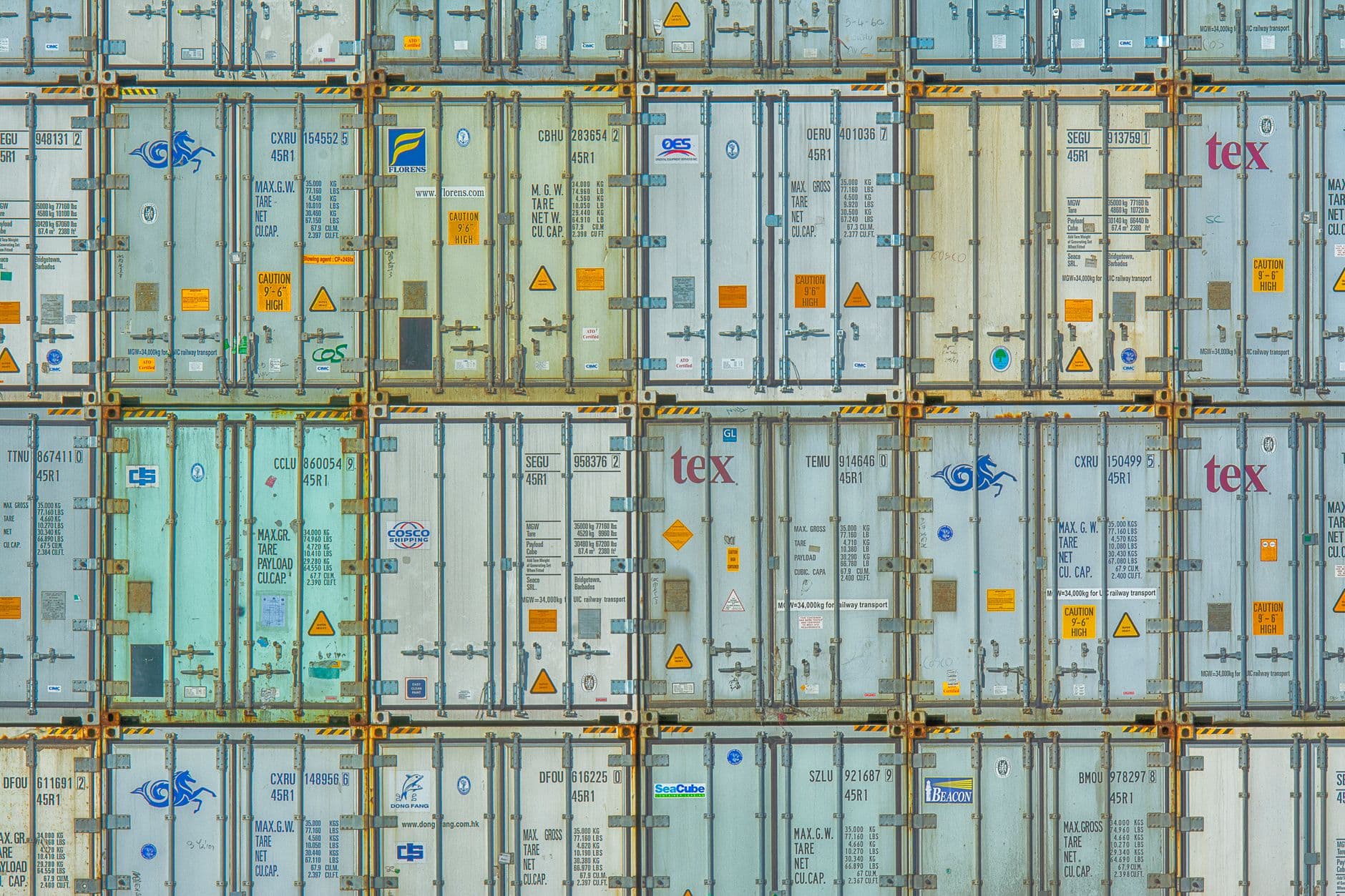

The container leasing league table changed hands in December 2025. Textainer completed its acquisition of Seaco, announced in May 2025, combining a fleet of about 4.4 million TEU with Seaco's 2.4 million to create a platform reported at roughly 8.3 million CEU. Triton, the long-standing leader, still runs an active fleet of more than 7 million TEU. Any ranking published before that deal closed has the top two the wrong way round.
I find this is the piece of the supply chain shippers understand least well, and it shows up in avoidable costs. When a booking falls through for want of equipment, or a detention invoice arrives with a per diem attached to a box you never chose, the ownership structure behind that container is the explanation. More than half the world's containers belong to lessors rather than to the shipping line painted on the side.
The largest container leasing companies, ranked
| # | Lessor | Reported fleet | Position |
|---|---|---|---|
| 1 | Textainer (with Seaco) | ~8.3 m CEU combined | Largest platform since December 2025; Seaco brings specials and tanks |
| 2 | Triton | Over 7.0 m TEU | Broadest customer base across the major lines |
| 3 | Florens | ~1.8 m TEU | Carrier-affiliated heritage |
| 4 | SeaCube | ~1.2 m TEU | Reefer-weighted portfolio |
| 5 | Beacon Intermodal | ~575,000 TEU | Intermodal and North America focus |
One reading warning before anyone compares those first two lines directly. Textainer's combined figure is quoted in CEU, or cost equivalent units, which weight a box by its value rather than its length, while Triton reports in TEU. A reefer or a tank counts far more heavily in CEU than in TEU, so the two numbers are not the same measure and the gap between the top two is narrower in practice than the raw figures suggest. What is not in doubt is that the combined Textainer platform is now the larger of the two.
A second reading note on fleet size generally. TEU is a unit of capacity, not a count of boxes: a 40-foot container counts as 2 TEU, so Triton's 7 million TEU is roughly four million physical containers once you allow for the 40-foot and high-cube mix that dominates modern fleets. When a lessor quotes availability in TEU and your plant thinks in boxes, that factor of nearly two causes real confusion on a tender.
Why more than half the world's containers are leased
A container is a cheap asset with an awkward cash-flow profile. It costs a few thousand dollars, lasts about 12 to 15 years in marine service, and spends a meaningful share of its life empty and in the wrong place. Owning the fleet outright means funding all of that from the balance sheet in a business whose earnings swing violently between years.
Leasing converts capital expenditure into a per-day operating cost that scales up in a strong market and can be handed back in a weak one. That flexibility is worth paying for, which is why lessors supply more than half of all active container capacity, with trackers putting the share somewhere near 58 percent. Estimates of the leasing market's annual value diverge widely, from roughly USD 5.6 billion to USD 7.6 billion depending on the tracker and on what each counts as revenue, so treat any single figure as an order of magnitude rather than a measurement.
The consequence for shippers is indirect but real. When lines add capacity by ordering ships, as we set out in the ranking of the biggest container ships and shipping lines, the boxes to fill those ships usually arrive on lease rather than on order. Equipment supply therefore responds faster than vessel supply, and it withdraws faster too, because a lessor can stop buying in a quarter while a shipyard slot takes years to unwind.
What the Textainer and Seaco deal actually changed
Textainer announced the Seaco acquisition in May 2025 and completed it in December 2025. The immediate effect is arithmetic: 4.4 million TEU plus 2.4 million puts the combined business ahead of Triton and leaves the market with two platforms of comparable scale and a considerable drop to third place.
The more interesting effect is qualitative. Seaco's strength was in specialised equipment, tank containers and out-of-gauge gear, fleets that were never evenly spread across the market to begin with. Consolidating them into the largest platform means that a shipper needing 50 tanks in a secondary location now has one fewer independent place to ask. Consolidation in leasing rarely shows up as a price shock; it shows up as fewer options in a tight month and as more uniform commercial terms, because the same short list of lessors writes them.
What a lessor actually sells
A lease is not a rental price with a delivery date. The terms that decide whether it is cheap are these:
- Per diem. The daily rate for the box, quoted per unit. It is the number everyone compares and rarely the number that decides total cost.
- Lease type. Long-term leases fix a rate for a term measured in years. Master leases price flexibility instead, letting you flex the fleet up and down at a premium. One-way leases exist to solve a single repositioning problem, typically on a backhaul nobody wants.
- Pick-up and drop-off locations. The depots where you may take and return equipment, plus free days at each. A cheap per diem into a depot 400 km from your factory is not cheap.
- Drop-off limits. How many boxes you may return at a given location in a given period, which governs whether you can actually exit when the season ends.
- Damage protection. A damage protection plan caps repair exposure at redelivery. Without one, the survey at hand-back becomes an open invoice.
- Redelivery condition. The standard the box must meet on return, and who pays to get it there.
Here is why the per diem deserves less attention than it gets. Take a hypothetical 5 US cent difference in daily rate across a fleet of 500 boxes: that is USD 9,125 over a year. A single unbudgeted repair bill at redelivery, or 30 days of storage because your drop-off allocation was full, can exceed it. The cheap column on the quote is not where the money is.
Lease, buy, or take the carrier's box
For most shippers the default is the carrier-owned container, priced inside the freight rate and governed by the carrier's free time. That is the right answer when your flows are balanced and your dwell is short. It stops being the right answer in three situations.
The first is chronic detention. If boxes sit at your site or a customer's beyond the free days, you are paying a penalty rate for storage, and a shipper-owned or leased box removes the clock entirely. Our guide to the shipper-owned container sets out how that trade works in practice.
The second is a lane where carrier equipment is structurally scarce, typically an import-heavy inland point where empties do not naturally return. The third is specialised gear, and this is precisely where the December 2025 consolidation bites: tanks, flat racks and open tops now sit more heavily inside the two largest platforms than they did.
Worth noting: taking control of the box also takes on the empty. Positioning, storage and street-turn logistics become yours, and that is the same cost pool we examined in drayage and port dwell. A 40-foot box parked on a chassis is a rented asset twice over.
Where reefers change the arithmetic
Refrigerated equipment is a separate market inside the same fleet. A reefer costs several times a dry box, needs a genset or a plug at every stage, and the portfolios that hold it are concentrated, SeaCube being the clearest case at roughly 1.2 million TEU weighted towards temperature-controlled gear. Long-term leasing dominates reefers precisely because the asset is too expensive to hold idle and too specialised to source on 48 hours' notice.
Reefers are also why the CEU measure matters. A fleet weighted towards refrigerated and specialised boxes looks larger in CEU than in TEU, which is part of why the merged Textainer platform reports the way it does. If you move perishables, the lessor market is not background information, it is where your equipment plan starts, and we traced how availability behaves in a squeeze in our analysis of reefer container capacity.
Frequently asked questions
Who is the largest container leasing company?
Textainer, following completion of its Seaco acquisition in December 2025, with a combined fleet reported at roughly 8.3 million CEU. Triton is second with an active fleet of more than 7 million TEU. Rankings published before December 2025 still show Triton first.
What share of shipping containers are leased rather than owned?
More than half of active container capacity, with trackers putting the figure near 58 percent. The split moves with the ordering cycle, because lines buy boxes in strong markets and lean on leases in uncertain ones.
Is leasing a container cheaper than buying one?
Over a full 12 to 15 year asset life, buying is usually cheaper per day; leasing buys flexibility and avoids residual-value risk on a box you might not need in three years. The decision turns on how stable your volumes are and whether you can redeliver equipment where your flows end.
Can a shipper lease containers directly?
Yes. Lessors deal with shippers as well as carriers, and one-way and master leases exist for exactly that case. The practical constraints are depot access at both ends and the drop-off limits written into the agreement.
Fleet figures are as reported by the companies and by industry trackers and move with each quarter's purchases, sales and redeliveries. They are also not quoted on a single basis: CEU weights a container by relative value while TEU measures length, so a CEU total and a TEU total cannot be compared directly. Ownership in this sector has changed repeatedly through recent acquisitions, so confirm the current corporate position before relying on it commercially.