


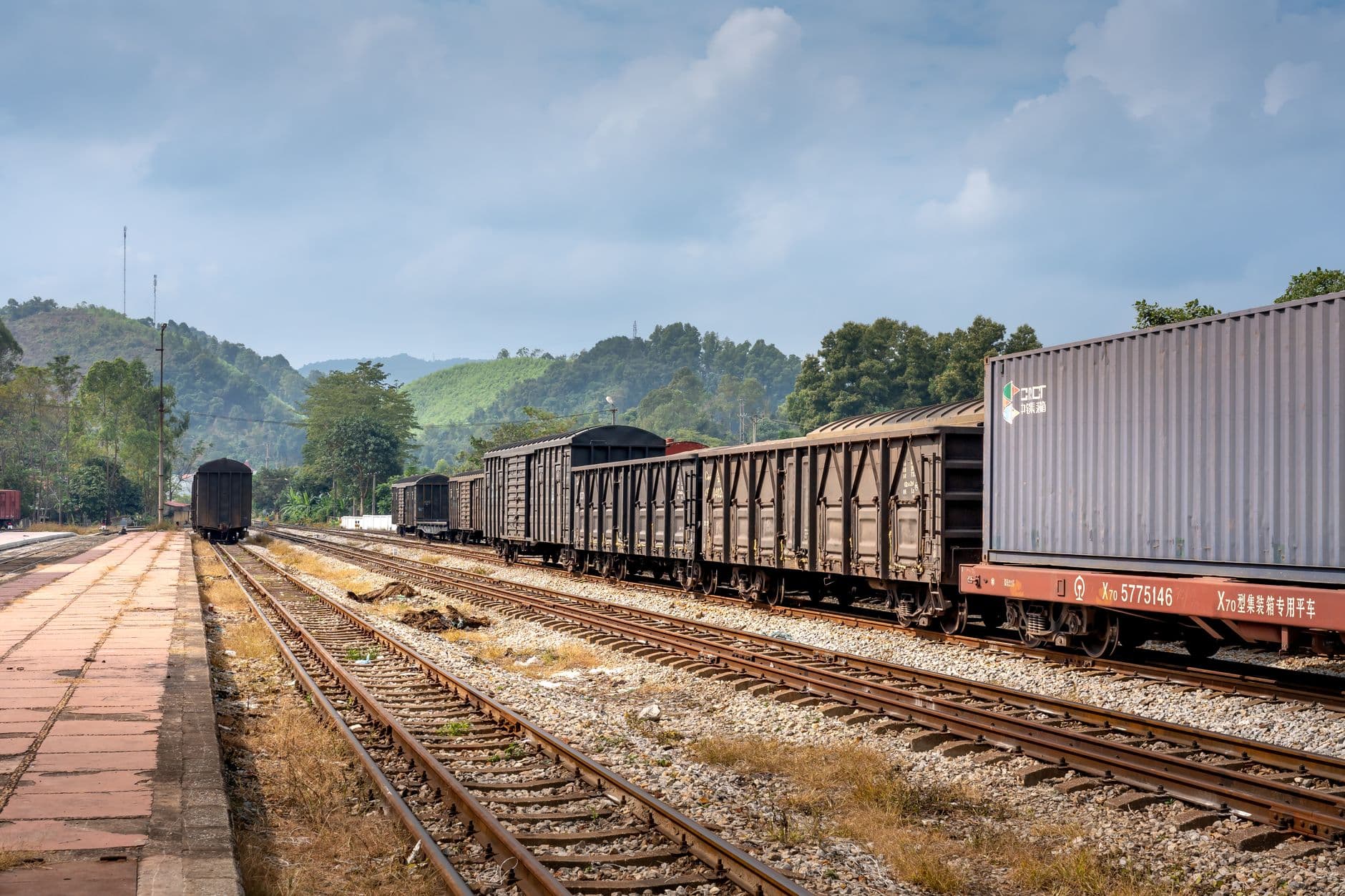

Khorgos Gateway on the Kazakhstan-China border is the largest dry port by transshipment capacity, which rose from 540,000 to 800,000 TEU a year in September 2025, a 48 percent increase. It handled around 380,000 TEU in 2025. Dry ports are ranked on capacity and train counts rather than tonnage, and that makes comparisons harder than they look.
A dry port has no water. It is an inland terminal, usually rail-served, that performs customs clearance and container handling on behalf of a seaport or a land border. I have spent enough time reconciling these facilities' numbers to know the trap: one publishes annual TEU, the next publishes daily train departures, a third publishes hectares, and none of them means the same thing.
The biggest dry ports and inland container depots in 2026
| # | Facility | Country | Headline capacity or volume | What it serves |
|---|---|---|---|---|
| 1 | Khorgos Gateway | Kazakhstan | 800,000 TEU capacity, around 380,000 TEU handled in 2025 | China to Europe and Central Asia rail gauge change |
| 2 | Alashankou land port | China | Over 6,000 China-Europe trains in 2025, 125 routes to 21 countries | Rail crossing opposite Kazakhstan's Dostyk |
| 3 | Małaszewicze | Poland | 460,000 square metres, projects adding 198,925 TEU | Broad to standard gauge entry into the EU |
| 4 | Riyadh Dry Port | Saudi Arabia | 4 million TEU cumulative since commercial start in 2022 | Inland clearance for Gulf seaports |
| 5 | ICD Tughlakabad | India | Around 250,000 to 300,000 TEU capacity, roughly 2,000 containers a day | Delhi region imports and exports |
| 6 | Zhengzhou International Land Port | China | Opened 30 June 2024, targeting rail hub scale | Central China to Europe rail |
| 7 | Sławków | Poland | 1 billion euro expansion announced May 2025, target above 500,000 TEU a year | Westernmost broad-gauge terminal in the EU |
Khorgos earns the top spot on more than capacity. In September 2025 the terminal added nine sorting tracks on the 1,520 mm gauge and cut average container handling time from five hours to one. That single change matters more to a transit time than the headline TEU number, because gauge-change dwell is the part of a China-Europe run that varies most. The crossings on either side of this border are covered in more detail in our review of the busiest China-Europe rail border crossings.
Why the ranking depends on which metric you accept
Compare the two Chinese entries with the two Polish ones and the problem becomes obvious. Alashankou reports trains: over 6,000 China-Europe and Central Asia trips through 2025, averaging 21 a day with a single-day record of 30, across 125 routes serving 21 countries. Małaszewicze reports area and project capacity: 460,000 square metres today, with a container terminal project adding 198,925 TEU of annual handling and roughly 800 million euros of Polish funding behind the wider upgrade.
Those two facilities sit on the same corridor and handle much of the same freight, and there is no arithmetic that converts a train count into a TEU figure reliably, because train length and loading factor both vary. When I need a like-for-like read, I use three questions instead of one number:
- What is the gauge-change or clearance dwell? Khorgos at one hour against a former five is a real improvement you can put in a transit calculation.
- Is the capacity figure installed or planned? The 800,000 TEU at Khorgos came online in September 2025. The 198,925 TEU at Małaszewicze is a project target.
- How much of the throughput is transit versus domestic? Riyadh Dry Port clears cargo for Saudi consumption; Khorgos mostly passes boxes through to somewhere else.
- Does the facility have spare paths on the rail line feeding it? A terminal can add cranes faster than a railway can add slots.
Khorgos, and the honest version of its growth
Khorgos Gateway occupies 129.8 hectares including logistics and industrial zones and can hold 18,000 containers on the ground. Its 2025 volume of around 380,000 TEU was up roughly 2 percent on 2024, which is modest growth against a 48 percent capacity increase.
That gap is the interesting part, and it points the same way as several other Middle Corridor numbers. Capacity along the route is being built ahead of demand, partly because the Caspian leg constrains what reaches the terminal in the first place. Our look at the Aktau to Baku ferry crossing covers that bottleneck, where ferry slots and weather, not terminal cranes, decide monthly volume. A dry port with headroom is a good problem to have, but it does not by itself create traffic.
The facilities people call dry ports that are not
Two categories get mixed into these rankings and both distort them. The first is inland river ports. Duisburg in Germany handles container volumes an order of magnitude above any true dry port, reported around 4.2 million TEU, but it sits on water and receives barges, so it belongs with the terminals in our list of the busiest inland waterways and river ports rather than here.
The second is the empty-container depot. Storage yards for empties can hold enormous numbers of boxes without performing clearance or intermodal transfer, and they occasionally appear in "largest container depot" lists on the strength of stacking capacity alone. A dry port earns the name by doing customs and modal transfer work, not by holding steel.
What is worth watching through 2027
Three developments will reorder this table faster than volume growth will. Alashankou converted a track in early July 2025 for dedicated bulk loading, adding 7,700 tonnes of daily handling capacity, which signals that these rail crossings are diversifying out of containers. Zhengzhou International Land Port, in use since 30 June 2024, is being built toward "ten thousand trains" ambitions that would put it above Alashankou on train counts if achieved. Poland answered in May 2025 with a 1 billion euro expansion plan for Sławków aimed at more than 500,000 TEU a year, which would make it the largest broad-gauge terminal inside the EU. And Riyadh Dry Port's operator passed 4 million cumulative TEU since 2022, a pace that suggests Gulf inland clearance is scaling faster than the Eurasian corridor is.
Common questions
What is the biggest dry port in the world? Khorgos Gateway in Kazakhstan, on both installed capacity of 800,000 TEU a year and 2025 throughput of around 380,000 TEU. It also holds 18,000 containers across 129.8 hectares.
What is the difference between a dry port and an inland port? A dry port has no waterway access and depends on rail or road links to a seaport or land border. An inland port such as Duisburg receives vessels, usually barges. The distinction matters because it changes the cost structure completely.
Is ICD Tughlakabad really the largest in Asia? It is often described that way, and it moves around 2,000 containers a day against a design capacity near 250,000 TEU a year, which means it runs well beyond its rated figure. On installed capacity, Khorgos is larger. Definitions and reporting bases differ enough that the claim depends on which one you use.
The pattern across these seven facilities is that dry ports have stopped being purely a rail-gauge fix and started being clearance hubs. Khorgos cut dwell from five hours to one, Riyadh cleared 4 million TEU in under four years, and Małaszewicze is spending European money to catch up on capacity it does not yet need.