


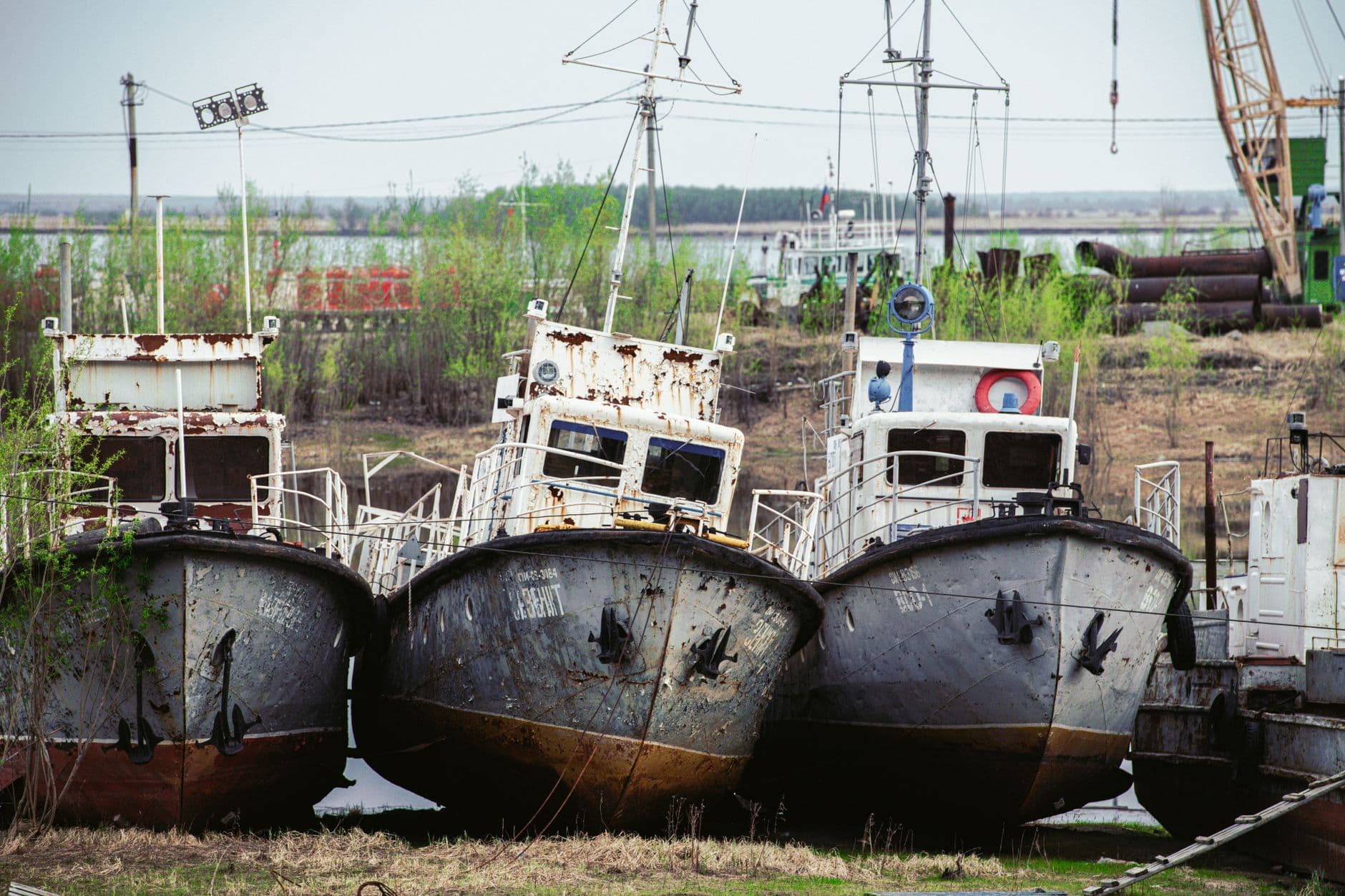

Four coastlines dismantle almost every merchant ship that leaves the fleet: Alang in India, Chittagong in Bangladesh, Gadani in Pakistan and Aliağa in Türkiye. Together they hold a maximum recycling capacity of about 12 million light displacement tonnes a year, and roughly 85 percent of the tonnage scrapped in 2025 went to South Asia. Alang alone accounts for about 32 percent of global tonnage by LDT.
What has changed is the gate. The Hong Kong Convention entered into force on 26 June 2025, and compliance rather than capacity now decides where a ship can go. I read the recycling market as the closing chapter of the fleet story we have been telling through the biggest shipbuilders and the largest merchant fleets: ships get built, they trade, and eventually somebody has to take them apart.
The world's ship recycling clusters, ranked
| # | Cluster | Country | Position | Compliance status |
|---|---|---|---|---|
| 1 | Alang | India | Largest single cluster, ~32% of global LDT | 115 of 128 plots HKC-compliant |
| 2 | Chittagong | Bangladesh | Historically the top country by tonnage | 14 of 153 yards certified, ~20 in process |
| 3 | Gadani | Pakistan | Third South Asian centre | First HKC-certified yards from January 2026 |
| 4 | Aliağa | Türkiye | Europe's outlet | Yards meeting both HKC and EU standards |
| 5 | China and others | Various | Domestic tonnage, limited foreign intake | Varies by yard |
The ordering depends on what you count. India leads on certified capacity and on LDT share. Bangladesh has historically led as a country on tonnage received, though it has been losing global share, so the two swap places between years and between metrics. Anyone quoting a single definitive league table here is glossing over that.
What a yard actually pays
Recycling is a purchase, not a disposal fee: the yard buys the ship for its steel. Indicative 2025 levels show how sharply the market splits by destination. Alang was around USD 500 to 510 per LDT and Gadani around USD 525 to 530. Bangladesh sat near USD 410 per LDT for dry bulk, USD 430 for tankers and USD 440 for container ships. Aliağa in Türkiye was far below all of them, at roughly USD 260 for dry bulk, USD 270 for tankers and USD 280 for containers.
On a 20,000 LDT bulker, the gap between an Indian and a Turkish price is several million dollars. That single fact explains most of the geography of this industry, and it is why regulation aimed at moving tonnage to higher-standard yards runs against a strong commercial current.
Ship type matters within each market too. Containers and tankers fetch premiums over dry bulk because of what is aboard: more outfitting, more non-ferrous metal, more machinery worth recovering. The pattern holds across all four clusters even as the absolute levels diverge.
The Hong Kong Convention made compliance the constraint
Since 26 June 2025 a recycling sale is a compliance exercise. A ship needs an inventory of hazardous materials, the yard needs an approved ship recycling facility plan, and the specific plot has to hold current certification. Capacity that is not certified is, for a growing share of owners and their financiers, capacity that does not exist. By June 2026 the convention had 30 contracting states between them representing roughly 60 percent of world merchant tonnage.
The certification race is where India has pulled ahead. Alang has 115 of its 128 plots compliant and a capital programme reported at ₹1,224 crore for the current phase, inside a national expansion aimed at lifting annual capacity from roughly 500 to 600 ships towards 1,000 to 1,200. Bangladesh, from a much larger base of 153 yards, had 14 certified with around 20 more in progress. Read those two sentences together and the medium-term shift in tonnage is not hard to predict.
Pakistan has moved from legislation to operating certified capacity faster than most observers expected. Gadani's first HKC-certified yard, Prime Green Recyclers, came into operation in January 2026, a second yard was certified by ClassNK in March 2026, and supporting legislation followed in May 2026. That matters because Gadani has consistently paid among the highest prices per LDT, and certification removes the compliance objection to using it.
Türkiye's position rests on a different qualification. Aliağa's yards satisfy both the Hong Kong Convention and the stricter European Union list, which makes them the practical destination for EU-flagged tonnage regardless of what South Asia is paying, because for those ships the South Asian price is simply not available. India is now attacking exactly that advantage: 34 Alang yards have applied for EU approval and three have completed inspection, and if EU listing follows, the price gap between Aliağa and Alang stops being protected by regulation.
Why the yards are starving
Here is the counterintuitive part of the 2026 market: capacity is being certified and expanded while the yards sit short of work. Around 321 vessels were dismantled globally in 2025 on the most widely cited count, and container-ship recycling fell to a 20-year low. Bangladesh took 57 ships in the first half of 2025 against 89 in the same period of 2024. Alang's own run rate tells the story with a twist: 113 ships in its 2025 financial year, a ten-year low, recovering only slightly to 119 ships and 1,087,447 LDT in FY26. Certified capacity of 1,000 ships a year is being built for a market currently delivering barely a tenth of it.
The explanation is on the earning side rather than the scrapping side. When freight markets pay, owners keep old ships trading, because a vessel earning a healthy day rate is worth more in service than as steel. Every disruption that lengthens voyages does the same thing: it absorbs tonnage that would otherwise be surplus. The rerouting away from the Red Sea is the clearest recent example, and it kept ships employed that a normal market would have retired.
So recycling volumes are a lagging indicator of freight weakness. If you want to know when the scrapping wave arrives, watch charter rates in the sectors with the oldest fleets, which is why the age profiles in our rankings of the largest dry bulk companies and the largest tanker companies matter to this market.
The decarbonisation wave that has not arrived yet
The structural case for more recycling is strong. Tightening emissions rules progressively penalise inefficient tonnage, and at some point the cost of running a 20-year-old ship under a carbon regime exceeds what it earns. Industry estimates put roughly 16,000 ships in line for that pressure over the next decade, which is the wave India is certifying and expanding for.
The timing is genuinely uncertain, and I would not build a plan on a specific year. What is reasonably certain is the shape: when the wave comes it will arrive faster than yards can add certified plots, and the price per LDT will fall as supply overwhelms demand. Owners who wait for the peak of the wave to sell will get the worst of both.
What this means if you own or charter tonnage
- Certification decides your buyer list. EU-flagged ships are limited to EU-listed yards, which in practice means Türkiye rather than South Asia and a materially lower price.
- Prepare the inventory early. The hazardous-materials inventory is a survey, not a form, and an incomplete one delays a sale into a moving market.
- Price by ship type, not by cluster. Container and tanker tonnage earns a premium per LDT over dry bulk in every market.
- Watch charter rates as the leading signal. Recycling volume follows freight weakness with a lag; it does not lead it.
- Factor the delivery voyage. Bunkers and crew to reach the yard are part of the net proceeds, and the cheapest price per LDT can lose to a nearer yard.
- Expect reputational scrutiny. Cargo owners increasingly ask where a carrier's retired tonnage went, and the answer travels further than it used to.
Frequently asked questions
Where is the biggest ship recycling yard in the world?
Alang in Gujarat, India, is the largest single cluster and accounts for about 32 percent of global recycling tonnage by light displacement tonne. Chittagong in Bangladesh has historically been the largest by country tonnage received, so the two lead on different measures.
How much does a shipowner get for scrapping a ship?
Indicative 2025 levels ran from about USD 260 to 280 per LDT in Türkiye to USD 500 to 530 per LDT in India and Pakistan, with Bangladesh between USD 410 and 440 depending on ship type. Containers and tankers price above dry bulk in each market.
What did the Hong Kong Convention change?
It entered into force on 26 June 2025 and made certified recycling facilities and a hazardous-materials inventory the condition of a compliant sale. The effect has been to shift tonnage towards yards that hold current certification, which favours India's Alang and Türkiye's Aliağa.
Why is ship recycling volume falling?
Because freight markets have been paying well enough to keep old ships trading, and longer routings absorb tonnage that would otherwise be surplus. Around 321 ships were recycled globally in 2025, container-ship demolition hit a 20-year low, and Bangladesh's intake fell from 89 ships in the first half of 2024 to 57 in the same period of 2025.
Recycling capacity, yard counts and certification numbers change as plots are audited and relisted, and prices per LDT are indicative market levels that move weekly with steel and currency. Country tonnage shares differ depending on whether ships or LDT are counted and on the reporting year, which is why sources sometimes name different leaders.