



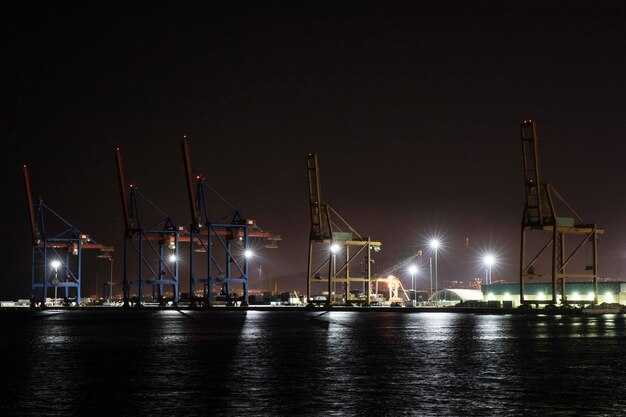
Adopt on-dock electrification for cargo-carrying equipment within a three-year window, starting with yard tractors, straddle carriers, and container-handling cranes to eliminate exhaust at source. This technology-driven shift requires coordinated procurement, standardized charging infrastructure, and access to clean energy so operations remain reliable while carbon emissions drop.
Deploy shore-power for berthing and accelerate the use of battery-electric and fuel-cell fleets for yard equipment, so ships can plug in without idling, a move supported by the industry and port communities. Couple this with a monitoring system and practices to optimize charging schedules, reduce peak demand, and maintain cargo throughput.
To scale decisions, implement a common data standard and real-time monitoring dashboards that track carbon intensity per cargo-carrying operation, electricity mix, and equipment utilization. Many ports can share anonymized data to identify best approaches over many port ecosystems and accelerate learning across nations.
Policy and finance must align to reduce risk: staged incentives, long-term energy offtake, and grant programs for electrification retrofits. A port authority can seed a fund covering a portion of capex and adopt a three-year maintenance plan. This pathway will increase the share of carbon-free energy in port logistics and strengthen resilience for cargo-carrying networks during climate disruptions.
Set clear metrics and deadlines: aim for electrifying at least 60% of container-handling equipment in major terminals by 2030, with 85% by 2035. Use monitoring data to verify that the energy supply is clean and reliable, and report absolute emissions reductions to national and international bodies. This approach will increase their accountability and help nations measure progress toward net-zero shipping.
As a practical technology roadmap, start with three priority tracks: electrify 25-40% of yard equipment, install shore-power for a subset of berths, and deploy solar arrays to cover part of peak-demand energy. Publish lessons learned in many reports showing cost savings, uptime improvements, and carbon reductions, ensuring monitoring data supports decisions across nations.
Industry Brief: Decarbonizing Port Terminals
Implement a phased electrification plan for ports, anchored by shore power, on-dock energy storage, and clean fuels to cut greenhouse emissions while preserving service levels and reducing time in port. For time-chartered vessels and local fleets, align with a single, clear strategy that connects terminal operations to coast-side grids and renewables.
Define scope across terminals: quay, yard, and fuel supply, with a pilot at one port and scale to others. Engage partners such as moller and other operators to align on data sharing, KPI reporting, and joint capital plans. A photo record of milestones helps keep all stakeholders informed and accountable.
Adopt a portfolio of technologies: shore power, containerized battery storage, hybrid engine systems, and green fuels where feasible. Prioritize interfaces that connect vessel schedules with port energy flows to reduce idle time and prevent peak demand charges. A flexible approach supports different vessel types and time-chartered agreements, including the scope to switch fuels as markets demand it.
Anchor the program in a responsible local strategy that keeps coast communities engaged and minimizes local emissions. Build capacity for climatological loads, plan expansion alongside port growth, and document cost savings from reduced fuel burn and lower greenhouse gas intensity. Technologies that decouple port activity from fossil fuels offer benefits in both the short and the long term, and positions ports to advance competitiveness in the worlds of ports.
Assess Port Electrification Readiness: Power Demand, Grid Capacity, and Load Management
Run a chartered, accurate readiness assessment and implement a phased project with milestones for port electrification. Compile an equipment registry and vessel-call profiles to translate on-site activities into a practical plan. Use the data to advance decision-making, secure funding, and align stakeholders across the industry. This initial phase covers many activities. This is part of the long roadmap.
Map peak and average loads by equipment category: quay cranes, RTGs, yard tractors, trucks, lights, and ship-to-shore power where used. For a large container terminal, peak demand can reach 80–150 MW during main berthing windows, while mid-size terminals may see 20–60 MW. Apply accurate forecast models that weight vessel schedules, weather, and seasonal cargo mix.
Grid capacity: Engage the grid operator early to assess interconnection options and required upgrades. Identify dedicated feeders, transformer capacity, and substation redundancy to support concurrent charging and on-site generation. Plan for on-site storage and microgrid resilience to handle outages and shifts in demand. This readiness helps avoid bottlenecks and ensures intended load levels can be served. Plan for potentially significant upgrades in feeders to support peak charging.
Load management: Deploy a port-wide energy management system to coordinate charging across berths, container yards, and on-dock equipment. Use 2–4 hour storage at key hubs to smooth peaks and reduce utility demand charges. Implement demand response programs with the utility and adjust charging windows to cheaper or cleaner periods. Integrate ship shore power where possible and stagger mobile equipment charging to spread load. This approach yields significant reductions in peak demand and emissions.
Regulations and environmental plan: Align with local and national regulations, ship emissions rules, and industry targets for anti-pollution and pollution reductions. Prioritize electrification and shore-to-ship connections; where electric options are limited, consider methanol-fueled gensets or hybrids to cut emissions on transported cargo.
Partnerships and governance: Build partnerships with utilities, harbor authorities, equipment suppliers, and chartered shipping lines to share data and align incentives. Establish joint pilots and scalable contracts to test shore power, storage, and fast charging at limited berths before broad deployment. Many activities can be staged across the long-term plan to reduce risk and accelerate reach. This collaboration requires concerted effort from utility, shipping, and port teams.
Next steps and metrics: Define a half-year rollout with phased berth electrification, then expand to downstream facilities. Track container throughput, energy usage, and emissions reductions to verify progress toward targets. Capture lessons learned to sharpen the project timeline and ensure reached milestones align with the plan.
Design Onsite Power Solutions: Shore Power, Generators, and Energy Storage for Terminals
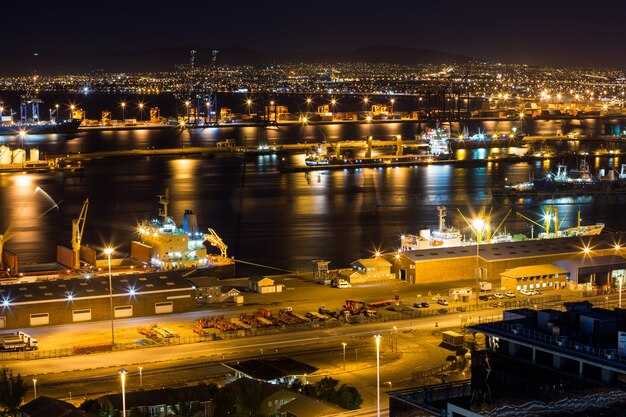
Install shore power at the busiest berths now and pair it with modular energy storage to eliminate onboard combustion aboard vessels during berthing. This source power lowers fuel use, reduces emissions, and stabilizes vessel turn times across the coast.
Design targets: 5–10 MW per berth for existing containers, with paths to 15–20 MW for future mega-vessels. Use 11–20 kV feeds, standard connectors, and reel systems to cover a dozen meters of berthing distance. Coordinate with grid operators and include auto-transfer switching to avoid outages.
When shore power isn't available, deploy modular generators of 2–5 MW, with methanol-capable engines as a transitional option and fuel-flexible packages that can switch to other fuels as markets shift.
Add containerized energy storage: 2–5 MWh per berth, 2–10 MW discharge, 4000–8000 cycles; scalable with a dozen ESS containers per berth to match vessel schedule and berth length.
Integrate an optimising energy management system to balance supply and demand, track headroom, and coordinate with vessel planners to reduce port time and improve berth utilisation.
Economic case and partnerships: capex around USD 2–4 million per berth for shore power, ESS USD 1–3 million, and gensets USD 1–2 million; total 4–9 million per berth. Payback of 4–9 years depends on electricity price, berth occupancy, and carbon charges. Build partnerships with utilities, shipping lines, and equipment suppliers; include a hassan port network case to illustrate rapid scaling and risk sharing.
Implementation steps: begin with 3–4 berths, install 5–10 MW shore power with 2–3 MWh ESS per berth, then scale to a dozen berths within a five-year window. Use a modular approach with a dozen or more energy storage containers and a robust service contract to keep uptime above 97% and track key metrics: energy savings, emissions avoided, and time gains per voyage.
This design positions terminals to lower emissions while maintaining service levels and asset value. By coordinating with container operations and using methanol and other fuels where appropriate, terminals enhance flexibility and enable a measured, scalable transition for sea-bound cargo at coastside hubs.
Integrate Shore Power for Vessels: Cabling, Switchgear, and Safety Protocols
Install shore power at selected port berths with a dedicated, outdoor-rated, three-phase feed (400/480 V, 50/60 Hz) and a modular shore-side switchgear cabinet sized to the vessel's maximum load (2–6 MVA per berth for typical container, bulk, and RO-RO ships). This maersks global programme aims to enhance port efficiency and deliver a total reduction in emissions by powering hotel loads ashore, enabling vessels to shut down main engines while alongside.
Choose cabling that withstands coastal exposure: XLPE-insulated copper conductors, armoured 3-core or 4-core cables with protective earth, rated IP66 for outdoor installation; specify cross-sections in the range of 120–300 mm2 to carry peak currents safely. Route cables through weatherproof trays or ducts, keep separation from fueling zones, and label terminations with vessel IDs to support track of energy flow and fault history. Install epson energy meters along the feeder for precise monitoring.
Configure switchgear as a compact LV module on the shore side with integrated protection: main and sectional breakers, protective relays, and an interface for remote operation from the port control room. Use interlocks to prevent live connections during maintenance and provide an accessible emergency disconnect at the quay. Tie the switchgear into the vessel feeder with a dedicated grounding scheme and fault-reporting channels to the monitoring system.
Adopt strict safety protocols: permit-to-work, lockout-tagout, and daily condition checks for all connections; implement proper bonding between vessel and shore earth to eliminate potential differences; perform regular insulation resistance tests and cable integrity checks; post clear signs and train crew and terminal staff on procedures for ship-to-shore transitions.
Link shore power to a centralized monitoring layer: capture voltage, current, power factor, and energy use with epson meters and a port-wide data bus; feed results into источник data stream and the global monitoring dashboard to track performance across the coast; enable traceability for faults and uptime history; target a track record that supports the reduction in greenhouse gas intensity per port call and the overall reduction of fossil fuel use.
Economic and deployment planning: document a phased rollout across the port, starting with two berths and expanding to all coast terminals within 24–36 months; estimate capital expenditure per berth at 0.8–2.0 million depending on load, with annual energy savings of 1.2–3.5 GWh for typical ship mixes; anticipate ROI of 3–7 years based on berth utilization and service contracts; integrate a replacement timetable to align with new vessel classes and the shift to alternatives as cleaner energy sources become available; this approach advances greenport objectives and strengthens the worlds of port operations.
Adopt Clean-Fuel and Battery Solutions: LNG, Hydrogen, Ammonia, and Battery-Electric Equipment
Begin with a local, owned pilot at your main coast terminal to prove LNG and battery-electric fleets reduce emissions and boost reliability. Move quickly to electrify 30-40% of yard trucks within 12-18 months, supported by modular charging hubs and a clear safety program. December milestones should mark the point where the pilot scales to full coverage around the terminals.
Adopt a clean-fuel strategy as the backbone: LNG supports sea-bound combustion and high-load yard tasks; hydrogen powers fuel-cell units for peak cycles; ammonia offers long-term storage and backup capability with proper containment; and battery-electric equipment handles repetitive, high-frequency work around berths and within the yard. This approach remains green while aligning with your long-term goal.
- Main technologies and assets: map which equipment will switch first, prioritizing owned, local assets to maintain control and accurate reporting.
- Retrofitting plan: run a phased retrofitting program that minimizes downtime, with time-bound sprints and a risk register to track cost, safety, and performance.
- Infrastructure: install modular charging hubs, LNG bunkering stands, and selective hydrogen/ammonia storage where space and safety allow; design for expansion around the coast.
- Safety and greenhouse-gas management: enforce strict LNG, hydrogen, and ammonia safety protocols, with continuous monitoring, leak detection, and training to reduce incidents and greenhouse gas footprint.
- Monitoring, reporting, and governance: deploy an accurate monitoring system that collects real-time data on fuel use, emissions, and uptime; publish a monthly report to your partnership network and local authorities to drive transparency.
- Partnership and funding: build a cross-operator strategy with ship-owners, energy suppliers, and equipment vendors to fund the program and share long-term benefits, lowering upfront costs while accelerating the move.
In the long run, the strategy should become a standard around terminals: a balanced mix of clean fuels and battery equipment that supports a responsible, cost-effective path toward net-zero shipping. Learn from each phase, adjust the retrofitting plan, and maintain an absolute focus on your goal of reduced emissions, stronger energy security, and a stable cost profile that is less dependent on a single technology or fuel. The time to act is now; the faster you move, the sooner you report progress and begin to see tangible benefits.
Navigate Policy, Financing, and ROI: PPA Models, Grants, and Regulatory Pathways

Start with a three-year PPA strategy that pairs on-site solar at port terminals with battery storage and grid-backed clean energy to power cranes, conveyors, and cargo-handling equipment, delivering emissions reductions and stable operating costs for freight operations.
Choose a PPA model aligned to risk tolerance: Standard PPA where a developer owns and operates generation and sells power to the port; a split-structure PPA that shares capex and O&M between the port and partner; or a virtual PPA that settles on an off-site project while on-site loads are offset through a tariff. In moller’s portfolio, the moller terminals announced a partnership that would rely on PPAs to optimize fuel use and reduce emissions across three terminals, signaling an industry-wide move.
Financing hinges on grants and debt with favorable terms. Target grants covering 30-60% of capex, combine with low-interest loans, and stack with tax incentives where available. For three-year ROI, anticipate LCOE reductions of 20-40% versus diesel baselines and aim for IRR in the mid-teens with a mix of electricity, fuels, and energy efficiency measures. These programs require a clear emissions baseline, a detailed implementation plan, and a governance structure that keeps their project on track.
Regulatory pathways shape timing and certainty. Secure interconnection approvals, grid upgrades, and permitting within an industry-wide timeline to avoid delays. Align with emissions standards and reporting regimes, and plan to demonstrate pollution reductions to attract grants and private finance. In jordan, policymakers announced targeted electrification incentives for port terminals, which would accelerate this transition for freight and logistics operations and reduce emissions across cargo flows.
Practical steps to move forward: map energy demand by cargo cycle, identify owned vs. leased assets, appoint a head of energy transition, and initiate a 90–180 day stakeholder alignment with carriers, terminal operators, and regulators. Build a partnership with energy providers to fix tariffs, then lock in a PPA for the three-year horizon. This approach would reduce emissions and pollution while creating a clear ROI signal for investors, positioning the port and its logistics network as a leader in clean freight.
| PPA Model | Terms and Risk Allocation | ROI and Financing Notes | Regulatory/Policy Considerations |
|---|---|---|---|
| Standard PPA | Developer owns/operates; port buys power; clear performance warranties | IRR 8–12%; payback 6–9 years; favorable with grants 30–40% capex | Interconnection, permits, grid codes, emissions reporting |
| Virtual PPA | Off-site project; physical energy offset by contract; risk shifted | Lower capex; faster deployment; ROI hinges on hedging and tariff design | Traceability and verified emissions reductions needed |
| Split-Structure PPA | Shared capex; joint venture; operator retains assets | Milestone-driven three-year plan; upfront costs but quicker scale | Regulatory alignment across terminals and fleets |