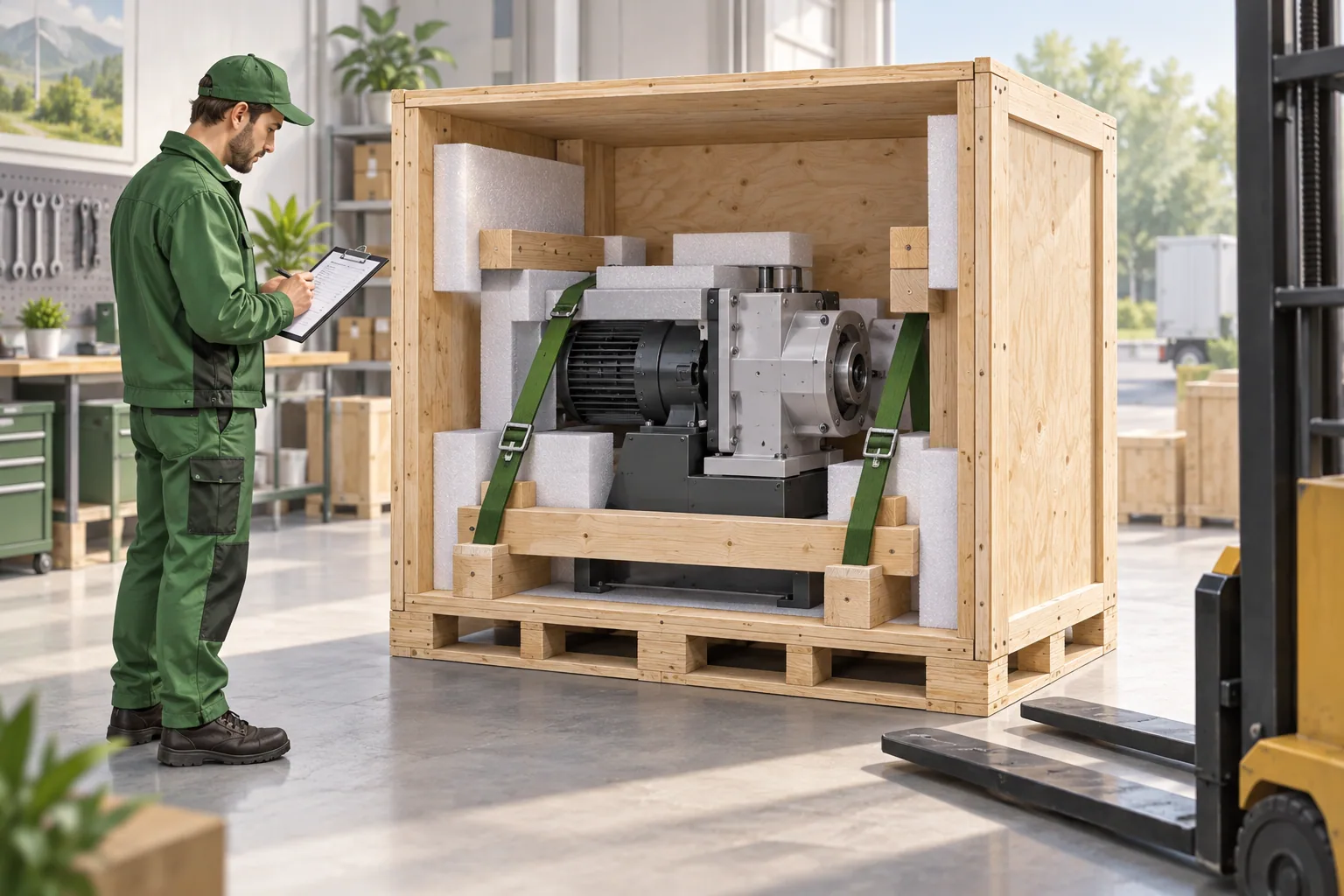

Make the area safe, then check the delivery
Do not climb onto an unstable load, open leaking equipment or move damaged goods just to take a photograph. Ask the responsible site personnel to arrange a safe inspection. Record what could not be checked and why.
- Compare the actual unit IDs and count with the inventory and transport document.
- Inspect safely with the carrier where practicable. Identify the affected units and visible condition.
- Record specific observations at handover and ask for them to be entered on the delivery record. Keep a copy of the record and the observations you sent.
- Photograph the whole unit, label, packing and affected area, retaining original files. Avoid unnecessary personal data.
- Notify the contracting carrier promptly through the appropriate channel; notify your insurer and booking support separately as applicable.
- Keep the goods, packaging, inventory and communication evidence available for an agreed inspection where safe and practicable.
A generic “subject to inspection” phrase is less useful than a factual description. Do not confirm that the goods were undamaged or complete if that has not been established. If observations cannot be added to the provider's form, retain the reason and send a specific written notice promptly. Whether to accept, refuse or unload a particular delivery requires the actual contract and circumstances.
Describe what you observed
- Outer damage: “Unit B: right side of carton wet and torn; photos 03–05”
Still unknown: Condition of contents, if not safely inspected - Short delivery: “A and B received; C listed on inventory but not delivered”
Still unknown: Whether a split delivery was agreed and where C is - Internal damage found later: Discovery date/time, unit ID, unpacking record and photographs
Still unknown: Cause; preserve packing for inspection - Delay: Agreed timing, actual events and when goods became available to the receiver
Still unknown: Cause and any compensable loss
Keep visible facts separate from conclusions about fault. A missing pallet has not automatically been proved stolen or legally lost. Ask the carrier to account for it without treating an undocumented promise of a later arrival as a completed delivery.

A short notice you can adapt
Use this as an information template, not a guaranteed legal form. Send it to the carrier's appropriate address/channel, keep evidence of sending and request acknowledgement. A message to platform support alone should not be treated as notice to the carrier.
- Reference: booking and transport-document references; sender, receiver and contracting carrier.
- Event: delivery / discovery date, time and location.
- Expected and received: unit IDs/counts and the inventory version.
- Observations: exact affected units, visible condition and what remains uninspected.
- Evidence: delivery record, photographs and relevant correspondence.
- Request: acknowledge receipt, account for missing goods and confirm inspection and claim procedure.
- Contact: responsible person and a private reply channel.
CMR notice rules have a specific scope
First establish whether CMR applies; domestic contracts and furniture removals require their own assessment. For qualifying carriage, Article 30 distinguishes these cases:
- Apparent loss or damage: Check with the carrier or communicate reservations indicating the loss/damage by delivery
- Non-apparent loss or damage: Written reservations to the carrier within seven days of delivery, excluding Sundays/public holidays; joint-check cases use the checking date
- Delay: Written reservation to the carrier within 21 days from when goods were placed at the receiver's disposal; required for delay compensation
Article 30 excludes the relevant starting day from calculation. Damage reservations affect evidential presumptions; missing one is not a blanket statement that every right disappears. Article 32 separately governs time limits for legal action. Insurer deadlines also need checking. Act promptly; obtain advice on scope or disputed dates.
Example: two of three pallets arrive in Vigo
Illustrative delivery: the inventory lists pallets A, B and C. A and B arrive in Vigo; B has a wet outer corner. Its contents have not been inspected safely, and no split delivery was agreed. C is not handed over.
Record those observations separately and adapt this factual notice to the carrier's required channel:
[Shipment reference], delivery at [place, local date/time]. Inventory [version] lists A, B and C. We received A and B; C was not handed over. Pallet B has a wet outer corner; its contents remain uninspected. The delivery record and photos [references] are attached.
Please acknowledge receipt, account for C, and confirm the inspection and claim procedure for B. Please identify the responsible contact and next action. We are retaining the available goods, packaging and evidence for an agreed inspection where safe.
Keep evidence of sending and any acknowledgement. Notify the insurer under its separate procedure and contact booking support about the booking issue. The notice records missing cargo and visible condition; it does not establish the cause, liability, legal loss or a payout. Apply the actual contract's notice requirements and seek advice when scope or dates are disputed.
Keep the record open until the next step is agreed
Ask whether a survey or inspection is required before repair, return or disposal. If urgent measures are needed to prevent further harm, put safety first, seek appropriate instructions and document the action and reason. Keep value evidence privately. Record who is handling the carrier claim, insurer notification and platform issue, with the next agreed action. Read the documents and insurance checklist before your next shipment.
Sources and checks
Each date records a check of the stated claim and scope.
- Article 30(1)–(5): apparent/non-apparent damage and delay reservations, written notice, starting day and checking-date distinction; Article 32 is separate.
Carriage within CMR scope only; no domestic/furniture-removal or insurer deadline advice, no claim-outcome guarantee · Checked October 10, 2026
Ready for the next step?
Turn your shipment details into a clear request.
Prepare your cargo, access and timing details, then compare the scope of each carrier's offer.
Something has changed? Tell us what needs correcting.