


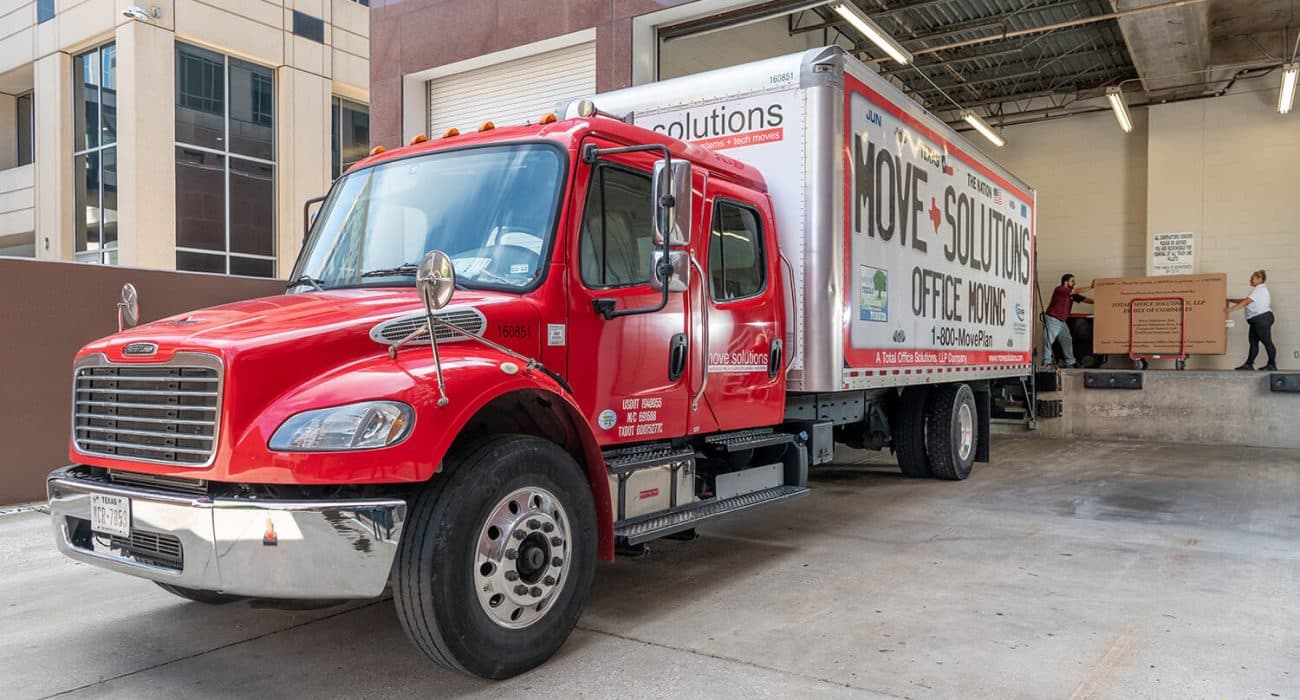

Penske 22-foot box truck dimensions and capacity
A Penske 22-foot box truck gives you an interior of up to 21 ft 11 in long by 8 ft 1 in wide by 8 ft 1 in high, about 164 sq ft of floor space, up to 1,200 cu ft of cargo volume and a load capacity of up to 10,000 lb. It runs a diesel tank of up to 70 gallons at up to 13 mpg, and ships with a 1,000 lb loading ramp rather than a liftgate.
Those are Penske Truck Rental's own published figures, and Penske notes they are approximations that vary by make, model and year across its fleet, so confirm the unit you are actually assigned.
I book medium-duty equipment for office and plant moves often enough that I check interior height before anything else. Eight feet one inch sounds generous until a client rolls out a 7 ft 6 in server rack on a pallet and you still need clearance for the jack underneath it. The table below is the spec sheet I actually work from.
| Specification | Penske 22-foot box truck |
|---|---|
| Interior length | up to 21 ft 11 in |
| Interior width | up to 8 ft 1 in (97 in) |
| Interior height | up to 8 ft 1 in (97 in) |
| Floor space | up to 164 sq ft |
| Cargo volume | up to 1,200 cu ft |
| Load capacity | up to 10,000 lb |
| Fuel tank and economy | up to 70-gallon diesel, up to 13 mpg |
| Loading aid | 1,000 lb capacity ramp |
| Licence class | non-CDL, rated up to 26,000 lb GVW |
Two numbers on that list get misquoted constantly. The first is payload: this truck carries up to 10,000 lb, not the 15,000 to 17,000 lb figure that circulates on moving blogs. The second is the loading aid. The 22-footer comes with a ramp; the liftgate rated up to 3,000 lb belongs to Penske's 26-foot commercial class. If your load includes anything nobody can walk up a ramp, that single distinction decides which truck you book.
Does a Penske 22-foot truck require a CDL?
No. Penske rents this size in its non-CDL class, rated up to 26,000 lb gross vehicle weight, which keeps it below the federal threshold where a commercial driver's licence becomes mandatory. That is the practical reason the size dominates corporate moves: a company can put its own facilities staff behind the wheel, and the crew that packs the office can also drive it.
Two cautions from experience. A weight rating is not a licence guarantee, and towing a trailer heavy enough to push the combination past 26,000 lb changes the rules. Separately, a number of states and cities restrict commercial vehicles on parkways, in tunnels and during set hours, and none of those rules care what licence the driver holds.
22-foot versus 26-foot: what the extra four feet buy
The comparison matters more than either spec sheet on its own, because the price gap between the two classes is usually smaller than the capability gap.
| Specification | 22-foot | 26-foot, non-CDL |
|---|---|---|
| Interior | 21 ft 11 in x 8 ft 1 in x 8 ft 1 in | 25 ft 11 in x 8 ft 1 in x 8 ft 7 in |
| Loading space | up to 1,200 cu ft | up to 1,700 cu ft |
| Payload | up to 10,000 lb | up to 10,000 lb |
| Loading aid | 1,000 lb ramp | liftgate up to 3,000 lb, or liftgate and ramp combination |
| Floor height | ramp-loaded | approx. 46 to 50 in |
Read the payload row twice. Both classes cap at 10,000 lb, so the 26-footer buys 500 more cubic feet and six extra inches of height, not more weight. For an office move that is usually the right trade, because workstations and furniture fill volume long before they fill weight. For anything dense, such as file archives, batteries or printing stock, you reach 10,000 lb with the box half empty in either truck.
What actually fits in 1,200 cubic feet
Volume figures mean little until you translate them into things a client recognises. A standard 48 by 40 in pallet occupies 13.3 sq ft, so 164 sq ft of floor takes roughly ten to twelve pallets in a single layer once you leave aisle space for the jack. That is arithmetic rather than a Penske specification, and it assumes nothing is double-stacked.
In office terms, a 22-footer normally absorbs one mid-sized department per run: modular workstations and cubicle panels, executive desks and conference tables, lateral filing cabinets and archive pallets, crated IT racks and UPS units, plus the loose inventory nobody inventories, from coat racks to whiteboards. Once the job becomes a whole floor, the honest answer is a second truck, not cleverer packing.
Loading and damage prevention on an office move
The 22-foot interior is normally lined and fitted with e-track, which is what makes it usable for delicate cargo instead of bulk alone. Heavy dense items ride low and forward of the axle; server cabinets sit near the centre of gravity, strapped to e-track, never against the rear door where every pothole is amplified. Furniture pads and shrink wrap go on before the ramp comes out, not during the load.
The habit that saves the most money is checking the destination before the origin. A truck that fits the pickup dock but not the delivery dock has to be unloaded twice, and that shuttle costs more than booking the right vehicle would have.
Why the 22-foot box is the default for headquarters relocations
Corporate moves run on off-hours: evenings, weekends, the overnight window between a Friday shutdown and Monday morning. The industry describes the goal as taking a client out of business and putting them back in business, which in practice means dismantle, transport, reassemble, reconnect and test before the first employee arrives. This size suits that rhythm because it clears most parking-garage heights and city loading zones, needs no CDL driver, and still swallows a department in one trip.
Fleets that specialise in the work tend to run these trucks in numbers alongside crew vans and a couple of larger units, so a job can be matched to vehicle size rather than the other way around. When hybrid-era office reconfiguration picks up, this medium-duty class is what absorbs it.
Key takeaways
- Dimensions: up to 21 ft 11 in x 8 ft 1 in x 8 ft 1 in, about 164 sq ft of floor, up to 1,200 cu ft.
- Weight: up to 10,000 lb payload, the same cap as the 26-foot class, so the longer truck adds volume rather than tonnage.
- Licence: no CDL required in Penske's non-CDL class, rated to 26,000 lb GVW.
- Loading: 1,000 lb ramp on the 22-footer; the liftgate rated up to 3,000 lb is a 26-foot feature.
- Range: up to a 70-gallon diesel tank at up to 13 mpg, roughly 900 miles between fills.
Specifications vary by make, model and year, so confirm the unit you are assigned rather than the class average, and measure the doorway, the dock and the elevator before you measure the truck. If the job outgrows one box truck, you can book cargo transport, including bulky and oversized items, at competitive global rates on GetTransport.com.
Frequently asked questions
What are the interior dimensions of a Penske 22-foot truck?
Up to 21 ft 11 in long, 8 ft 1 in wide and 8 ft 1 in high, giving about 164 sq ft of floor space and up to 1,200 cu ft of cargo volume, per Penske Truck Rental. Penske publishes these as approximations because its fleet spans several makes and model years.
How much weight can a Penske 22-foot box truck carry?
Up to 10,000 lb of payload, within a class rated up to 26,000 lb gross vehicle weight. Higher figures quoted elsewhere, such as 17,000 lb, do not match Penske's published specification for this size.
Does a Penske 22-foot truck have a liftgate?
Not as standard: it comes with a 1,000 lb capacity loading ramp. Penske's liftgate, rated up to 3,000 lb and sometimes combined with a ramp, is part of the 26-foot commercial class, so book that size if the load cannot go up a ramp.
How many pallets fit in a 22-foot box truck?
Roughly ten to twelve standard 48 by 40 in pallets in a single layer, since each takes 13.3 sq ft of the 164 sq ft floor and you need working aisle for a pallet jack. Double-stacking raises that count but only if the cargo and the 8 ft 1 in ceiling allow it.