
Start with what could change your own shipment
If the receiver has no forklift, first resolve unloading. If the site accepts trucks only by appointment, first agree the arrival window and waiting terms. A list of possible fees is useful only when you connect it to the cargo and both handover points.
Keep the packed dimensions, gross weight, access details and handling responsibilities beside the offer. Mark each required service as included, separately priced or not confirmed. Ask about the unresolved items before agreeing the booking.
Turn each uncertainty into a specific question
| Your shipment or site | What to confirm in writing |
|---|---|
| No equipment or people available to load or unload | Who supplies the equipment and operator at each end? Is it suitable for the packed unit and included in the price? If separate, what is the additional amount payable? |
| An appointment, queue or slow handover | Which event starts and stops waiting time? What allowance is included? What rate, billing unit and rounding rule apply? |
| Stairs, a long carry or restricted vehicle access | What is the exact handover point? Are extra people or a different vehicle required, and what do they cost? |
| Changed dimensions, weight or stackability | Does the corrected cargo description require a new quote? Ask for the revised total before collection. |
| A missed collection or delivery | What counts as a failed attempt? What happens to the goods, who arranges another attempt, and how are redelivery or storage charged? |
| A changed date or cancellation | Which cut-off and local time zone apply? What charge or refund would apply to the change you are considering? |
Also check any separate fuel or toll adjustment, documents or customs work relevant to the route, selected insurance and tax. Ask whether the amount is fixed, included or still unknown. These questions do not mean that every provider uses every charge.
Example: the receiver has no forklift
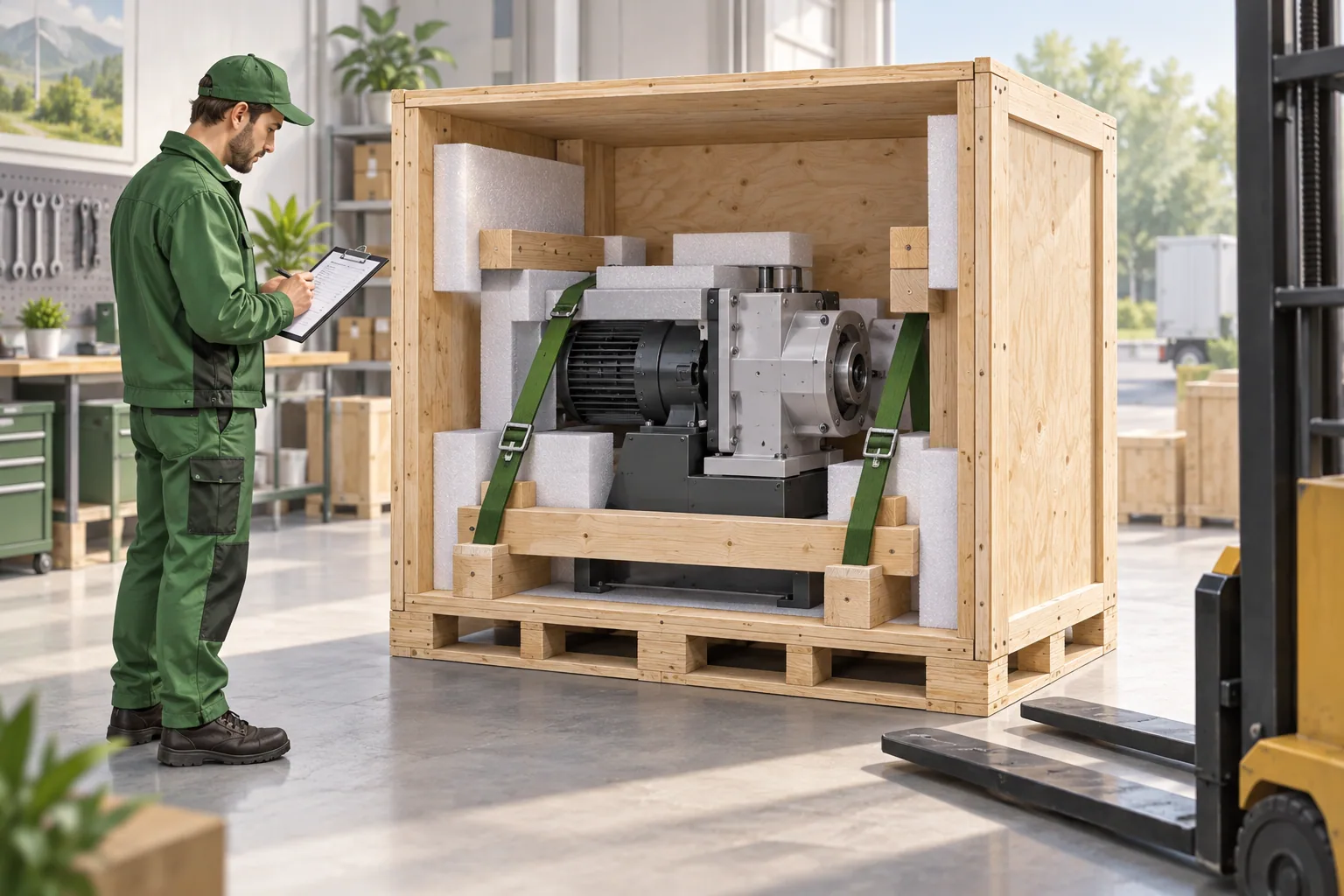
Illustrative shipment: a warehouse in Spain can accept your pallet, but its forklift will be unavailable. Tell the carrier before booking. Agree suitable unloading equipment and labour, or arrange a different appointment. Confirm the packed size and weight, the surface and the route from the truck to the handover point; a tail lift alone does not settle that whole movement.
In the GetTransport Truck request form, “Loaders needed” appears under “Additional requirements”. Select it if relevant and describe where help is needed. Then ask the provider to confirm the people, equipment and price. The form option lets you state a requirement; it does not establish that the service is available or included.
“The receiver has no forklift available. Delivery is to [exact handover point], with [access and surface details]. The packed unit is [dimensions and gross weight]. Please confirm how you will unload and move it to that point, who provides the equipment and operator, and whether all this work is included. If extra, confirm the additional amount payable including any applicable tax and the revised total.”

Work out a waiting charge from the agreed clock
Invented agreement for learning, not a typical tariff: 30 minutes are included from the agreed arrival/check-in event. After that, each started 15-minute block costs €18 before any applicable tax.
- 75 minutes elapsed: subtract the 30-minute allowance, leaving 45 minutes. That is 3 started blocks × €18 = €54 before tax.
- 76 minutes elapsed: subtract 30 minutes, leaving 46 minutes. That starts a fourth block: 4 × €18 = €72 before tax.
The extra minute enters a fourth billing block in this invented agreement. Different terms could produce a different result. Ask which timestamps will be recorded, what the allowance covers and whether rounding applies to each stop or to another agreed period. Keep the check-in and completion records.
Ask for the missing detail behind a charge
If an invoice simply says “waiting”, ask for the time records and calculation before trying to reconcile it with your quote:
“Please itemise the waiting charge on [invoice/reference]. Which agreed clause and rate apply? Please provide the start and end events and timestamps, the included allowance, the chargeable minutes, the rounding calculation and any separate tax. I will compare these with our accepted quote and site records. Please also confirm the practical plan for the goods while we clarify this line.”
Compare the answer with the accepted offer, messages and site records. Identify the specific difference: for example, an earlier clock start, a missing allowance or a service already included. Send that difference to the agreed provider contact and ask for a corrected or explained calculation.
Before booking, agree who can approve additional work, how the driver or dispatcher reaches them and what the terms say if nobody answers. Keep a contact at both sites. A request for approval should be reflected in the agreed terms, not assumed from an unanswered message.
DHL Freight Sweden’s terms provide one example of service-specific waiting and failed-delivery charges. Use your own provider’s agreed terms for your shipment; the example does not establish another carrier’s fees.
Complete the offer or prepare the request
Already have an offer? Add the confirmed extras once to the full-price comparison. Keep required unloading or other unresolved costs marked “not confirmed” in your notes and the comparison tool.
Still need an offer? Describe your shipment in a Truck request, including both sites and the handling you need. That gives the provider a concrete job to price.
Sources and checks
Each date records a check of the stated claim and scope.
- Service-specific waiting and failed-delivery fees are described.
DHL Freight Sweden; edition valid 2026-09-27; provider example only · Checked October 10, 2026
- The public English Truck request form includes “Loaders needed” under “Additional requirements”. No request was submitted and no price or availability was tested.
GetTransport public English Individual/Truck form; reuse of the recorded 14454 observation · Checked October 24, 2026
Ready for the next step?
Turn your shipment details into a clear request.
Prepare your cargo, access and timing details, then compare the scope of each carrier's offer.
Something has changed? Tell us what needs correcting.