



The India-Middle East-Europe Economic Corridor, usually shortened to IMEC, is the most ambitious trade-route proposal in years, and in 2026 it sits in an awkward and increasingly contested middle state: signed and partly under construction, but short of the funding, the firm timelines, and now the political stability that would let anyone move real cargo through it. At GetTransport.com we book freight on the India-Europe and Gulf lanes every week, so when a corridor lands a G20 signature and a wave of press, clients ask the same thing: should we plan routing around it yet? My honest answer for now is no for booking decisions and yes for watching closely, though what you watch has changed. In this guide I will explain what IMEC actually is and why it was proposed as a rail-and-sea alternative to the all-water Suez route, walk through the segments and the ports involved, set it against the Suez Canal and the Middle Corridor across Central Asia, and separate what is built from what is still on paper. Then I will cover the obstacles that matter most in 2026, including the alternative routes now competing with it, and give you a checklist for deciding when this corridor should touch your routing at all.
What IMEC is and why it was created
IMEC is a planned multimodal trade corridor meant to connect India to Europe overland through the Gulf, rather than sending every box the long way around by sea. The idea became formal on 9 September 2023, when eight parties signed a Memorandum of Understanding on the sidelines of the G20 summit in New Delhi: India, Saudi Arabia, the United Arab Emirates, the European Union, France, Germany, Italy and the United States. That guest list tells you the project is as much about strategy as about logistics, and analysts at the Atlantic Council and the Middle East Institute have framed it in exactly those terms.
The commercial logic is simpler. Almost all India-to-Europe trade today rides the all-water route through the Red Sea and the Suez Canal, a corridor that has looked less reliable since the Red Sea disruptions, and one that also runs close to the sensitive Strait of Hormuz. We have written before about why alternatives to those choke points matter for anyone shipping out of the Gulf. IMEC is one answer: a spine of rail and short sea legs that, in theory, sidesteps a single canal the whole of Europe-Asia trade leans on.
The two corridors and the ports involved
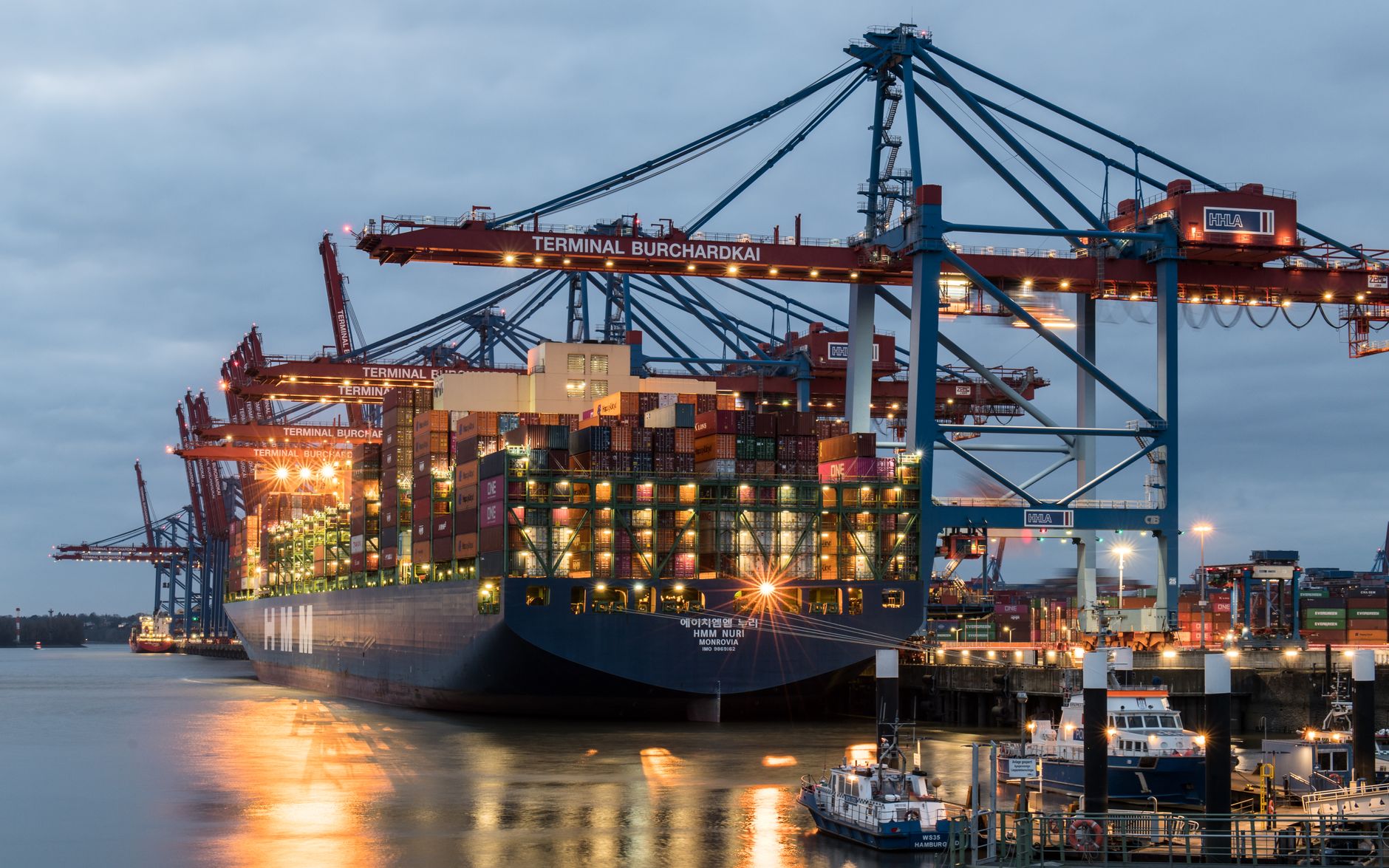
It helps to picture IMEC as two joined corridors rather than one line on a map. The East corridor is a maritime leg that carries cargo from India's west coast to container ports in the United Arab Emirates. From there the Northern corridor takes over, first as a rail spine that would cross the Arabian Peninsula, linking the UAE to the Israeli port of Haifa by way of Saudi Arabia and Jordan, and then as a second maritime leg from Haifa across the Mediterranean to European gateways, headlined by the Greek port of Piraeus, with onward reach into Italy and France.
The port list is where the corridor gets concrete. On the Gulf side, established terminals in the United Arab Emirates anchor the handoff from ship to rail. That rail spine is meant to tie into the wider GCC rail network that Gulf states are already building, which is the piece most likely to be usable first. The northern maritime leg then leans on Mediterranean gateways, with Piraeus positioned as the marquee European entry and further discharge options in Italy and France. The Saudi segment overlaps heavily with the kingdom's own land bridge plans, so some of the groundwork is being laid for national reasons regardless of IMEC's fate.
How IMEC compares to Suez and the Middle Corridor
So how would IMEC stack up against the routes shippers use now? The headline claim comes from CSEP, the Centre for Social and Economic Progress, whose analysis suggests IMEC could cut freight time on India-Europe routes by up to 40% and costs by up to 30% against traditional routing. Those are ceiling figures for a fully built corridor, not what any box would see in 2026, so I read them as direction rather than a number to price a booking on.
Two existing routes set the benchmark. The Suez Canal is the all-water default, cheap per container and simple to book, yet exposed to the Red Sea and Hormuz risk that pushed everyone to look for options in the first place. The Middle Corridor, the Trans-Caspian rail-and-sea route across Central Asia and the Caucasus, is already operational and growing, though capacity remains a real ceiling. IMEC sits between the two, part rail like the Middle Corridor and part sea like Suez, but not yet a through-route you can actually sell.
| Route | Main mode | Reach | 2026 status |
| IMEC | Sea and rail, multimodal | India to Europe via the Gulf and the Mediterranean | Signed in 2023, partial groundwork, northern leg stalled by the 2026 conflict and a reroute debate |
| Suez Canal | All-water ocean | Asia to Europe via the Red Sea and Mediterranean | Operational default, exposed to Red Sea and Hormuz risk |
| Middle Corridor | Rail and short sea (Trans-Caspian) | China and Central Asia to Europe via the Caspian and Caucasus | Operational and growing, capacity-limited |
Built versus planned: the 2026 status check
This is the section I would read most carefully, because the gap between the map and the ground has widened, not narrowed. The parties did not let the plan sit idle at first. India and the United Arab Emirates signed an Intergovernmental Framework Agreement to cooperate on IMEC operations, covering a shared logistics platform and a digital ecosystem for documentation and supply-chain services. Construction of some of the hard infrastructure the corridor needs, meaning new rail lines and the ports and highways that feed them on the Gulf side, began in April 2025, and Israel has said it will build its own rail link of roughly 12 kilometres to the Jordanian border to close part of its section.
The harder truth is what happened next. As of 2026 the project still lacks firm funding commitments and timelines for the corridor as a whole, and the roughly $5 billion gap on the Jordan-to-Israel rail segment is unresolved. On top of the money problem, the northern leg took a direct political hit. The 2026 conflict between Iran, the United States and Israel, which included a missile strike on the port of Haifa, knocked out the safe-hub assumption the whole Mediterranean handoff was built on. In April 2026 India, the UAE and the United States were reported to be looking at ways to regain momentum, which tells you both that the ambition is alive and that it had slowed enough to need a push.
The obstacles and the rival routes now in play
None of IMEC's promise reaches a bill of lading until money and geopolitics both settle, and in 2026 the geopolitics moved first. Saudi Arabia has held to its position that it will not normalize relations with Israel without a credible path to a Palestinian state, and after the strike on Haifa, Riyadh has been pushing for a version of the corridor that leaves Israel out entirely. That single shift has put the original Haifa routing in doubt and opened space for competitors.
Two alternatives are worth watching. The first is a proposed Turkey-to-Saudi railway running through Jordan and Syria, effectively reviving the historic Hijaz railway, which would bypass Israel altogether and could compete directly with IMEC's northern leg. The second is a parallel push in which Cyprus, holding the rotating EU presidency, and India have discussed building the Mediterranean end of the corridor first, creating a maritime hub through Cyprus, Greece and Italy. Neither solves the overland question through the Levant, but both show that the route map is being redrawn in real time. For a shipper the takeaway is blunt: a corridor whose very path is being renegotiated is not one you build a service contract around, and the financing gap only compounds that.
What a shipper should watch before rerouting
So what do we actually do with IMEC at GetTransport.com? We watch it and brief clients on it, but we refuse to reroute a single container on the strength of a signing ceremony. What we watch in 2026 is less about track being laid and more about which political path wins. Here is the short list we keep an eye on, and the same list works for any shipper deciding when IMEC earns a place in a routing plan.
- Watch whether the corridor keeps its Haifa routing or shifts to an Israel-bypass path, because that political decision, not the engineering, is the current pivot.
- Track the proposed Turkey-Jordan-Syria railway and the Cyprus-led Mediterranean initiative, since either could become the route that actually gets built.
- Follow the Gulf rail build directly, as the GCC-side lines are the part most likely to carry commercial freight first regardless of how the northern leg resolves.
- Keep the $5 billion Jordan-Israel funding gap in view, because unfunded segments do not move completion dates.
- Compare any future IMEC quote against your live Suez and Middle Corridor numbers, not against the headline 40% time and 30% cost claims, which describe a finished corridor.
Until the path itself is settled and funded, treat IMEC as a corridor to monitor rather than to book. When operational reality catches up with the map, we will move client cargo across it and tell you here when that day is real rather than announced.
Frequently asked questions
What is the India-Middle East-Europe Economic Corridor (IMEC)?
IMEC is a planned multimodal trade corridor linking India to Europe through the Gulf, using sea legs at each end and a rail spine across the Arabian Peninsula. Eight parties, including India, Saudi Arabia, the UAE, the European Union and the United States, signed a Memorandum of Understanding for it at the G20 summit in New Delhi on 9 September 2023. It is designed as a rail-and-sea alternative to the all-water Suez route.
Is IMEC operational in 2026?
No. As of 2026 IMEC is signed and only partly under construction, and it is not operational as a through-route. Gulf infrastructure began going in around April 2025, and India and the UAE have signed a framework agreement on operations, yet the corridor still lacks firm funding, with a roughly $5 billion gap on the Jordan-Israel rail segment. The 2026 conflict and a strike on the port of Haifa have also thrown the northern routing into question. We do not route cargo on it today.
Will IMEC still run through Israel and Haifa?
That is now openly in doubt. After the strike on Haifa, and with Saudi Arabia holding that it will not normalize relations with Israel without progress toward a Palestinian state, Riyadh has pushed for a corridor that excludes Israel. A rival Turkey-Jordan-Syria railway reviving the historic Hijaz line, and a Cyprus-led plan to build the Mediterranean end first, are both being floated as alternatives. The path is being renegotiated, so the original Haifa handoff is no longer a safe assumption.
How does IMEC compare with the Middle Corridor?
The Middle Corridor is the Trans-Caspian rail-and-sea route running from China and Central Asia to Europe across the Caspian and the Caucasus, and it is already operational, if capacity-limited. IMEC would serve a different origin, India rather than China, and is not yet running. For now the Middle Corridor is usable, while IMEC is one to watch.