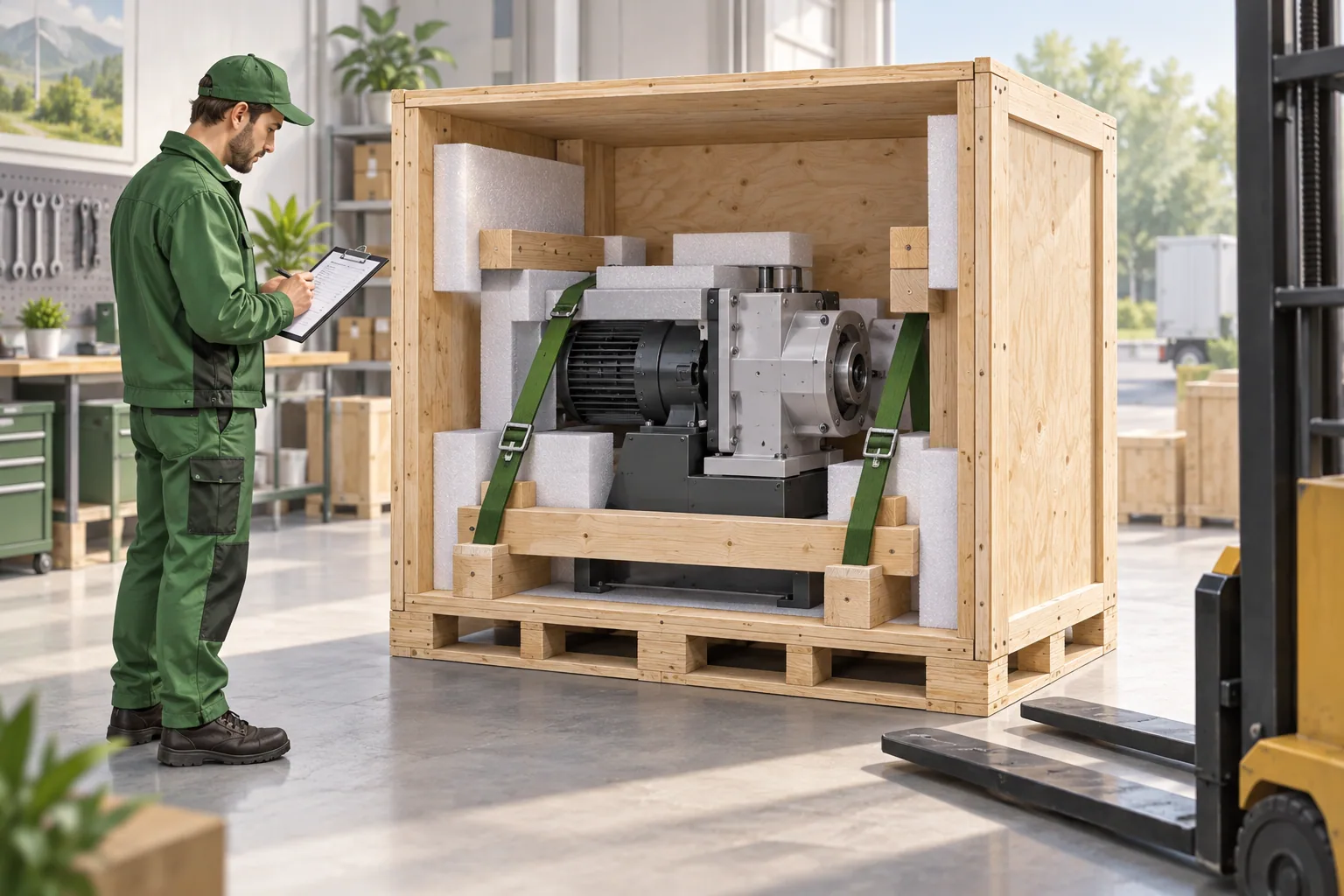
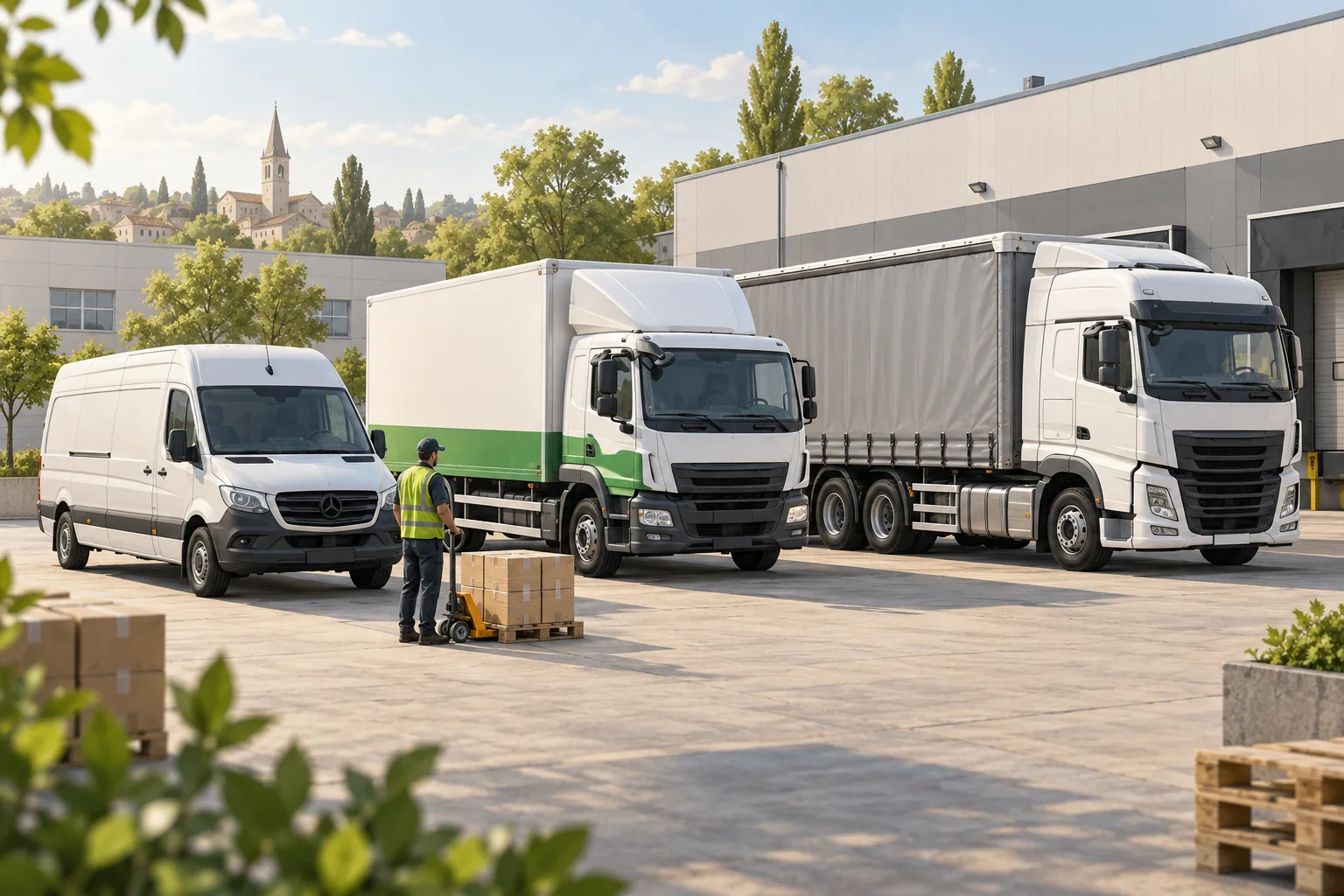
Give the carrier the cargo record and the work at both sites
“Van”, “box truck” or “lorry” is a starting label. Send the finished packed measurements, gross weight and photos, then describe collection and delivery. Ask the carrier to propose the actual vehicle and loading method for that job.
Get a specific answer to each of these questions:
- Usable space: will the packed units fit in the available length, width and height, accounting for wheel arches and other obstructions?
- Loading opening: will each piece pass through the clear opening in its required position, using the proposed loading method?
- Available payload: can the vehicle accept this cargo on this trip, accounting for other loads, distribution and relevant floor or axle constraints?
- Equipment and people: what will load and unload each unit at each site? Ask for the equipment capacity and usable platform dimensions to be checked for the actual unit and method.
- Access and handover: can the vehicle reach and use the agreed stopping point? Describe gates, turning space, parking, restrictions, surface and any movement into a building.
- Special requirements: what protection, restraints, transport position or specialist arrangements does this cargo need?
You do not need to design the vehicle or loading plan yourself. Give the provider the information it needs and keep unanswered points visible until it confirms a workable proposal.
Capacity is more than one number
Do not read a vehicle’s gross weight label as the weight of cargo it can accept. Ask for the available cargo payload of the proposed vehicle on this trip, including other loads. A load can be within that figure but still need a different arrangement because of its dimensions, distribution or handling requirements. The carrier must confirm the complete plan.
Similarly, a tail lift is not a promise that the driver will carry goods upstairs or move a pallet across gravel. Agree the route from the truck to the handover point, equipment and people at each end.
Example: the inside height fits but the door does not
A fictional shipment contains one finished crate: 160 × 90 × 110 cm and 220 kg gross. It must remain upright. The proposed vehicle has 140 cm usable internal height, but the clear loading opening is only 100 cm high.
The 110 cm-high crate cannot pass upright through that 100 cm-high opening. The 140 cm inside height does not solve that mismatch. Keep the packing and upright requirement in the request and ask for a suitable alternative:
Crate A is 160 × 90 × 110 cm, 220 kg gross, and must stay upright. Your proposed opening is 100 cm high. Please propose a vehicle and method that can load this finished crate in that position.
The sender has a forklift and operator; the receiver has no unloading equipment. Please confirm the usable space, clear opening, available payload, loading/unloading equipment and people, and the total price to the agreed handover point. Access photos are attached.
Confirm the remaining dimensions and handling clearances as part of the carrier's complete proposal. Do not remove protective packing or tip the cargo simply to make the proposed opening work; ask the cargo supplier or specialist about any change to its preparation or handling requirements.
Check the route through both properties
- Use the packed measurement record for each unit. Ask the site contacts to confirm any measurements still missing.
- Record where the vehicle can stop and where the cargo must be collected or left. Show the surface, gates, doors, turns and any access limits in photos and measurements.
- Confirm opening hours or appointments, the equipment available and who operates it at each address. A forklift at collection does not settle unloading at delivery.
- If the job includes indoor carrying, give the room and floor, stairs or usable lift and the path to the room. Have that work and its price included in the offer.
- Ask the carrier to confirm the proposed vehicle, securing and handling method against the same unit record and site details before collection.
Ask for specialist planning when the job needs it
The European Commission’s road-safety guidance explains that loads exceeding road weight or dimension limits require national or regional authorisation. An oversized or unusually heavy load therefore needs a route and vehicle assessment, not a generic truck recommendation.
Dangerous goods, temperature-sensitive cargo or unusual lifting arrangements also require the applicable provider and specialist checks. Describe those needs before asking for a standard transport offer so the provider can identify the information and assessment still required.
Copy these details into the vehicle request
- Each packed unit: [ID, length × width × height and gross weight with units; photos; measured or estimated].
- Handling restrictions: [upright position, stackability, fragile parts, lifting or other supplier instructions].
- Collection: [location and handover point; access and stopping space; equipment and operator; local time window].
- Delivery: [location and handover point; access and surface; unloading equipment/people required; indoor carrying if needed; appointment].
- Confirm the proposal: [actual vehicle, usable space and clear opening, available payload and loading/unloading method for these units and sites].
- Quote the complete work: [total payable, currency, tax treatment, conditional extras and anything still to arrange].
Request a vehicle for this shipment. The link opens a Truck request. Put the per-unit record, access details and handling needs in the shipment description, add useful photos and select relevant additional requirements. Ask the provider to identify and confirm its proposed vehicle and work in the offer.
Keep the same requirements if the vehicle changes
Keep the cargo record, site details and written proposal together. If a substitute vehicle or equipment is offered, ask the provider to confirm it meets those same requirements before collection. Send any cargo, access or timing changes and agree their effect on the method and price.
Compare shared and dedicated service arrangements separately: selecting a vehicle size does not specify who shares it, transfers or delivery commitments. Use the quote comparison tool to compare the full price of offers covering the same job.
Sources and checks
Each date records a check of the stated claim and scope.
- Abnormal loads need national or regional permits; procedures differ.
EU road transport; specific route authorisation not established here · Checked October 10, 2026
Ready for the next step?
Turn your shipment details into a clear request.
Prepare your cargo, access and timing details, then compare the scope of each carrier's offer.
Something has changed? Tell us what needs correcting.