


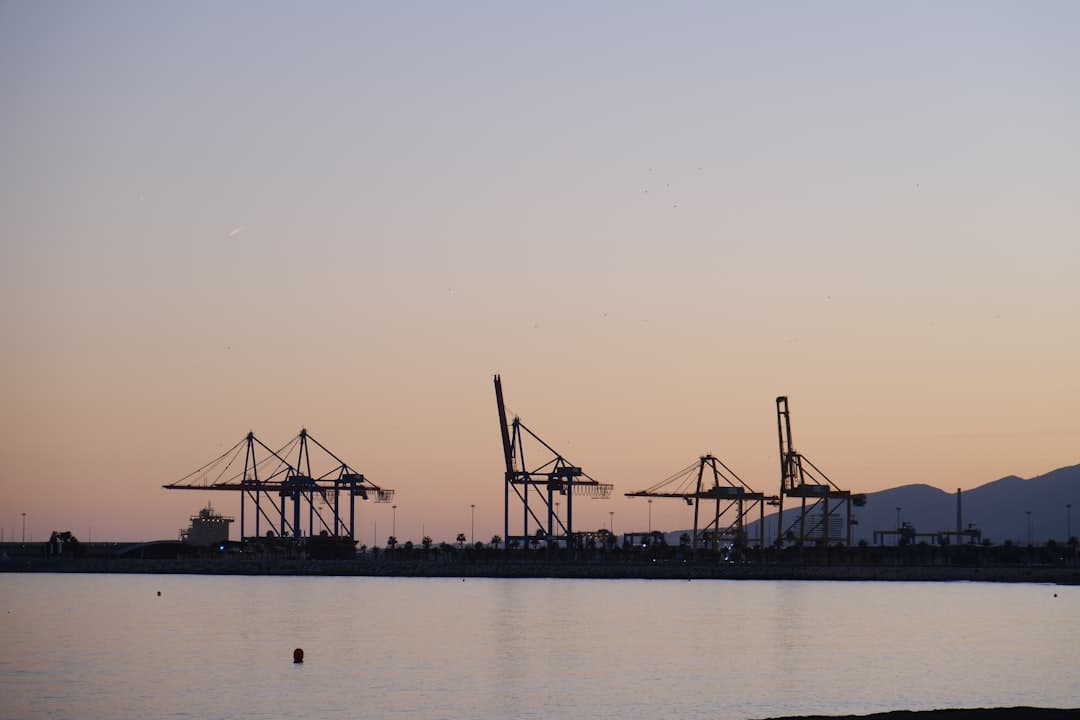
Container handling at Germany's six main seaports stopped for 24 hours from the night shift of 17 August 2026, ending on the 18th. The union ver.di called the walkout across Hamburg, Bremerhaven, Wilhelmshaven, Bremen, Brake plus Emden, and about 5,000 of the 11,000 workers covered by the national port agreement took part. The third round of negotiations opened in Hamburg on 24 August, with the two delegations caucusing separately before direct talks, and it was still running as this went out on the 25th with no result announced. That makes the coming days the part of this dispute that matters for anyone with a booking through the German range, and it is the first thing to re-check before you act on anything below.
I have been through several North European labour cycles and the pattern is consistent: the first stoppage is a warning shot, the schedule damage lands afterwards, and the terminals that recover fastest are the ones whose customers moved cargo before the second round. Below is what stopped, what each side is asking for, plus the routing options that hold up when the German range slows down.
Which terminals stopped
The strike covered employees at more than a dozen port companies working under the ZDS collective agreement. In Hamburg it hit the HHLA container terminals Altenwerder, Burchardkai plus Tollerort, the EUROGATE Container Terminal Hamburg, and the Gesamthafenbetriebs-Gesellschaft, the labour pool that supplies gangs across the port.
German reporting described operations at Hamburg's four main container terminals as largely halted, with quay cranes standing idle. Some vessels had already omitted the port before the stoppage began, which is the tell that carriers were pricing the risk rather than waiting for confirmation. Altenwerder is one of the most heavily automated facilities in Europe, and automation does not help here: the equipment runs, the people who dispatch and lash do not.
The gap between the two offers
The headline numbers look close together until you annualise them.
| Position | Increase, percent | Term, months | Other terms |
|---|---|---|---|
| ver.di demand | 8.2 | 12 | Floor of 2.50 euro extra per hour |
| ZDS employers offer | 5.1 | 19 | Backdated to 1 August 2026, runs to end of February 2028 |
On my own arithmetic the employer offer of 5.1 percent spread across 19 months works out near 3.2 percent a year, against a union demand of 8.2 percent in 12 months. The distance is therefore roughly five percentage points of annual pay growth, not the three points the raw figures suggest. That is why a single warning strike has not settled it.
The euro floor matters more than the percentage in one respect. A fixed 2.50 euro per hour lifts the lowest grades proportionally further than a flat percentage does, which is a deliberate design: the union is protecting the bottom of the scale, where recruitment into shift work has been hardest. Employers resist floors because they compress differentials they later have to rebuild.
What a 24-hour stoppage does downstream
A single day of lost handling rarely stays a single day. Berth windows are allocated in advance, so a ship that misses its slot waits for the next gap, and in a congested August that gap can sit two to four days out. Rail and truck slots booked against the original discharge date fall over separately, which is where inland delay accumulates for shippers who never see the quay.
The freight market backdrop is unusually soft, which cushions the blow. Asia to North Europe spot rates averaged about 5,000 dollars per forty-foot container in mid-August before easing to roughly 4,700, down some 20 percent plus more than 1,000 dollars from the July high. Capacity is available, in other words, so a missed sailing is easier to recover than it would have been last year. Congestion at Shanghai plus Ningbo and typhoon-driven port omissions across north and central China are meanwhile pushing schedule volatility from the load end, which is worth remembering before blaming a German berth for a late arrival.
Contingency options, ranked by how well they actually work
Substituting a German call is harder than a map suggests, because the ZDS agreement covers the whole German range at once. Wilhelmshaven, the country's only deepwater container terminal, struck alongside Hamburg, so the usual within-country fallback was unavailable.
- Rotterdam or Antwerp discharge plus barge or rail into Germany. The most reliable substitution, and the one carriers execute themselves through port omissions. Rhine barge capacity is the constraint to check first.
- Feeder relay from a hub outside the dispute. Works for boxes that can absorb an extra handling, adds cost per move rather than transit certainty.
- Polish and Baltic gateways for eastern German cargo. Viable for inland destinations east of the Elbe, less so for the Ruhr.
- Holding cargo at origin. Cheapest option when rates are falling, because the market is not punishing a week of delay right now.
- Air freight for the exception cases only. Justified for production-stopping parts, never for restocking.
Comparative volumes plus terminal capability across the alternatives sit in our ranking of the biggest ports in Europe, and the automation profile of the Hamburg terminals is covered in our review of the most automated container terminals.
What the Hamburg round decides
Three outcomes are plausible from the round that opened on 24 August, and each has a different operational signature. Note what preceded it: ver.di said on 17 August that no third date had been agreed and that it was waiting for a signal from the employers. The date materialised within a week of the stoppage, which is itself a reading of how the warning strike landed.
A settlement near the middle, something like six percent over 15 months with a smaller euro floor, ends the disruption within days and leaves a modest backlog. A breakdown leads to further warning strikes, probably longer than 24 hours, and at that point carriers begin omitting German calls as policy rather than as exception. A partial agreement that goes to a member vote keeps handling running while the ballot proceeds, which is the quiet outcome that most disputes reach.
My own reading is that the participation figure argues for settlement. Around 5,000 of 11,000 covered workers joined, just under half, with about 2,100 of them in Hamburg on ver.di's own count. That is enough to stop the terminals for a day, it is not the near-total turnout a union brings to a decisive strike, and both sides can read the same number.
- Treat the German range as one exposure. The ZDS agreement covers Hamburg through Emden together, so there is no domestic fallback port.
- Check berth windows, not strike days. One lost day usually becomes two to four through requeueing in August.
- Use the soft market. Asia to North Europe at about 4,700 dollars per forty-foot box means delay costs less than diversion for most cargo.
- Pre-book Rhine barge or rail before the next round. Inland capacity sells out faster than quay capacity when a port pauses.
- Read the Hamburg round for the tone, not the number. A ballot outcome keeps cargo moving even without a signed deal.
Common questions
Which German ports were affected by the August 2026 strike? Hamburg, Bremerhaven, Wilhelmshaven, Bremen, Brake and Emden. The 24-hour warning strike began with the night shift on 17 August and ended on 18 August 2026.
What does ver.di want? An 8.2 percent pay increase over 12 months with a floor of at least 2.50 euro extra per hour. The ZDS employers association has offered 5.1 percent over 19 months, backdated to 1 August 2026 and running to the end of February 2028.
How many workers took part? About 5,000 of the roughly 11,000 seaport workers covered by the collective agreement, according to the union, which was enough to halt container handling at Hamburg's four main terminals.
Will there be more strikes? That depends on the third negotiating round, which opened in Hamburg on 24 August 2026 and had produced no announced result by the 25th. A warning strike of this kind is designed to precede a settlement, though a breakdown would most likely bring longer stoppages.
What should shippers do now? Confirm berth windows rather than counting strike days, secure Rhine barge or rail slots for inland legs, and treat Rotterdam or Antwerp discharge as the practical substitution. Spot rates near 4,700 dollars per forty-foot container to North Europe make waiting cheaper than rerouting for most cargo.
Sources: ver.di strike calls and ZDS employer statements reported by WorldCargo News, Splash247, Maritime Executive and TrasportoEuropa for the 17 to 18 August 2026 stoppage, Kuehne and Nagel customer advisories on affected terminals, Freightos rate benchmarks published 18 August 2026, plus German press reporting on Hamburg terminal operations and on the opening of the third round. Negotiation status and rate levels reflect the position on 25 August 2026, with the Hamburg round still in progress.