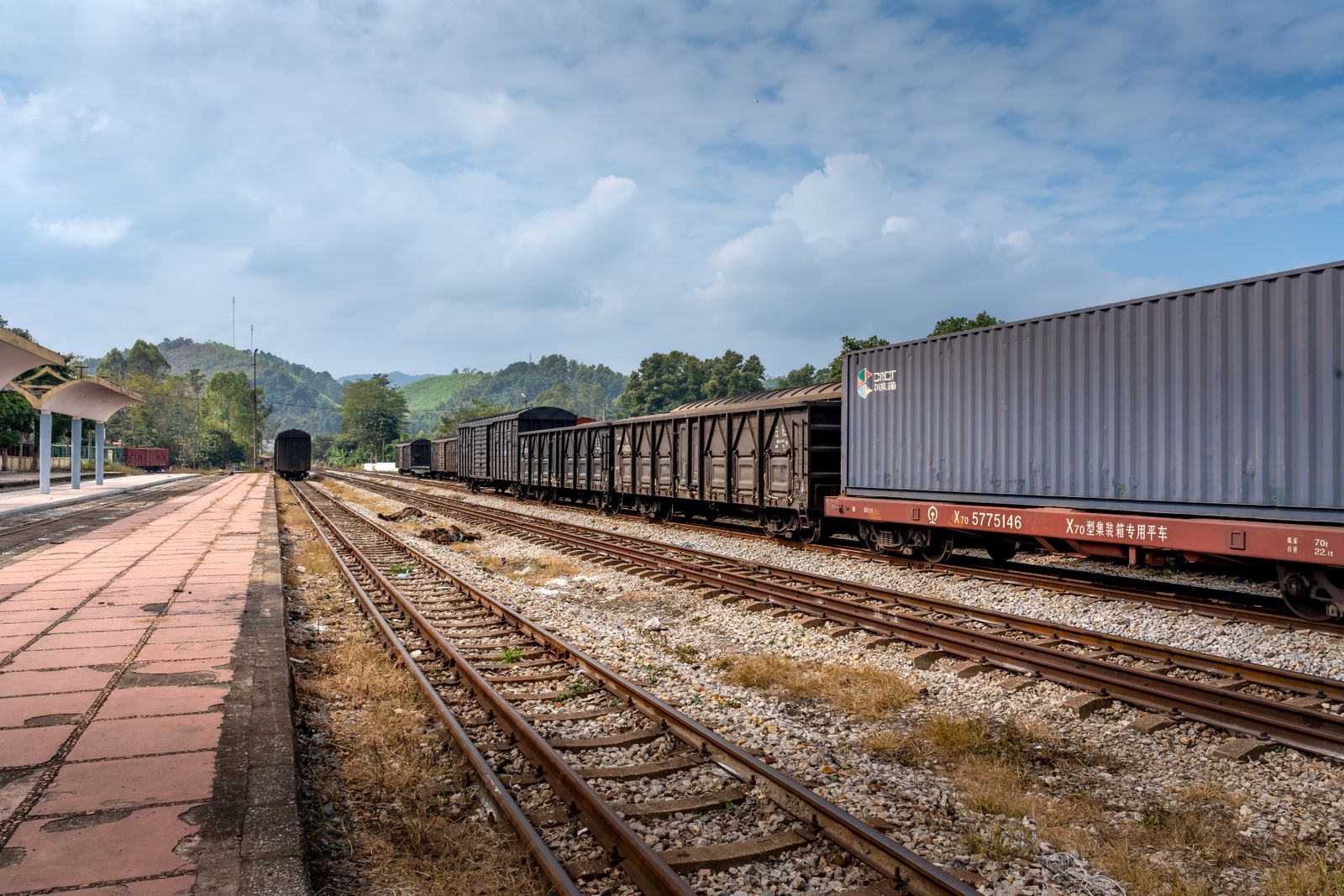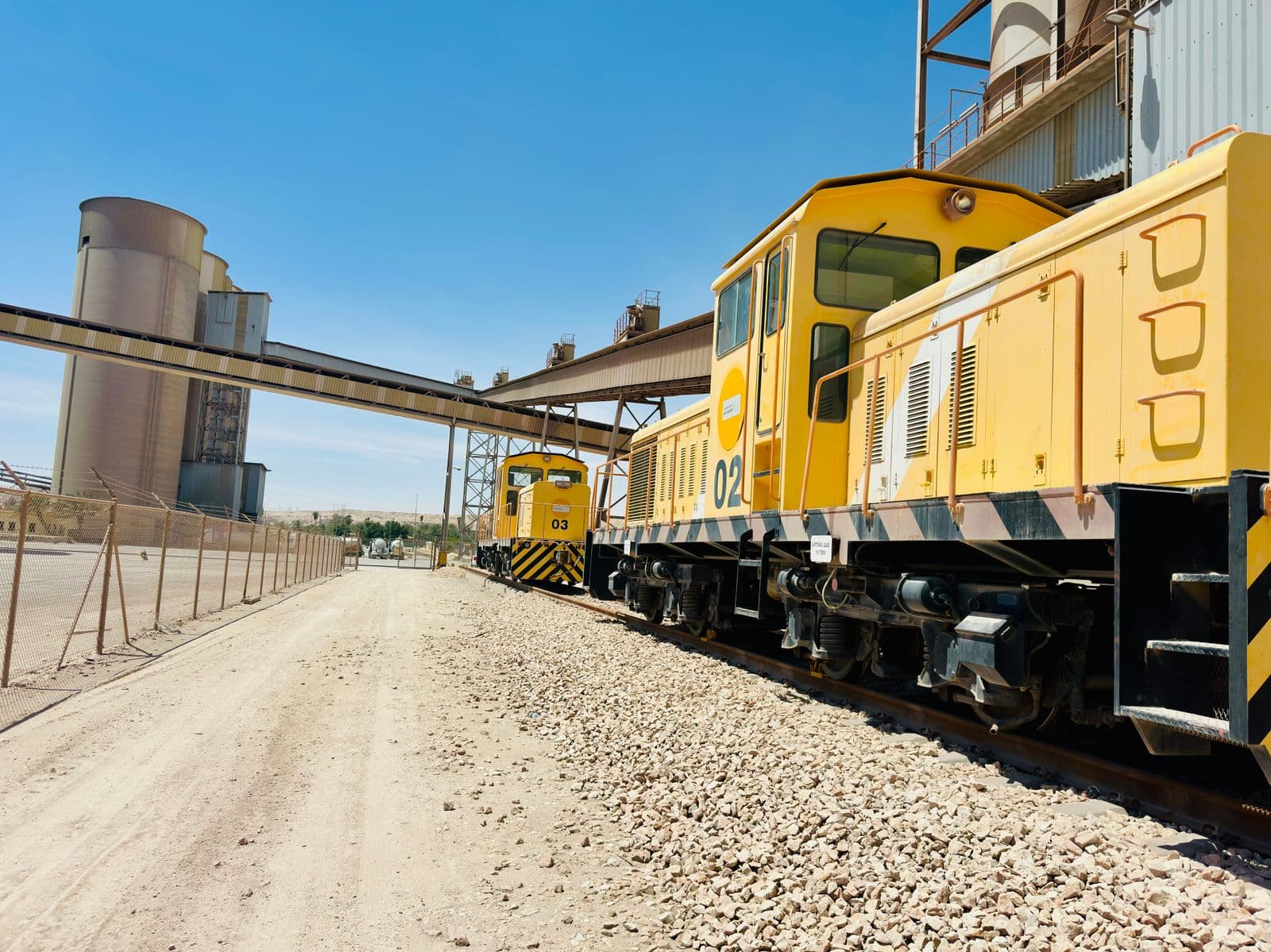
The 1,860 km railway between Zambia's Copperbelt and the port of Dar es Salaam is being rebuilt under a 30 year concession worth 1.4 billion dollars. The target is 2.4 million tonnes of freight a year by the third year of operation, against a corridor that has recently moved a small fraction of that. This is where the work stands in August 2026.
I have followed TAZARA since the first serious revival talk in 2023, and my scepticism was built on 2 decades of announcements that produced ceremonies rather than track. What changed in late 2025 is that money, an operator and a deadline arrived in the same document. What has not changed is the volume arithmetic, which is the part shippers should read first.
What the concession commits to
China Civil Engineering Construction Corporation, a subsidiary of China Railway Construction Corporation, signed the concession on 29 September 2025 to rehabilitate and then operate the line for 30 years. The programme was formally launched with a foundation stone ceremony in Lusaka on 20 November 2025. On 6 April 2026 CRCC vice president Sun Liqiang used a site visit to restate the 3 year construction schedule, which puts substantial completion around late 2028.
| Element | Commitment |
|---|---|
| Route length | 1,860 km, of which 975 km in Tanzania and 885 km in Zambia |
| Investment | 1.4 billion dollars over the concession |
| Concession term | 30 years, rehabilitate and operate |
| Rolling stock budget | About 400 million dollars |
| Locomotives and wagons | 32 to 34 locomotives, about 760 wagons, plus 18 coaches |
| Freight target | 2.4 million tonnes a year by year 3 of operation |
The rolling stock figures are worth a note, because published counts differ. Zambian government material describes 32 locomotives and 762 wagons; TAZARA and Chinese releases describe 34 locomotives, 760 wagons, 18 coaches and 2 passenger train sets. The gap is small, and it usually means one document counts shunting units separately. I flag it because corridor announcements in this region are often repeated without anyone checking which version they came from.
The volume gap nobody quotes
Set the 2.4 million tonne target against what the corridor actually moves. TAZARA board targets for the 2024/25 financial year sat at 350,000 tonnes of cargo. Combined volumes across all operators on the route have recently run near 500,000 tonnes a year. The revitalisation therefore needs to multiply throughput by roughly 5 times, on the same alignment, in 3 years.
That is achievable in principle. The line was built for bulk mineral traffic and the demand exists: Zambian and Congolese copper output keeps growing, and the corridor sits closer to the Copperbelt than Durban does. It is not achievable by track work alone. Locomotive availability, wagon turnaround and border processing at Nakonde and Tunduma decide throughput as much as rail condition does, and only 1 of those 3 is inside the construction contract.
My working assumption for planning purposes is that capacity arrives in steps rather than smoothly: a first step when new locomotives enter service, a second when the worst sections of formation are rebuilt, and a third only if border processing is fixed alongside. Shippers who need a firm eastern routing before 2028 should be planning around road haulage to Dar es Salaam with rail as an upside, not the reverse.
The port is ahead of the railway
Dar es Salaam has moved faster than the line that feeds it. The port handled 27.7 million tonnes in 2024/25, up 15 percent year on year and the highest in its history, and it set a monthly container record of 91,625 TEU in July 2026. Vessel waiting time fell from an average of 5 days to under 48 hours, which is the single change most often cited by regional logistics firms when they explain why they rerouted through Tanzania.
The Democratic Republic of Congo has also secured a dedicated dry port at Dar es Salaam to track mineral exports of about 7.2 million tonnes. That matters more than it sounds: a dry port with Congolese customs presence removes one of the border handoffs that has historically made the eastern route slower than its distance suggests. Ports across the region are covered in our ranking of African ports.
How the eastern route compares
Copper leaving Kolwezi or the Zambian Copperbelt has 4 realistic exits, and they differ by more than distance.
| Route | Rail distance | Indicative end to end transit | Status in 2026 |
|---|---|---|---|
| Lobito, Angola | 1,289 km Benguela line | 12 to 17 days | Operating, financing closed in July 2026 |
| Dar es Salaam via TAZARA | 1,860 km | Weeks, constrained by rolling stock | Under rehabilitation to 2028 |
| Durban, South Africa | Road plus rail, longest option | 25 to 50 days | Operating, congested and border heavy |
| Beira and Nacala, Mozambique | Shorter than Durban | Between the 2 above | Operating, capacity limited |
Lobito is the benchmark the eastern corridor now has to answer. Its operator moved more than 200,000 tonnes in 2025 with a record 37,000 tonnes in December, runs about 360 wagons, and targets 240,000 tonnes of copper. In July 2026 the western route reached financial close on a 753 million dollar package for the 1,300 km Angolan section, 553 million of it from the United States International Development Finance Corporation and 200 million from the Development Bank of Southern Africa, with Lobito Atlantic Railway as borrower and concessionaire. Zambia intends to start building its own link to that line from the third quarter of 2026, with financial close aimed at early 2027 and first operations between 2027 and 2028, the same window in which TAZARA expects to finish. Our Lobito corridor guide sets out that route in detail.
Two corridors reaching capacity in the same 24 months is unusual, and it changes the negotiating position of anyone shipping Copperbelt metal. For the first time since the 1970s the eastern and western routes will compete on service rather than on availability.
What to plan around
- Treat 2028 as the earliest meaningful date. The 3 year schedule was restated in April 2026, so a 2026 or 2027 volume commitment on TAZARA rail is a bet, not a plan.
- Price the border, not just the track. Nakonde and Tunduma processing sits outside the construction contract and has historically added days.
- Use the port improvements now. Sub 48 hour vessel waiting at Dar es Salaam is available to road freight today, without waiting for the railway.
- Keep both corridors in the contract. Lobito and Dar es Salaam are moving on similar timelines, and dual routing is the cheapest hedge available.
- Watch locomotive deliveries as the leading indicator. About 400 million dollars of rolling stock is the part of the programme that converts fastest into hauled tonnes.
- Check gauge compatibility on any through service. TAZARA, Zambia Railways and the Benguela line all run 1,067 mm cape gauge, which is why through running is possible at all.
Common questions
Who is rebuilding TAZARA? China Civil Engineering Construction Corporation, part of CRCC, under a 30 year concession signed on 29 September 2025 worth 1.4 billion dollars.
When will it be finished? The contractor restated a 3 year schedule in April 2026, pointing to late 2028 for substantial completion of the rehabilitation.
How much freight will it carry? The stated target is 2.4 million tonnes a year by year 3 of operation, against recent corridor volumes near 500,000 tonnes.
Is Dar es Salaam ready for that volume? The port handled 27.7 million tonnes in 2024/25 and cut vessel waiting to under 48 hours, so the maritime side is ahead of the rail side.
Is Lobito a better option? For Congolese copper it is currently faster, at 12 to 17 days end to end over a 1,289 km line, and its Angolan section closed 753 million dollars of financing in July 2026. For Zambian volume the answer changes once the Zambian link and the TAZARA rebuild are both delivered.
What is the main risk to the timetable? Rolling stock delivery and border processing rather than civil works. Rail rehabilitation without locomotives and clean customs handoffs does not produce tonnes. Regional operators are compared in our rail freight operator ranking.
Sources: TAZARA and CCECC concession releases from September and November 2025, CRCC site visit statements of 6 April 2026, Tanzania Ports Authority throughput reporting for 2024/25 and July 2026, Zambian Ministry of Transport and Logistics material on the revitalisation programme, Africa Finance Corporation statements on the Lobito Corridor financial close of July 2026, plus Lobito Atlantic Railway volume disclosures for 2025. Figures reflect published information as of 31 August 2026.