


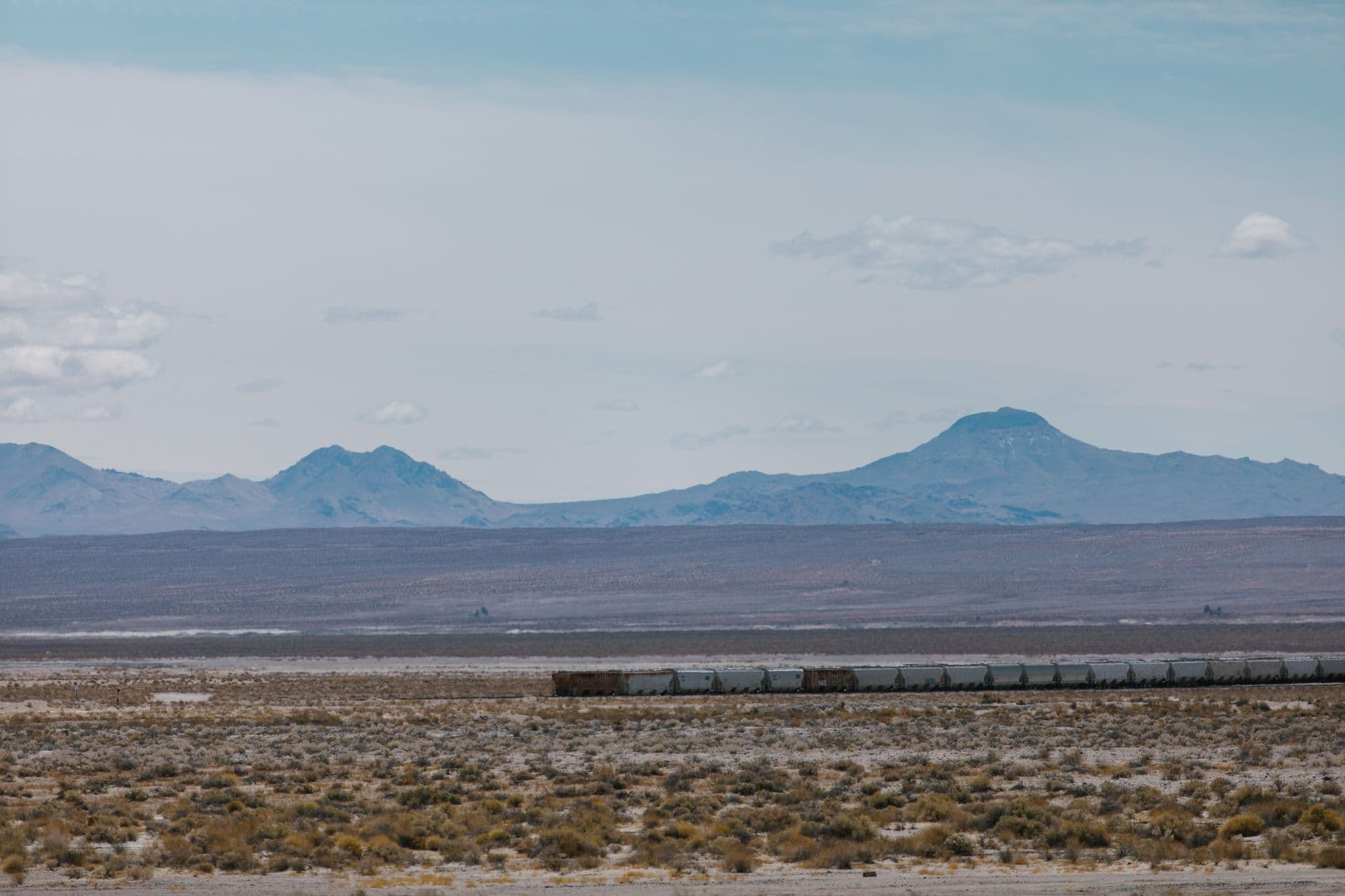
In 2026 Etihad Rail gives shippers and forwarders a working freight railway that runs the length of the United Arab Emirates, from the Saudi border at Ghuweifat to Fujairah on the east coast, with capacity to move up to 50 million tonnes of cargo a year Etihad Rail. For a forwarder that headline matters less than what it unlocks: a real alternative to trucking on port-hinterland moves, and a growing cross-border option as the line pushes into Oman and plugs into the wider Gulf network. What follows is the operational read on how to use it, not the ribbon-cutting version.
I have spent enough time modelling Gulf lanes to stay sceptical of new infrastructure until it carries real tonnage. Etihad Rail has cleared that bar. The freight service has run since 2023, the national network is complete, and passenger trains only began rolling out in phases in 2026 Gulf News, which tells you where the priority sat all along. So the question for a cargo owner is no longer whether the railway exists. It is when rail beats a truck, and what it changes about the way you plan a Gulf move.
What Etihad Rail freight actually is in 2026
The network was built in stages, set out in the table below. It began narrow, a single sulphur line running from the Shah and Habshan gas fields to the port at Ruwais, and became a national spine when the long east-west section opened in early 2023, reaching from the Saudi border at Ghuweifat across to Fujairah on the Gulf of Oman Etihad Rail. The operational network now touches all seven emirates.
Two operator claims frame the value for anyone weighing rail against road. One fully laden freight train can replace about 300 trucks, and moving the same tonnage by rail cuts roughly 70 to 80 percent of the carbon dioxide a truck fleet would emit Etihad Rail. Over a year the network is expected to avoid more than 2.2 million tonnes of greenhouse gas, which the operator puts at the equivalent of taking around 375,000 vehicles off the road Etihad Rail.
| Segment | Length | Route | Status |
|---|---|---|---|
| Stage One | 264 km | Shah and Habshan gas fields to Ruwais | Freight operational since January 2016 |
| Stage Two | 605 km | Ghuweifat (Saudi border) to Fujairah | Opened 28 February 2023 |
| National network | ~900 km now, ~1,200 km planned | All seven emirates | Freight live; passenger rolling out in phases from 2026 |
| Hafeet Rail (UAE-Oman) | 238 km | Sohar Port to Abu Dhabi via Al Ain and Al Buraimi | Under construction, reportedly ~40% complete (mid-2026) |
| GCC Railway | 2,177 km planned | Six GCC states | Target 2030 |
Sources: Etihad Rail, Hafeet Rail, Gulf Railway (GCC).
How forwarders use it for port-hinterland moves
The most immediate use case has nothing to do with borders. It is the short, heavy leg between a seaport and an inland industrial zone, the drayage move that clogs UAE highways today. Etihad Rail has wired its main line into the country's major gateways, with terminals and loading points serving Khalifa Port, Jebel Ali Port and Fujairah Port, plus inland hubs at ICAD in Abu Dhabi, Dubai Industrial City, Al Ghail and Ruwais Railway Technology. That turns the railway into a spine linking quays to factories without a truck for every container.
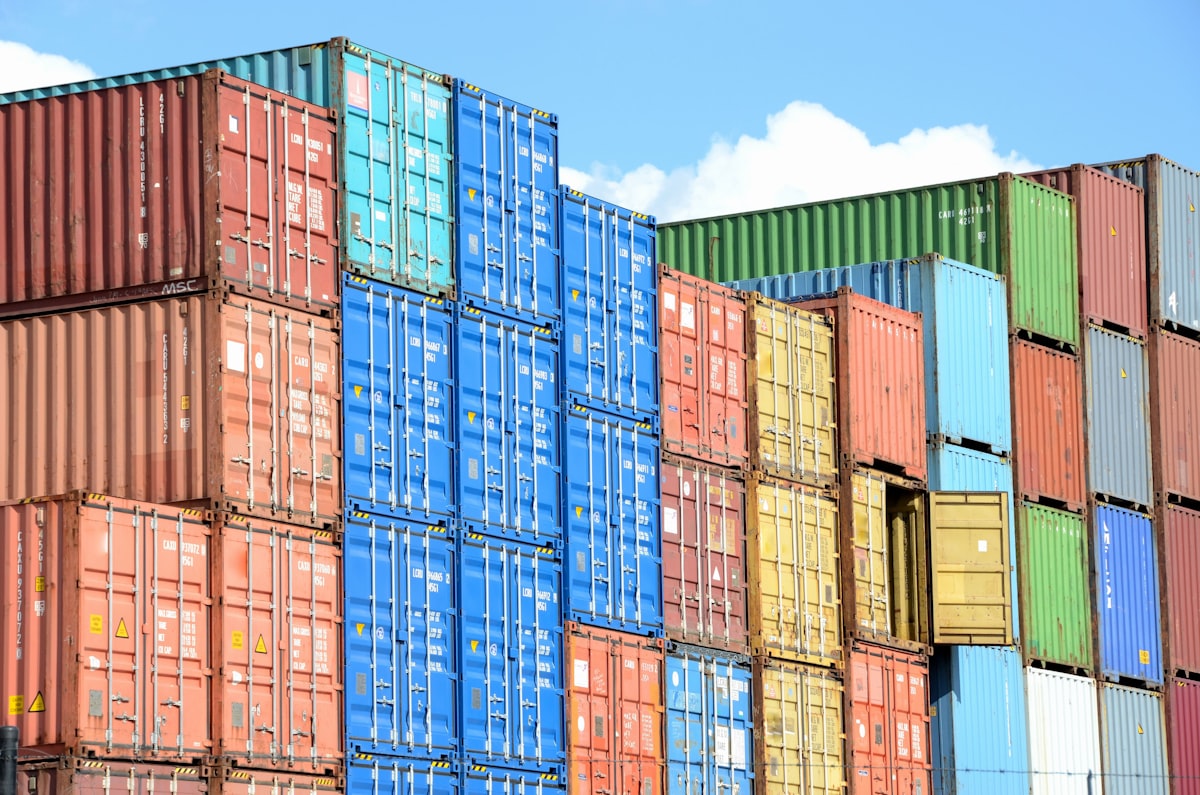
The anchor is the inland freight terminal at ICAD, which Etihad Rail describes as the largest of its kind in the country. When fully ramped it is designed to handle more than 15 million tonnes of bulk raw materials and roughly 116,600 twenty-foot containers a year International Railway Journal. For a forwarder handling project cargo or industrial inputs, a terminal on that scale behaves like a dry port. You rail the box inland from Khalifa Port, stage and clear it near the factory, and skip the highway queue.
The volume is not theoretical. In the first year of its rail partnership the petrochemicals producer Borouge moved more than 700,000 tonnes of polymers on Etihad Rail Energy Connects, the kind of steady industrial flow that suits a train far better than a rolling convoy of trucks. If your cargo is dense, regular and running between a Gulf port and an inland site, this is where rail already pays.
Rail versus trucking, the honest comparison
Trucking still wins on flexibility. A truck goes door to door, leaves when the box is ready, and ignores the terminal timetable. Rail asks you to consolidate and to work to a schedule, and it needs a first and last mile arranged at each end. In exchange it offers scale and a much lower carbon figure, along with insulation from driver shortages and road congestion that are real cost lines on Gulf highways.
One quiet advantage is worth stating plainly. Etihad Rail was built to a single standard gauge across the whole UAE, and the wider Gulf network is being planned to match. So a container can, in principle, run from a UAE port deep into the peninsula without the break of gauge that slows other regional corridors, the way the Caucasus interchange slows the Middle Corridor. When I model a rail quote against an all-road move, I treat terminal handling and the drayage at each end as the cost of entry, then weigh the fuel, tolls and driver time saved over the trunk haul as the payback. For a single urgent pallet, the truck wins. For a repeating industrial programme, the maths tilts to rail well before the environmental argument even enters.
The cross-border story: Hafeet Rail into Oman
Here is where 2026 gets genuinely new. Etihad Rail, Oman Rail and the UAE investment company Mubadala have formed a joint venture, Hafeet Rail, to build the region's first fully integrated cross-border railway. The line will run 238 kilometres from Sohar Port in Oman to Abu Dhabi by way of Al Ain and Al Buraimi Hafeet Rail. It carries a price tag near 2.5 billion US dollars, construction started in 2024, and by April 2026 the operator reported it had reached roughly 40 percent completion and entered the track-laying phase Arabian Business.
The freight design speed is 120 kilometres an hour Hafeet Rail, and that is the number a forwarder should watch rather than the passenger figures. A direct rail link between Sohar, one of Oman's deep-water gateways, and the Abu Dhabi industrial belt creates a second overland entry into the UAE hinterland. It gives cargo a route into the Emirates that does not depend on the same chokepoints as every other Gulf approach. That is a resilience option worth keeping on the shelf, and it is the first tangible piece of the Gulf-wide vision instead of another line on a planning map.
The wider GCC Railway and the Saudi land bridge
Zoom out and Hafeet Rail is one segment of the long-discussed Gulf Railway, a planned 2,177 kilometre network meant to connect all six GCC states, from Kuwait through Saudi Arabia, Bahrain, Qatar and the UAE down to Oman Gulf Railway. The programme carries a working target of 2030, by which point the six-country system is projected to move on the order of 201 million tonnes of freight a year Gulf Railway. Those are planning figures, so I read them as direction of travel rather than a timetable to book against.
The piece most relevant to UAE shippers is the Saudi connection. Stage Two already reaches the border at Ghuweifat, and Etihad Rail ran a passenger trial on the Saudi-UAE section during 2026 to prove the physical link Gulf Business. Once scheduled freight interchange with the Saudi rail network goes live, a container could move by rail from a UAE port toward the Saudi land bridge that joins the Gulf coast to the Red Sea, opening an overland alternative to sailing around the Arabian Peninsula. That remains a plan rather than a booking you can make today, and I would not build a 2026 routing on it. It is the direction the network points, and it reframes the UAE segment as the first leg of a peninsula-wide land bridge rather than a domestic railway.
If you already route cargo through Saudi and Gulf gateways, read this alongside the pressure on the sea leg. Congestion at Red Sea and Gulf ports has been a recurring theme this year, and I covered the operational fallout in our guide to Jeddah and Gulf port congestion in 2026. Rail is one of the pressure valves that story eventually needs.
When rail wins, and when it does not
After stripping away the marketing, my rule of thumb is simple. Etihad Rail freight earns its place when the cargo is heavy or high in volume, when it runs on a repeatable lane between a port and an inland zone, and when the shipper can live with a fixed schedule instead of on-demand pickup. It is a poor fit for a single time-critical consignment. It is also a poor fit for cargo scattered across many small drops, or for any lane where the nearest terminal is so far from origin or destination that the drayage cancels the saving.
The cross-border layer changes the calendar, not today's decision. Hafeet Rail into Oman is still under construction, and full GCC interchange sits years out. What a forwarder can do now is design lanes that are rail-ready, so that when the Oman link and the Saudi interchange open, the switch is a re-quote rather than a rebuild. The corridor thinking mirrors what we mapped for the India-Middle East-Europe corridor, where the shippers who planned early are the ones holding options now.
This is where a marketplace view beats a static map. GetTransport.com lets a shipper compare carriers who actually run the port drayage, the rail feeder and the cross-border legs this month, rather than assuming the railway alone solves the move. The train is the trunk. The first and last mile still decide whether the plan holds, and that is exactly the part a live carrier network prices honestly.
Frequently asked questions
Is Etihad Rail freight fully operational in 2026?
Yes. The freight service has run since Stage Two opened on 28 February 2023, and the national network now spans roughly 900 kilometres across all seven emirates Etihad Rail. Passenger services are the later addition, rolling out in phases from 2026, beginning with the Abu Dhabi to Dubai leg Gulf News. The line is designed to carry up to 50 million tonnes of freight a year, so for cargo owners it is a live option today rather than a future promise.
How much road freight can one Etihad Rail train replace?
Etihad Rail states that one fully laden freight train can take the place of about 300 trucks, and that moving the same tonnage by rail cuts roughly 70 to 80 percent of the carbon dioxide a truck fleet would produce Etihad Rail. Across a year the operator expects the network to avoid more than 2.2 million tonnes of greenhouse gas Etihad Rail. For a repeating industrial flow, that is where the cost and carbon case is strongest.
Does Etihad Rail connect to Oman and the rest of the GCC?
Not yet directly, but the link is being built. Hafeet Rail, a joint venture of Etihad Rail, Oman Rail and Mubadala, is constructing a 238 kilometre cross-border line from Sohar Port in Oman to Abu Dhabi, reported at around 40 percent complete as of mid-2026 Arabian Business. It is the first piece of the wider Gulf Railway, a planned 2,177 kilometre network linking all six GCC states with a target of 2030 Gulf Railway.
Can I ship by rail from the UAE to Saudi Arabia now?
Not as a routine freight booking yet. Etihad Rail's Stage Two already reaches the Saudi border at Ghuweifat, and a passenger trial ran on the Saudi-UAE section in 2026 Gulf Business, but scheduled cross-border freight interchange with the Saudi network is still being brought online. The practical step today is to design lanes that can switch to rail once the interchange opens, rather than to book it now.