


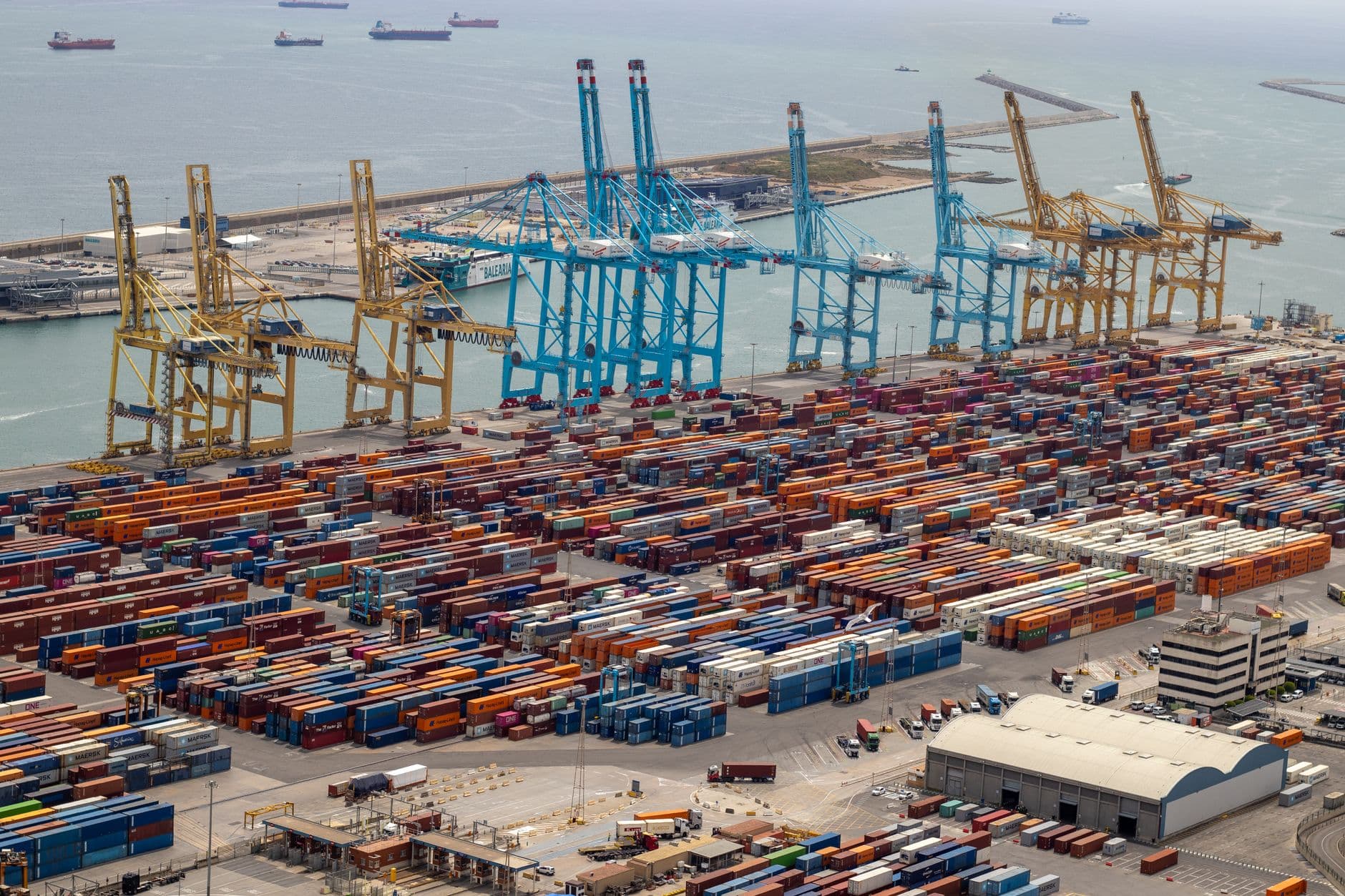

When a shipper calls our freight desk in 2026 about moving Asian factory inputs into Mexico, the question is no longer which ocean carrier to book. It is which gateway will actually let the box off the ship this month. Manzanillo, the country's busiest Pacific port, started the year with vessels waiting well over a week to berth and yards so full that customs alone could swallow days. The nearshoring boom that everyone wanted has arrived, and the ports it lands on were not built for it. This guide is the operational read on why Manzanillo jammed and how we route around it.
GetTransport.com matches carriers across Mexican Pacific and Gulf lanes every day, so what follows is the version a cargo owner needs, not the press-release version. The macro story of factories leaving Asia for Mexico has been told everywhere. What it leaves out is the part that hits your landed cost: a single congested terminal can add days of dwell and double-digit cost, and the fix is usually a different door rather than patience.
Why Manzanillo jammed
Manzanillo handles close to half of Mexico's containerised imports and processed around 3.9 million TEU in 2025, and utilisation is now approaching the levels that create operational bottlenecks and capacity constraints. In January 2026 the port moved more than 354,000 TEU in a single month, about 8 percent above the year before, and the cargo total climbed to 2.48 million tonnes. Volume is not the problem on its own. The problem is that the volume is the wrong shape.
Industry estimates suggest that a growing share of Pacific port traffic is linked to nearshoring supply chains, meaning Asian components arriving for assembly rather than finished goods for the shelf. That cargo does not sit at the port and feed a local store. It needs to clear customs fast and run inland by truck or rail to the plants in Jalisco, Guanajuato and Queretaro. When shippers report customs-related delays stretching beyond several days during peak congestion, the whole chain backs up behind the slowest step. Periodic labour disruptions and operational bottlenecks have further complicated recovery, and the port has needed weeks to drain its backlogs. The honest summary we give shippers is that Manzanillo is not broken, it is simply full, and full ports do not reward loyalty.
The cost of staying in the queue
The temptation is to wait it out, because Manzanillo has the deepest carrier coverage and the most direct Asia services. Sometimes that is right. But the math turns quickly once dwell stretches. Demurrage and detention clocks run while a box waits, trucking slots get rebooked, and plants that ordered just-in-time inventory start paying for the gap. Industry estimates put the cost penalty of Manzanillo congestion as high as 20 percent on affected moves, which is the kind of number that pays for a longer ocean leg to a quieter port several times over.
This is where a marketplace view earns its keep. The right gateway is not a fixed answer printed on a routing guide. It is whichever door is moving freight this week, weighed against the inland distance to your plant and the rail or truck capacity onto that lane. Below are the four alternatives we quote most often, and the trade-off each one carries.
Lazaro Cardenas: the Pacific relief valve
If you have to stay on the Pacific, Lazaro Cardenas is the first call. It posted the strongest momentum of any major Mexican port in early 2026: port figures put it at 247,009 TEU in March alone, a 29 percent jump year on year, and 685,412 TEU across the first quarter. Carriers are voting with their money, and APM Terminals has announced an expansion of around US$350 million there, set to lift its operating capacity from 1.2 million toward 2.2 million TEU, while Hutchison Ports and a multimodal hub project add yard and rail room.
The trade-off is geography and rail dependence. Lazaro Cardenas sits farther from the northern border than Manzanillo, so its real strength is its rail spine into central Mexico and onward toward the United States. For a shipper whose plant is in the Bajio or whose final destination is a cross-border rail ramp, the extra ocean and rail distance is often cheaper than a week of Manzanillo dwell. For a truck-heavy move to Guadalajara, the case is weaker. Match the gateway to how the box leaves the port, not just to the sailing schedule.
Ensenada: the Baja shortcut to the border
Ensenada is the only deepwater port in Baja California and sits about 110 kilometres south of the US border. That position is its whole pitch. For cargo bound for Tijuana, the California maquiladora belt or a quick cross-border run, Ensenada skips the long inland haul that Manzanillo and Lazaro Cardenas both require. The catch is scale. The terminal handles only around 143,000 TEU a year against a capacity near 300,000, with expansion plans toward 400,000, so it is a precision tool rather than a volume gateway. Direct Asia coverage is thinner, and a box that has to transship costs time. We route to Ensenada when the destination is genuinely close to the northwestern border and the volume is modest, and we keep it off the table for a heavy industrial programme deep in central Mexico.
The Gulf option: Veracruz and Altamira
The least obvious move is to leave the Pacific entirely. If your cargo comes from Europe, the eastern United States or the Atlantic side of Asia's network, the Gulf ports can be the shorter water route and they sit far from the Manzanillo crush. Veracruz is in the middle of a major expansion that lifts its throughput capacity from 28 million toward 95 million tonnes a year, anchored by a breakwater stretching 4.3 kilometres, and it already moves over a million TEU. Altamira runs about 1.2 million TEU of container capacity across five berths and is preparing ground for six new terminals.
The trade-off is the lane itself. Most low-cost Asian manufacturing still sails to the Pacific coast, so routing those inputs through the Gulf means a longer voyage around or a transshipment. Where the Gulf wins is for Europe-origin freight and for plants in eastern and central Mexico that the Gulf ports actually sit closer to. The other reason shippers underestimate the Gulf is the same reason they underestimate alternative water routes generally, which is the same lesson we drew from the Panama Canal squeeze in our guide to the Tehuantepec interoceanic corridor: the cheapest line on the map is not always the cheapest move once a chokepoint is priced in.
The onward move is where gateways are won
Choosing a port is only half the decision. The other half is how the box gets from the quay to the plant or the border. Mexico's two big railroads, Ferromex and CPKC, run the intermodal spine that connects the Pacific ports to the Bajio and on to the US border crossings, and rail freight between Mexico and the United States has largely stayed clear of the tariff turbulence that has roiled other lanes. That makes a port with strong rail, like Lazaro Cardenas, more resilient than its dwell numbers alone suggest, because the cargo can keep moving even when truck capacity tightens.
The forwarders are building for exactly this. In June 2026, DP World announced it had secured IATA certification for its Mexico City freight-forwarding hub, letting it issue air waybills directly and bolt air freight onto its end-to-end Mexican network of warehouses and inland offices. The signal for shippers is that the smart money is investing in the inland connection, not just the berth. A gateway with a thin onward leg can be slower than a busy port with a strong one.
USMCA still makes the whole bet work
None of these alternatives would matter without the trade framework underneath them. The reason Asian manufacturers are assembling in Mexico at all is that USMCA lets the finished goods cross into the United States on far shorter transit and friendlier duty terms than shipping direct from Asia. That advantage is what turned a steady import flow into the surge now overwhelming Manzanillo. The same logic that built the congestion is the reason it is worth solving rather than abandoning: the landed-cost edge of a Mexican assembly base survives a gateway detour, as long as the detour is planned rather than improvised.
A gateway-selection checklist
- Map the inland leg first. The plant or the border ramp, not the sailing schedule, should pick the port.
- Price Manzanillo dwell honestly. If congestion is adding days and a 20 percent cost penalty, a quieter port often wins even with a longer ocean run.
- Use Lazaro Cardenas when rail into the Bajio or the US border carries the box, not when a short truck move does.
- Reserve Ensenada for modest volumes genuinely close to the northwestern border.
- Test the Gulf for Europe-origin freight and for eastern and central Mexican destinations.
- Confirm the rail or truck capacity onto your chosen lane before you commit the booking, because the onward leg fails more often than the berth.
The headline that Manzanillo is jammed is the easy part of the 2026 story. The move is won in the gateway you pick to route around it and the inland leg that carries the box from there, which is exactly where a live marketplace view of who is moving freight this month beats a routing guide that names one default port. For shippers also weighing the canal squeeze on the other coast, our Panama Canal booking-window guide sets out the same trade-off logic on water.
Frequently asked questions
Why is Manzanillo so congested in 2026?
The nearshoring surge has pushed Asian factory inputs through Manzanillo faster than the port can clear them. It handles close to half of Mexico's container imports and processed around 3.9 million TEU in 2025, with utilisation approaching the point where bottlenecks form, and in January 2026 it moved more than 354,000 TEU, about 8 percent up year on year. Shippers report customs-related delays stretching beyond several days during peak congestion, and periodic labour disruptions have added to the backlog. The volume is not just high, it is time-sensitive nearshoring cargo that needs to clear and move inland fast.
Which port is the best alternative to Manzanillo?
There is no single answer, because the right gateway depends on where your cargo goes after the port. Lazaro Cardenas is the strongest Pacific relief valve, with 247,009 TEU in March 2026 and major rail-backed expansion, but it leans on rail into central Mexico. Ensenada suits modest volumes near the northwestern border. Veracruz and Altamira on the Gulf work for Europe-origin freight and eastern or central Mexican plants. Map the inland leg first, then pick the door.
How much does Manzanillo congestion add to my costs?
Industry estimates put the penalty as high as 20 percent on affected moves once demurrage, detention, rebooked trucking and inventory gaps are counted. That is often enough to justify a longer ocean leg to a quieter port. The way to decide is to compare the all-in cost of waiting out the queue against the all-in cost of a detour, including the inland distance from the alternative port to your final destination.
Does the Gulf coast make sense for nearshoring cargo?
Sometimes. Veracruz is expanding capacity from 28 million toward 95 million tonnes a year and Altamira is preparing six new terminals, and both sit far from the Pacific congestion. The Gulf wins for Europe-origin freight and for plants in eastern and central Mexico that those ports sit closer to. It is a weaker choice for low-cost Asian inputs, which mostly still sail to the Pacific coast and would need a longer voyage or a transshipment to reach the Gulf.