




When a client asks me what changes on their Yucatán and Gulf lanes next year, I point at one date: January 2027. That is when commercial freight is scheduled to start running on the Tren Maya, the rail loop that circles Mexico's southeast. Mexico Business News For most of its life this project was a tourist railway, and freight planners like me ignored it. That has changed. On our desk it now reads as a working cargo corridor with locomotives on the ground and a physical handshake into the Interoceanic Corridor at Palenque. This guide is about the freight side only, and what a shipper actually gets from it.
What the January 2027 launch actually delivers
The freight case starts with rolling stock, because a corridor without motive power is a map, not a service. Mexico has already taken delivery of the first 12 locomotives for the cargo operation, out of 19 planned, and those units are not sitting in a yard. They are already hauling construction material for the freight build-out. Mexico Business News Behind the locomotives sits an order of more than 500 freight railcars, which is the number I care about most, because railcar count is what sets how much tonnage a corridor can actually cycle in a week. Mexico Business News
The declared cargo mix is broad on purpose. The system is built to move fuels, bulk commodities, agricultural products, containers, and industrial goods. Mexico Business News The fuel piece is not speculative: in May 2026 Mexico's National Energy Commission granted the state-owned Tren Maya company a 15-year permit to transport diesel, which locks fuel in as an anchor cargo ahead of the January 2027 commercial start. CNE For a freight forwarder that mix tells you two things. First, this is not a boutique intermodal play; it is a general-freight railway aiming at heavy, low-value-per-ton commodities where trucking gets expensive over distance. Second, the container line item means box traffic is in scope, so international shippers are part of the plan and not an afterthought.
Money backs the intent. Mexican reporting puts the freight rail program near 38 billion pesos, roughly US$1.98 billion, with the Progreso port connection alone estimated around 35 billion pesos and managed by the Defense Ministry. Mexico News Daily The public tonnage target is up to 4 million tons of cargo a year by 2030. Mexico News Daily I treat 2030 targets the way I treat any government projection, as a ceiling to test against reality, but the capital commitment is real and the terminals are being poured now.
The route reality: a 1,554 km loop and four gateways
The Tren Maya is a 1,554 km railway that loops the Yucatán peninsula, running across the southeastern states and joining Cancún in the northeast down to Palenque in the west. Wikipedia A loop matters for freight because it gives you routing choice. Cargo does not have to run out and back on a single spur; it can move clockwise or counterclockwise depending on which coast or terminal it is headed for.
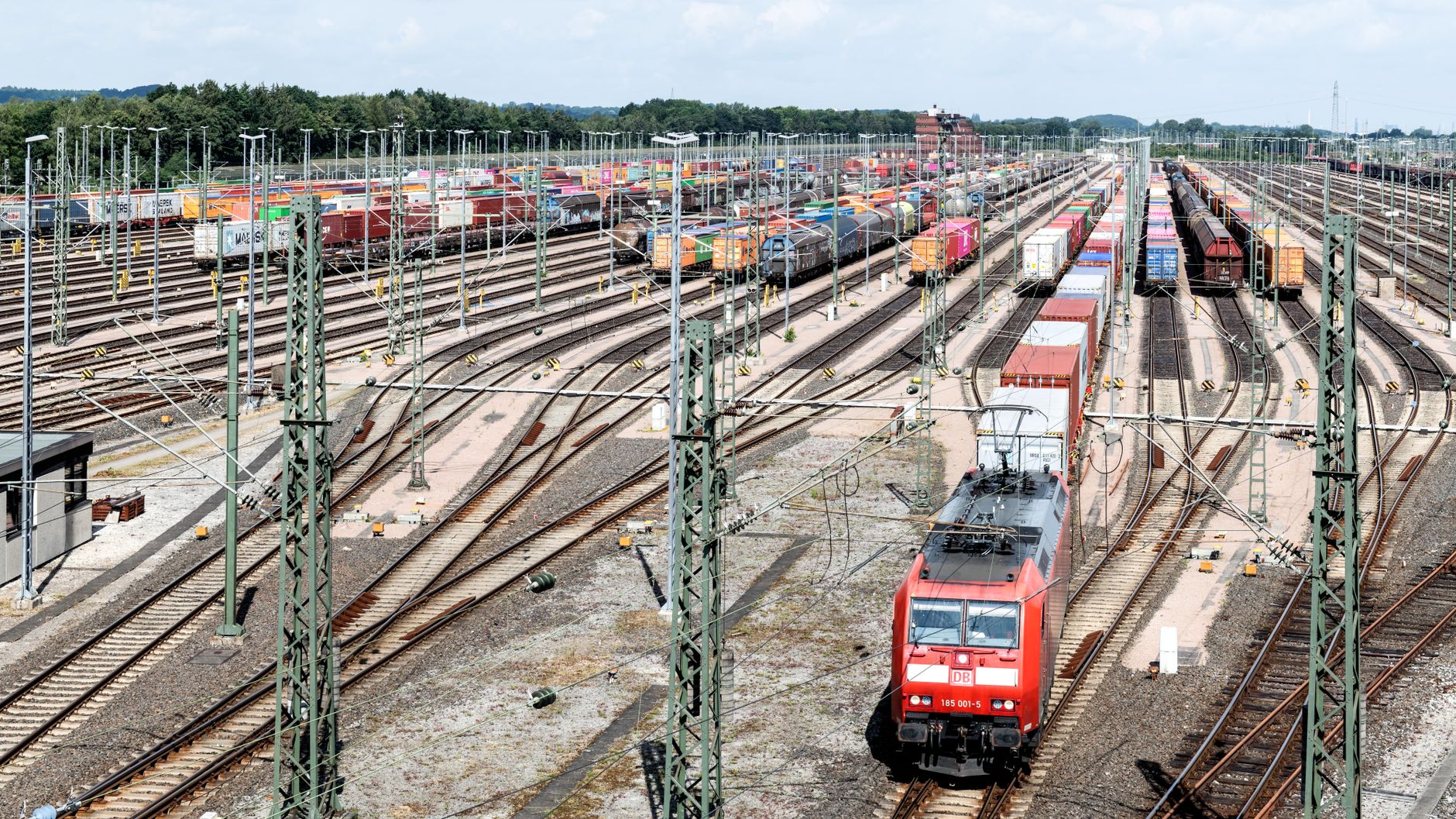
Freight does not touch every station. It concentrates at four multimodal terminals: Palenque, Poxilá, Progreso, and Cancún. Mexico Business News When I plan a lane, those are the four points I actually book against, and each has a distinct job:
- Progreso is the ocean gateway on the Gulf side, Yucatán's primary maritime port, reached by a dedicated freight branch out of the Poxilá terminal south of Mérida. Mexico News Daily This is where international box and bulk traffic meets the water.
- Poxilá is the inland distribution hub near Mérida that feeds the Progreso branch and consolidates cargo for the peninsula. Mexico News Daily
- Cancún anchors the northeast, and the first phase also covers fuel supply to Cancún International Airport, which tells you jet fuel is an early anchor load. Mexico News Daily
- Palenque is the strategic one, because it is where the loop hands cargo to the Interoceanic Corridor. More on that below.
The whole thing is run by the military rather than a private concessionaire. The railway is managed under Mexico's Ministry of National Defense, SEDENA, which also receives the operating revenue. Wikipedia As a shipper I read that as a mixed bag. On one side you get a single, well-capitalized operator with a mandate to keep the line running. On the other, military operation means the commercial interface, tariff transparency, and booking tooling are still maturing, so early users should expect to negotiate rather than pull a published rate card.
The Palenque handshake: plugging into the Interoceanic Corridor
The reason this railway matters far beyond Yucatán is the connection at Palenque. From there the freight line links into the Interoceanic Corridor of the Isthmus of Tehuantepec, the CIIT. Mexico Business News That is the land bridge Mexico has positioned as a complement to the Panama Canal, and it is the piece that turns a regional peninsula railway into part of an ocean-to-ocean story. I walked through the corridor economics separately in our Tehuantepec Interoceanic Corridor guide, and Tren Maya is best understood as the eastern feeder into that system.
The CIIT itself runs about 300 km between Salina Cruz on the Pacific and Coatzacoalcos on the Gulf, and the government has it tracking toward full operation in June 2026. Container News Its Line FA, from Coatzacoalcos up to Palenque, is the segment that ties directly into the Maya Train network. Container News So the practical geography is this: a box can land at a Pacific port, ride the isthmus rail to the Gulf in hours, and then either sail from Coatzacoalcos or continue onto the Tren Maya loop toward Progreso and Cancún.
The transit numbers are what make this interesting. On a pilot run, Hyundai Glovis moved 900 vehicles from Salina Cruz on the Pacific to Coatzacoalcos on the Gulf, and the rail leg took about nine hours. Container News That vehicle pilot is why I flag this corridor to anyone running RoRo or finished-vehicle programs, and it dovetails with what we cover in our international car shipping guide. Compare that isthmus crossing against the Panama Canal, which handles more than 8 million containers and around 14,000 ship transits a year but has seen canal transit stretch and queue during drought-driven draft restrictions. Container News The Mexican route does not replace Panama at that scale. It bleeds off overflow and gives a second path when the canal is congested.
| Attribute | Tren Maya freight (Yucatán loop) | Interoceanic Corridor (CIIT) | Panama Canal |
|---|---|---|---|
| Primary role | Regional feeder, peninsula distribution | Atlantic-to-Pacific land bridge | Global ocean-to-ocean transit |
| Length | ~1,554 km loop Wikipedia | ~300 km Salina Cruz to Coatzacoalcos Container News | ~82 km waterway |
| Freight status | Commercial launch Jan 2027 Mexico Business News | Full operation targeted June 2026 Container News | Operating for over a century |
| Indicative transit | Terminal-to-terminal within the peninsula | ~9 hr rail leg (vehicle pilot) Container News | 8 to 24 hr, longer under drought Container News |
| Scale | Up to 4M tons/yr target by 2030 Mexico News Daily | Ramping from pilot volumes Container News | 8M+ containers, ~14,000 ships/yr Container News |
| Key nodes | Palenque, Poxilá, Progreso, Cancún Mexico Business News | Salina Cruz, Coatzacoalcos, Palenque Container News | Balboa, Colón |
Transit and route reality: read the caveats
I will be blunt about where this sits in mid-2026. The Tren Maya cargo service is not carrying commercial freight yet. The locomotives are moving construction material, terminals at Progreso and Poxilá are still being built out, and the commercial date has already slipped once, from an earlier end-of-2026 goal to the current January 2027 window. Mexico News Daily When a project moves a launch date by a quarter, I assume the range of outcomes is wider than the press release, so I plan for a soft ramp through the first half of 2027 rather than full service on day one.
There is also a commercial-maturity gap between the two corridors. The CIIT already has an operational main line and has run pilot cargo, including that vehicle move, so it is the nearer-term option for isthmus crossings. Container News The Tren Maya freight arm is the newer layer on top. For a shipper that means the corridor story is real but staged. The isthmus land bridge comes first in 2026, and the Yucatán feeder plus Progreso ocean gateway follows through 2027 and beyond.
One more practical note on the Pacific side. Part of what drives interest in any Mexican land bridge is the search for Asia-Pacific routing that avoids canal chokepoints, the same logic pushing volume toward new deepwater calls. We tracked one of those shifts in our Chancay port reroute analysis, and the Mexican corridor competes in that same conversation for trans-Pacific cargo that wants a North American landing.
How I would think about it as a shipper
Here is the practical read I give clients moving cargo in, through, or out of Mexico's southeast.
First, match the cargo to the corridor's declared strengths. This railway was designed around fuels, bulk, agriculture, and containers, so grain, cement, steel, fuel, and containerized general freight are the loads that fit. Mexico Business News If your freight is high-value and time-critical, air or existing trucking still wins in the first year while the rail service stabilizes.
Second, watch Progreso. The port connection is the single most important piece for international shippers, because it is where the peninsula rail meets ocean vessels, and it carries the largest single slice of the freight investment at roughly 35 billion pesos. Mexico News Daily If Progreso dredging and terminal work lands on schedule, the Yucatán gains a genuine rail-to-water gateway it did not have before.
Third, treat Palenque as your interchange point. If your goal is an ocean-to-ocean move, you are really booking a CIIT crossing with a Tren Maya extension, not a single railway. Plan the customs and handoff at the terminal boundaries, and build the compliance side against Mexico's updated import rules, which we broke down in the Mexico customs law reform guide. Getting classification and documentation right at Coatzacoalcos or Progreso is what keeps a fast rail leg from stalling at the gate.
Fourth, price it against alternatives rather than against the hype. The corridor's selling point is reliability and a hedge against canal congestion, not headline speed for every lane. When the Panama Canal is running clean, ocean transit stays competitive on cost for many trades. When drought restrictions bite and queues build, a nine-hour isthmus crossing plus a Gulf sailing starts to pencil out. Container News I re-run that comparison every quarter, because the answer moves with canal draft levels and rate cycles.
Frequently asked questions
When does Tren Maya freight service actually start?
Commercial cargo operations are scheduled to begin in January 2027, after an earlier target of late 2026 was pushed back. The first 12 of 19 planned locomotives have already arrived and are hauling construction material ahead of the launch. Mexico Business News
What can I ship on it?
The service is built for fuels, bulk commodities, agricultural products, containers, and industrial goods, moving across four multimodal terminals at Palenque, Poxilá, Progreso, and Cancún. It is a general-freight railway rather than a specialized intermodal-only line. Mexico Business News
How does it connect to the Panama Canal alternative?
At Palenque the Tren Maya links into the Interoceanic Corridor of the Isthmus of Tehuantepec, a roughly 300 km rail land bridge between Salina Cruz and Coatzacoalcos that is targeting full operation in June 2026. Together they let cargo cross between the Pacific and the Gulf by rail as a complement to the canal. Container News
Is it a real alternative to ocean shipping?
It is a complement, not a replacement. The Panama Canal still handles more than 8 million containers and around 14,000 ships a year, a scale the Mexican corridor will not match, but the land route can absorb overflow and offers a faster crossing when the canal is congested. Its 2030 target is up to 4 million tons of cargo a year. Mexico News Daily
If you are mapping a Mexico lane against these shifts, the smart move is to compare real options before the corridor hype hardens into fixed contracts. On GetTransport.com you can line up carriers and quotes across Mexican routes, from Progreso and Coatzacoalcos gateways to cross-border trucking, and see which mix of rail, road, and ocean actually fits your cargo and calendar. Run the comparison, then commit.