


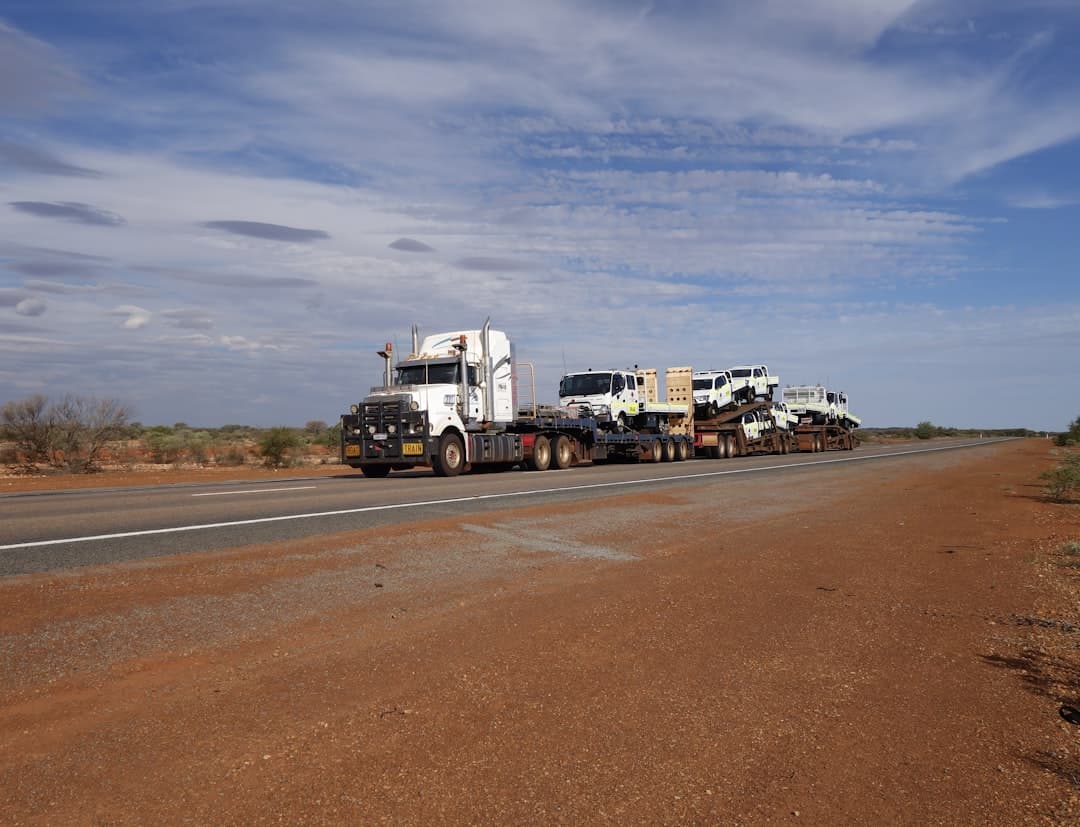

The longest truck ever driven on a public road was 1,474 metres of road train: 113 trailers behind a single Mack Titan, pulled a short distance in Western Australia in 2006. It moved about 150 metres. Nothing like it has run since, and nothing like it was ever meant to.
The number that matters is the legal one, and there Australia still leads at 53.5 metres. What surprises people who plan freight in Europe or North America is how far behind those markets sit, and how little the gap has to do with engineering. I have quoted the same pallet count in Finland and in Ohio and needed a different number of vehicles in each, purely because of what a permit allows.
The longest legal truck combinations in 2026, ranked
| # | Jurisdiction | Maximum length | Maximum mass | Where it may run |
|---|---|---|---|---|
| 1 | Australia (road train) | 53.5 m | About 135 t for an AB-quad, up to 200 t under permit | Gazetted road train routes, mostly outback and mining |
| 2 | Canada (long combination vehicle) | Up to 40 m | Provincial permit conditions | Prairie provinces and designated highways |
| 3 | United States (turnpike double) | About 35 to 36.5 m overall, 102 ft of cargo length in New York | 105,500 to 147,000 lb by state, 129,000 lb common | Specific toll roads in a minority of states |
| 4 | Finland | 34.5 m | 76 t | Effectively the whole road network, some cities excepted |
| 5 | Sweden | 34.5 m | Set by axle configuration under BK4 rules | A designated network, next expansion package due autumn 2026 |
| 6 | Mexico (doble remolque) | 31 m | 75.5 t | Authorised routes, right lane, 80 km/h cap |
| 7 | European Union (modular system) | 25.25 m | 60 t | Designated networks; Estonia joined in 2026, Poland is planning a pilot |
| 8 | Standard EU articulated lorry | 16.5 m | 40 t, 44 t on intermodal legs | Everywhere |
The spread from row one to row eight is more than three to one on length and more than three to one on mass. Same trucks, same trailers, same physics. The variable is regulation, and it tracks population density and bridge stock rather than any measure of what a vehicle can safely do.
Read the middle of that table carefully, because it contradicts the usual story. An American turnpike double at 35 metres or more is longer than anything Finland or Sweden permits. The difference is not the vehicle. It is that Finland allows its combination on virtually every road in the country while the turnpike double is confined to a handful of toll roads in a minority of states.
Australia earns its place, and only in specific places
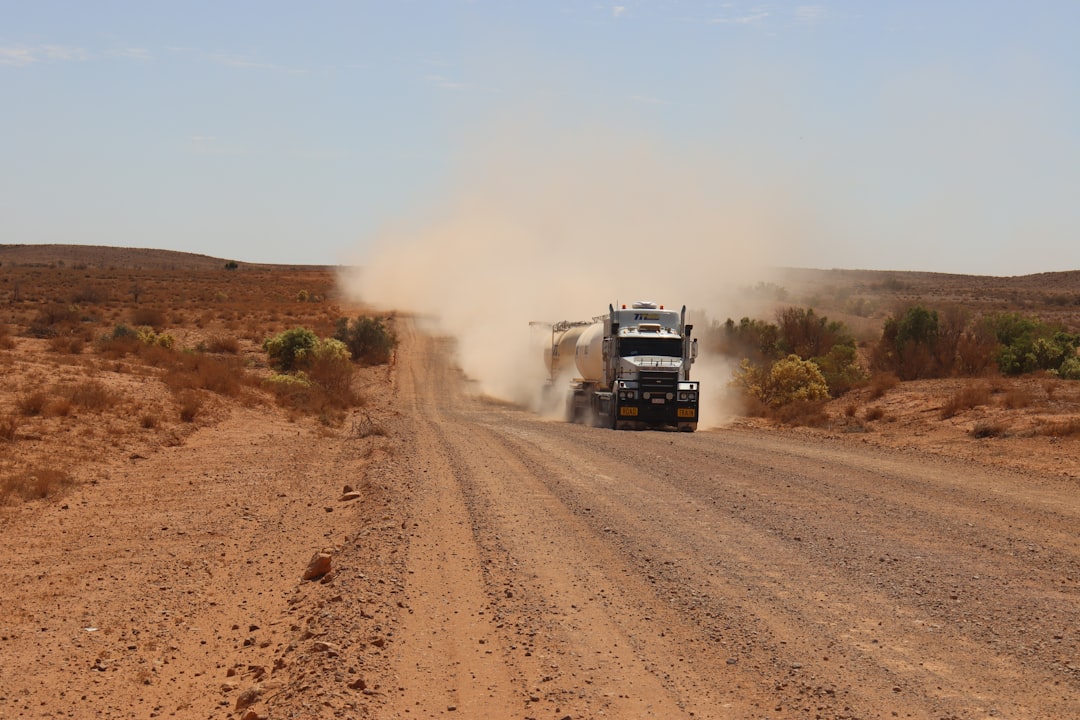
A road train at 53.5 metres carries up to four standard trailers under National Heavy Vehicle Regulator rules. The AB-quad, a prime mover with a B-double followed by two further semi-trailers, is the configuration people picture, and it is restricted to gazetted routes. Cross a state line and the permission changes: Queensland, Western Australia, South Australia and the Northern Territory allow the full 53.5 metres, while New South Wales and Victoria cap combinations at 25 metres and Tasmania at 26.
That patchwork is the actual operating condition. A load moving from a Pilbara mine to a Melbourne customer gets broken down at the boundary of the road train network, because the vehicle that is legal for 1,500 kilometres of the journey is illegal for the last 800. The economics work anyway, since the long leg is where the fuel and the driver hours are spent.
The rules underneath moved on 1 August 2026, when amendments to the Heavy Vehicle National Law took effect. They lift general mass limits to what had been the concessional levels and raise the length ceiling to 20 metres for certain general-access combinations. Neither touches the 53.5 metre road train figure, so the headline is unchanged, but a fleet running general-access work in the eastern states now has more capacity per vehicle than it had in July without applying for anything.
The Nordics treat length as an efficiency lever
Finland allows 34.5 metres and 76 tonnes on virtually the entire road network, not on a special corridor. Sweden decided in 2023 to permit combinations to 34.5 metres and has been widening the designated network since, with three new high-capacity transport combination types approved from 15 April 2025 including a rigid truck coupled to a dolly and semi-trailer.
The logic there is fuel and emissions per tonne rather than record-setting. Two 34.5 metre combinations do the work of three 25.25 metre ones on the same timber or paper volume, which removes a driver and a set of tyres from every three loads. Finland's approach of network-wide permission rather than corridor permission is the part most other countries have not copied, and it is the part that makes the productivity gain real, because a shipper can plan a door-to-door move without checking whether the last 40 kilometres qualify. Sweden is still working corridor by corridor, with its next package of approved high-capacity roads expected in the autumn of 2026.
The rest of Europe is unfreezing more slowly. Estonia opened to 25.25 metre modular combinations in 2026 and Poland has a pilot in preparation, while the European Commission is negotiating a revision of the weights and dimensions directive that would allow modular combinations to cross borders between consenting member states. That last point is the one to watch. Today a 25.25 metre set that is legal in Sweden and legal in Germany still cannot legally run the through movement, so the productivity case dies at the frontier rather than at the depot gate.
North America froze its limits in 1991
United States longer combination vehicles are governed by a freeze written into federal law in 1991, which locked each state's permissions at what was already allowed. Nothing has been added since. The turnpike double runs twin 48 or 53-foot trailers for an overall length around 35 to 36.5 metres, with gross weights set state by state between 105,500 and 147,000 pounds and 129,000 a common ceiling. New York permits 102 feet of cargo-carrying length on the Thruway. Away from those roads the standard is a single 53-foot trailer at 80,000 pounds.
So the American problem was never the vehicle. A turnpike double out-measures a Finnish 34.5 metre combination and carries comparable mass. What Finland has and the United States does not is permission to run it from the shipper's dock to the consignee's, which is worth more than any extra metre of trailer.
Mexico went the other way and then partly back. NOM-012 permits the doble remolque at 31 metres and 75.5 tonnes, longer than anything the European Union allows outside the modular system, but hedged with a 80 km/h speed limit, right-lane restriction and a list of authorised routes. Proposals to restrict the configuration further have surfaced repeatedly after crash investigations.
Length is rarely the binding constraint
When a move fails on my desk it is almost never because the combination was too long in the abstract. It fails on one of these:
- Axle mass and bridge assessment. A structure rated below the combination's axle loading stops the vehicle regardless of overall length, which is why the same 60 tonne EMS unit is routine on one road and prohibited two junctions later.
- Swept path. A 34.5 metre combination needs turning circles that most industrial estates were never laid out for, and a delivery point that cannot receive it makes the permit worthless.
- Network fragmentation. A permit valid on a designated corridor is not a permit to reach the consignee, and the break-down and re-marshalling cost usually eats the productivity gain on short hauls.
That last point is why long combinations concentrate in mining, forestry and long-distance line haul. The gain scales with distance while the fixed cost of assembling and splitting the set does not.
Where this sits with our other road and rail rankings
Vehicle limits only mean something against the network they run on, so read this with our ranking of countries with the largest road networks and with the longest highways. The equipment side sits in our rankings of the largest truck manufacturers and the biggest trucking companies. For the rail comparison, where a single train runs to 7.353 kilometres and the regulatory ceiling in Europe is 740 metres, see our ranking of the longest and heaviest freight trains, which follows exactly the same record-versus-permitted split.
Frequently asked questions
What is the longest truck in the world?
The record run was a road train of 113 trailers measuring 1,474 metres behind a Mack Titan in Western Australia in 2006, which travelled roughly 150 metres. In normal operation the longest legal combination is the Australian road train at 53.5 metres.
How long can a truck be in Europe?
The standard articulated lorry is capped at 16.5 metres and 40 tonnes, rising to 44 tonnes on intermodal journeys. Countries operating the European Modular System allow 25.25 metres and 60 tonnes on designated networks, with Estonia joining in 2026 and Poland preparing a pilot, while Finland and Sweden go further at 34.5 metres and Finland permits 76 tonnes across nearly its whole network. Cross-border running of modular combinations is still blocked, and a revision of the directive that would permit it between consenting member states is under negotiation.
Why do American trucks look shorter than European high-capacity ones?
They are not shorter where they are allowed. A turnpike double measures around 35 to 36.5 metres overall, longer than the Finnish 34.5 metre limit. The constraint is access: a federal freeze enacted in 1991 locked longer combination vehicle permissions at their existing state-by-state levels, no state has added routes since, and away from those toll roads the working standard is a single 53-foot trailer at 80,000 pounds.
Do longer trucks actually reduce cost?
On long hauls with dense freight, yes, because you remove a driver, a tractor and a set of tyres from every few loads. The saving disappears on short distances, where assembling and splitting the combination costs more time than the extra capacity returns, and it disappears entirely if the consignee cannot receive the vehicle.
What stops a long combination from running on a given road?
Usually the bridge assessments and the turning geometry rather than the length itself. Axle mass limits, swept path at junctions and the gap between a designated corridor and the actual delivery address decide whether a permit is usable, so check the route rather than the national limit.
Length and mass limits are as published by the national regulators and change through permit schemes rather than through headline legislation, so a figure valid nationally may not apply on your route. Australian masses vary by configuration and by permit, and figures between 135 and 200 tonnes appear in different official and industry sources depending on what is included. United States dimensions are quoted in the units used by the relevant state and federal rules. The 2006 road train record is as recognised by Guinness World Records and was a demonstration rather than a commercial movement. Confirm current permit conditions with the road authority before planning a long combination move.