


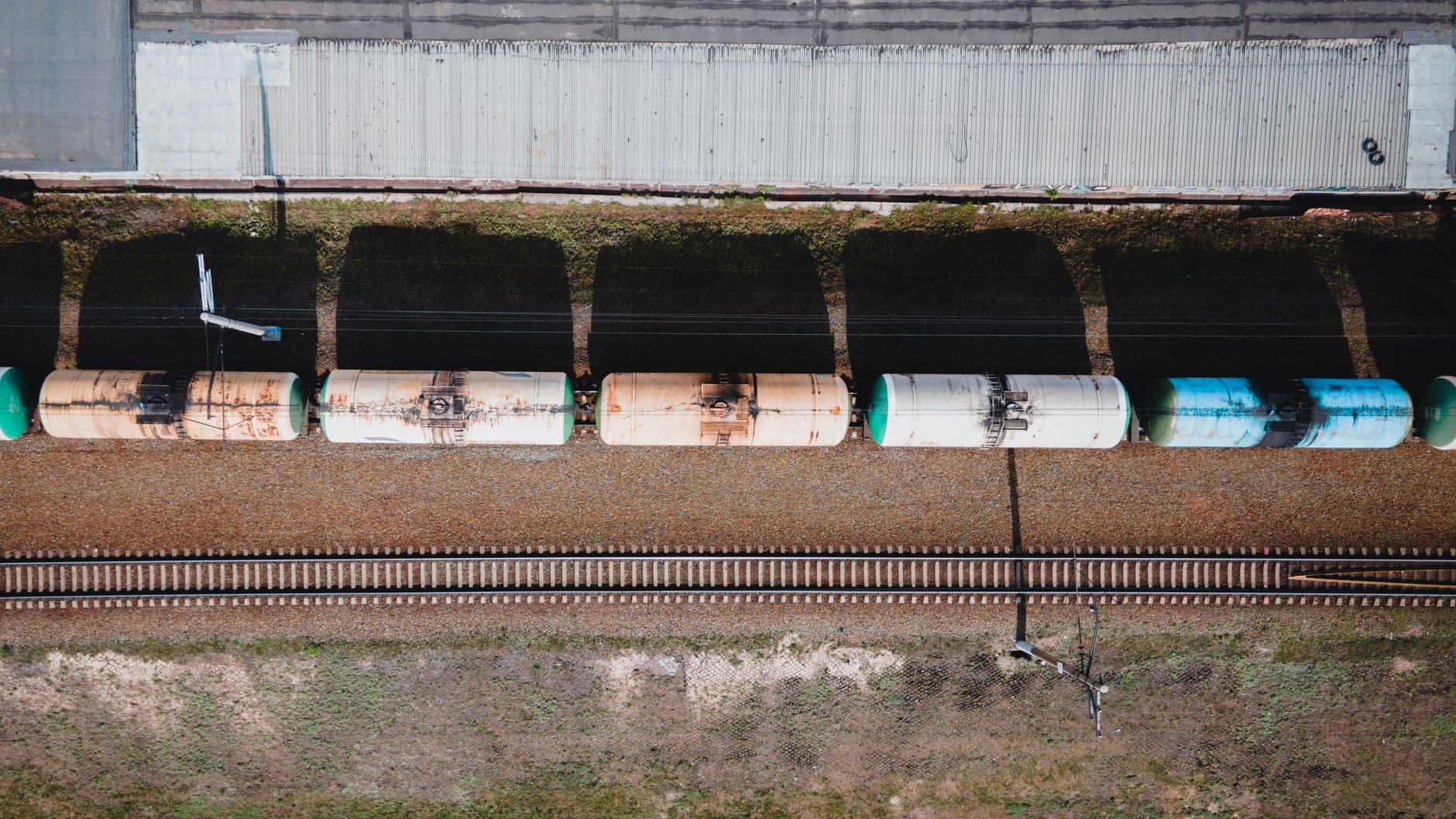
The longest freight train ever run was 7.353 kilometres of iron ore: 682 wagons, eight locomotives, 99,732.1 tonnes, hauled by BHP from the Newman and Yandi mines to Port Hedland on 21 June 2001. Nothing has beaten it in 25 years. The more useful number is the one that governs your intermodal booking in Europe, and it is 740 metres.
That gap between the record and the routine is what this ranking is really about. Every long-train record belongs to a dedicated mineral line with one owner, one commodity and no passenger traffic. Everywhere else, train length is set by the shortest passing loop, the signalling block, or a state legislature arguing about blocked level crossings. When a freight quote comes back with an odd number of containers per departure, that is the reason.
The longest and heaviest freight trains, ranked
| # | Train | Where | Length and mass | Status |
|---|---|---|---|---|
| 1 | BHP iron ore, 2001 | Pilbara, Australia | 7.353 km, 682 wagons, 99,732 t | One-off record run |
| 2 | Sishen to Saldanha ore, 1989 | South Africa | 7.5 km, 660 wagons, 68,640 t of ore | Historic demonstration run |
| 3 | Sishen to Saldanha with distributed power | South Africa | 3,780 m, 342 wagons, 41,400 t | Longest regular production train |
| 4 | Super Vasuki | India | 3.5 km, 295 wagons, about 27,000 t of coal | In scheduled service since 15 August 2022 |
| 5 | Daqin heavy haul coal | China | About 3.2 km, roughly 210 wagons, 20,000 t | Scheduled service since 2006 |
| 6 | North American Class I freight | United States | Commonly up to 16,000 ft, about 4.9 km | Everyday operation, self-imposed limits |
| 7 | European intermodal standard | EU TEN-T network | 740 m, sometimes 835 m | Regulatory design standard |
The ratio between the top and bottom rows is about ten to one. Same technology, same wagons in many cases, and a tenfold difference in what one crew can move, decided entirely by what the surrounding network permits.
Why the record has stood since 2001
BHP's run covered 275 kilometres and existed to prove a control system rather than to move ore efficiently. The eight General Electric AC6000CW locomotives were spaced at intervals of nearly a kilometre along the consist, and the point of the exercise was that one driver in the lead unit could command all eight simultaneously. That capability, now standard as distributed power, is what made every subsequent heavy haul operation possible.
The reason nobody has gone longer is that the record adds nothing. Beyond a certain length, in-train forces during braking and on grades rise faster than the productivity gain, and a single loading circuit can only accept so much train before the mine's own cycle time suffers. Records prove control systems. Timetables pay the bills.
The longest trains that actually run every day
South Africa's Sishen to Saldanha corridor holds the practical title. Production trains using radio distributed power run 3,780 metres long with 342 wagons and 41,400 tonnes gross, hauled by eight locomotives on a purpose-built export line. The 1989 record run on the same route reached 660 laden wagons over 7.5 kilometres, carrying 68,640 tonnes of ore behind nine electric and seven diesel locomotives.
China's Datong to Qinhuangdao line, better known as Daqin, has run 20,000 tonne combined trains since 2006 with roughly 210 wagons over about 3.2 kilometres, and it is generally described as the world's busiest dedicated freight railway. India's Super Vasuki, at 295 wagons and 3.5 kilometres, carries around 27,000 tonnes of coal, close to three times a conventional Indian coal rake, and it has run in scheduled service since its launch on 15 August 2022 rather than as a one-off demonstration. These are the consists a bulk shipper can actually contract, and they all share the same precondition: a dedicated corridor where nothing else needs a path.
North America: no federal limit, and a fight about it
There is no federal maximum train length in the United States. Most Class I railroads apply internal limits around 16,000 feet, roughly 4.9 kilometres, and at least one railroad has run a three-mile train twice a week. Precision scheduled railroading pushed average lengths up because a longer train spreads crew and locomotive cost across more cars.
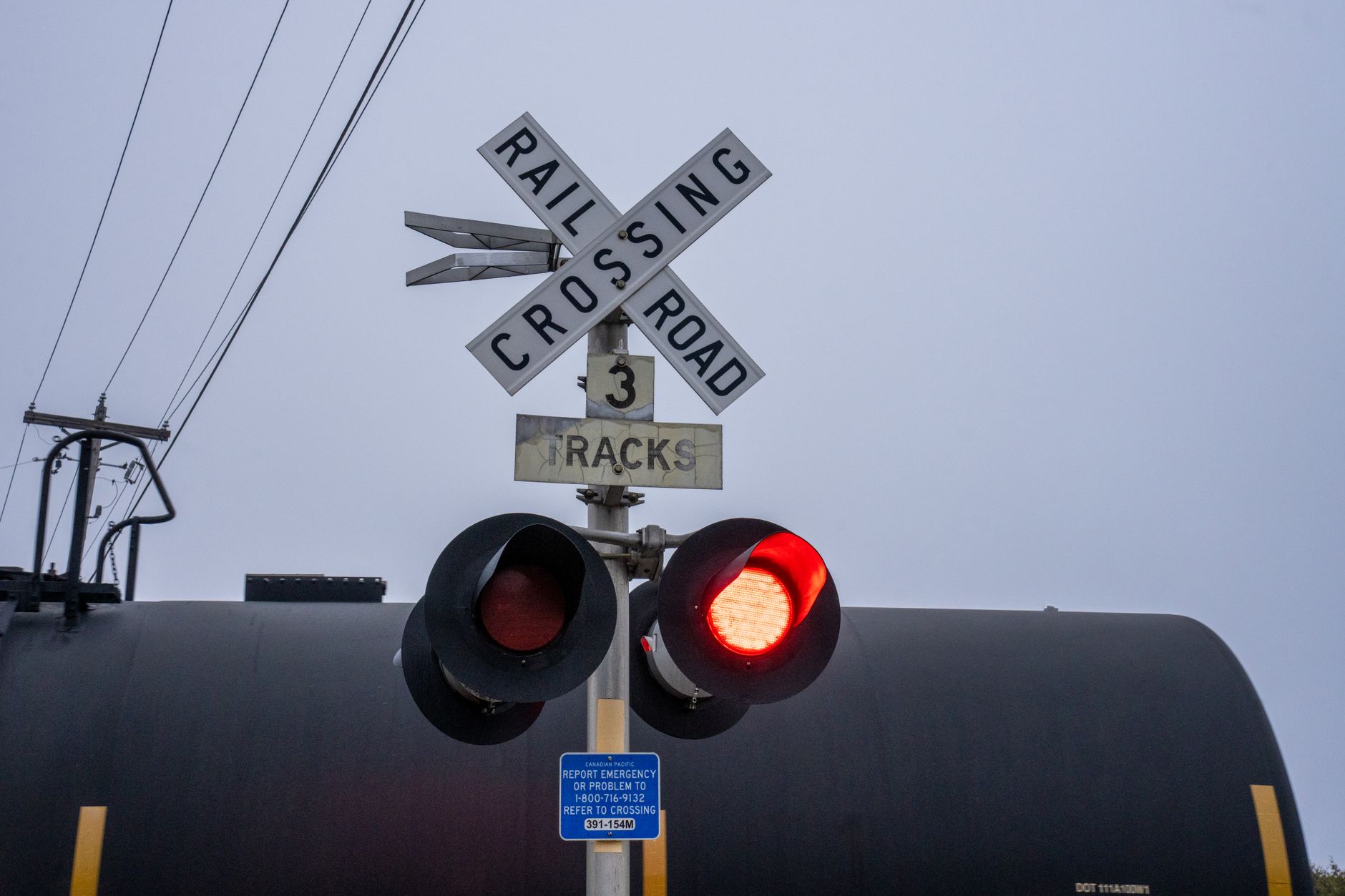
The distribution matters more than the ceiling, and it is where most reporting goes wrong. Federal law now defines a long train as one of 7,500 feet or more, about 2.3 kilometres, while the median Class I train runs closer to 5,300 feet. So the 16,000 foot consist is the tail of the curve rather than the norm, and a shipper who assumes every departure is a monster train will misjudge both the cut-off discipline and the crossing exposure.
The pushback is happening at state level. Texas House Bill 1564 would cap trains at 8,500 feet. California's SB 667 would require wayside detectors every 10 to 15 miles and limit length, specifying that a train originating outside California and exceeding 7,500 feet must be reduced to no more than 7,500 feet if it stops or sets out cars in the state before its final destination. The Association of American Railroads has told the Federal Railroad Administration that long trains are safe and that a 7,500 foot cap is unnecessary. Federal preemption has repeatedly defeated state and local rules in this area, including an Ohio Supreme Court ruling on blocked crossings that the US Supreme Court declined to review. The Railway Safety Act introduced in the 119th Congress would direct the Department of Transportation to regulate hazardous materials trains with reference to length and weight.
For a shipper, the practical read is that US train length is a commercial variable, not a legal one, and that blocked crossing politics is the pressure most likely to change it. Which railroad is running your cargo matters more than which state it crosses, and the operator picture is in our ranking of the largest rail freight operators.
Europe: 740 metres, and why it is so hard to change
The EU standard for freight train length on the trans-European network is 740 metres, with 835 metres permitted on some routes, against a design axle weight of 22.5 tonnes. Every element of the network is built around that figure: passing loops, platform-free freight sidings, signalling block lengths and terminal reception tracks.
Extending it is not a matter of coupling more wagons. A 1,000 metre train needs every loop on the route lengthened, because a single short loop forces the whole train to hold main line capacity while a passenger service overtakes. On mixed-traffic networks where passenger paths dominate the timetable, that is the binding constraint. The counter-example is instructive: dedicated freight lines in Australia, South Africa and northern China carry three to ten times the European standard length precisely because nothing else needs the track.
What train length changes for your cargo
- Slot economics. On a 740 metre network your unit cost is capped by wagon count per path, which is why European intermodal rates respond so sharply to terminal and path availability rather than to fuel.
- Cut-off discipline. Long trains have long assembly windows. A 16,000 foot North American consist is built from multiple blocks, and missing the block cut-off costs a full departure, not an hour.
- Level crossing exposure. A three-mile train at low speed can block a crossing for many minutes, which is the origin of the state bills and a genuine risk factor for time-critical drayage on the far side.
- Braking and dwell on grades. Heavier consists need longer to build and release air, so schedules on graded routes include allowances that a shipper reads as unexplained transit time.
- Commodity fit. Length records live in single-commodity bulk. Mixed manifest freight rarely benefits, because each additional block adds switching moves that erase the crew saving.
- Corridor comparison. When you compare rail against road on a long lane, compare the permitted train length as well as the distance. The same 2,000 kilometres behaves differently at 740 metres than at 4 kilometres per train.
The number to remember
One tonne-kilometre moved on a dedicated ore corridor and one moved on a mixed-traffic European main line are produced by different industries that happen to share a track gauge. The BHP record tells you what the technology can do. The 740 metre standard tells you what the network will let you buy this quarter, and it is the number that belongs in a freight budget.
Route length interacts with all of this, which is why the ranking of the longest railway lines reads so differently from this one: a very long line with short trains is a different business from a short line with enormous ones. The road equivalent of the same trade-off, where network length and legal load limits pull against each other, shows up in countries with the largest road networks.
Frequently asked questions
What is the longest freight train ever run?
A BHP Iron Ore train in Western Australia on 21 June 2001: 7.353 kilometres, 682 ore wagons, eight AC6000CW locomotives and 99,732.1 tonnes, run over 275 kilometres from the Newman and Yandi mines to Port Hedland. It was also the heaviest train ever operated.
What is the longest train in regular service?
The Sishen to Saldanha ore trains in South Africa, at 3,780 metres with 342 wagons and 41,400 tonnes gross, using radio distributed power across eight locomotives.
How long are freight trains in the United States?
There is no federal length limit. Federal law defines a long train as 7,500 feet or more, the median Class I train is nearer 5,300 feet, and railroads cap themselves around 16,000 feet with some services running to three miles. Texas has proposed an 8,500 foot cap and California a 7,500 foot limit, but federal preemption has struck down comparable state rules.
Why are European freight trains limited to 740 metres?
Because the trans-European network is designed around 740 metres, with 835 metres allowed in places, and the constraint is infrastructure rather than traction. Passing loops, sidings and signalling blocks would all need lengthening on every route a longer train uses.
Record figures come from Guinness World Records for the BHP run and from railway industry and operator reporting for the South African, Chinese and Indian consists; some historic South African figures vary between sources depending on whether locomotive mass is included. US train length practice is drawn from Federal Railroad Administration and Government Accountability Office material and from Association of American Railroads positions; the 7,500 foot figure is a statutory definition of a long train rather than a cap, and the Texas and California bills cited were proposals at the time of writing, so no federal maximum length exists. European length standards follow the trans-European transport network requirements. Verify the permitted length and axle load for your specific route with the operator, since national exceptions are common.