


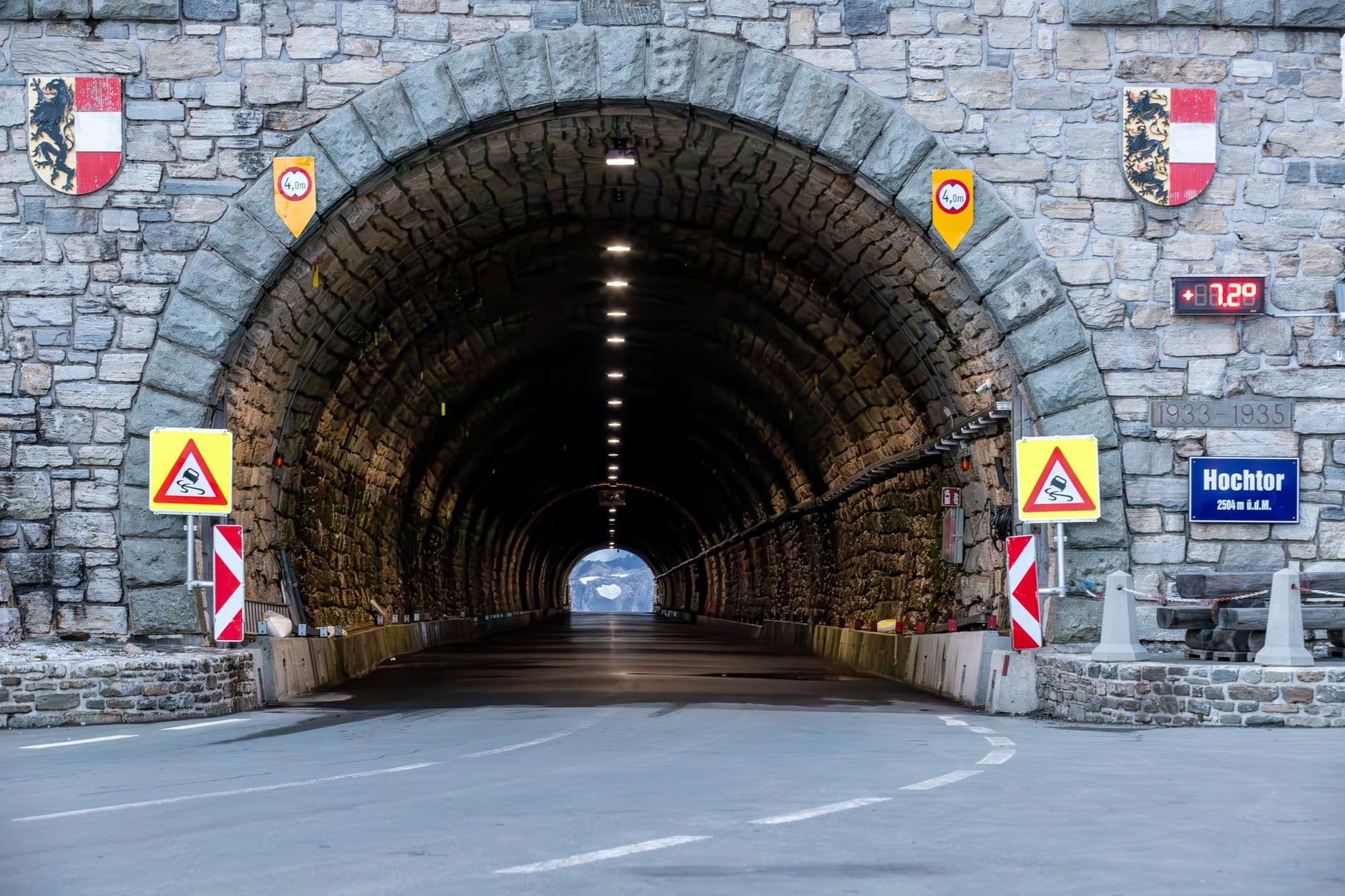

The Gotthard Base Tunnel is still the longest tunnel in the world at 57.1 kilometres, open since June 2016. It will not hold the title much longer. On 28 July 2026 miners broke through between the Austrian and Italian sections of the Brenner Base Tunnel, which with the Innsbruck bypass forms a 64 kilometre run. About 90 percent of the excavation is done and opening is expected in 2032.
Length is the headline, and it is the least useful number in the table. What decides whether a tunnel is available to your load is the restriction code on your dangerous goods, the corner height of your trailer, and whether the bore is closed for maintenance the night your driver arrives. I have seen a routing fall apart over a class code, never over a kilometre count.
The longest tunnels in the world, ranked
| # | Tunnel | Type | Length | Freight relevance |
|---|---|---|---|---|
| 1 | Gotthard Base | Rail | 57.1 km | Core of the Swiss Alpine freight route, flat crossing |
| 2 | Seikan | Rail | 53.85 km | Honshu to Hokkaido rail freight link |
| 3 | Channel Tunnel | Rail | 50.45 km | 1,163,124 trucks carried on shuttles in 2025 |
| 4 | Yulhyeon | Rail | 50.3 km | South Korean high-speed alignment |
| 5 | Brenner Base | Rail, under construction | 64 km with Innsbruck bypass | Main bores broken through 28 July 2026, opening expected 2032 |
| 6 | Rogfast | Road, under construction | 27 km, 392 m below sea level | Will be the longest and deepest subsea road tunnel, due 2033 |
| 7 | Lærdal | Road | 24.5 km | Longest road tunnel in operation |
| 8 | Gotthard road tunnel | Road | 16.9 km | Alpine truck route with hourly throughput limits |
| 9 | Mont Blanc | Road | 11.6 km | France to Italy freight artery, 8-hour night closures from mid-September 2026 |
Notice how the rail entries cluster above 50 kilometres while the road entries stop at 27. That is not an engineering limit, it is a ventilation and evacuation limit. Long road bores full of diesel vehicles are far harder to make survivable than rail bores with controlled access.
Brenner: the breakthrough that resets the ranking
The Brenner Base Tunnel will run 64 kilometres from Innsbruck to Fortezza once combined with the existing bypass, taking the record from Gotthard. Breakthrough on the main bores came at 10.35 on 28 July 2026, with roughly 90 percent of the 230 kilometre tunnel system excavated, and the remaining work is fit-out and railway systems ahead of an opening expected in 2032.
The freight case is the Brenner Pass road above it, one of the most heavily trafficked truck crossings in the Alps and a long-running dispute between Austria, Germany and Italy over transit restrictions. A flat rail alignment under the pass changes the economics of moving that traffic to rail, which is the entire point of the project. It is also six years away, so nothing in your 2026 routing changes because of it.
Switzerland: the corridor that measures its own success and is losing ground
Switzerland put roughly 24 billion Swiss francs into the New Railway Link through the Alps and the four-metre corridor upgrade, the works that let trailers with four-metre corner height ride on rail wagons through the Gotthard axis. It worked well enough that transalpine rail share is the highest in Europe. In 2025 it fell to 68.6 percent from 70.3 percent, the first time under 70 percent in a decade, with rail volumes through the Gotthard and Simplon corridors down 7.5 percent to 23.7 million tonnes, a loss of 1.9 million tonnes.
I read that as a warning rather than a collapse. The Swiss model taxes heavy trucks and offers a fast, gauge-cleared rail alternative, and the moment rail reliability slips, freight returns to the road within a quarter. The four-metre corridor is the detail that matters commercially: if your trailer exceeds that corner height, the rail option through the Alps is not available to you regardless of how long the tunnel is.
The Channel Tunnel: a length record that is really a market share number
At 50.45 kilometres the Channel Tunnel is third on the list, and it is the only entry on it where road freight rides through a long bore on a train as standard practice. LeShuttle Freight carried 1,163,124 trucks in 2025, down 3 percent on 2024, with about 972,000 of those in the first ten months and November alone at 97,307, down 7 percent, weakness the operator attributed largely to the automotive sector.
Those figures are a demand indicator for UK and EU trade rather than a tunnel story. The capacity is there; the trucks were not. Anyone modelling cross-Channel costs for 2026 should treat a 3 percent annual volume decline as the baseline condition, not as a temporary dip.
The restriction that actually governs your load
Under the European agreement on dangerous goods by road, every tunnel carries a restriction code from A to E, and every dangerous good carries a tunnel code. Category A means no restriction. Category E means the tunnel is closed to that cargo entirely. A tanker classified D/E is barred from category D and E tunnels while remaining free to use A, B and C.
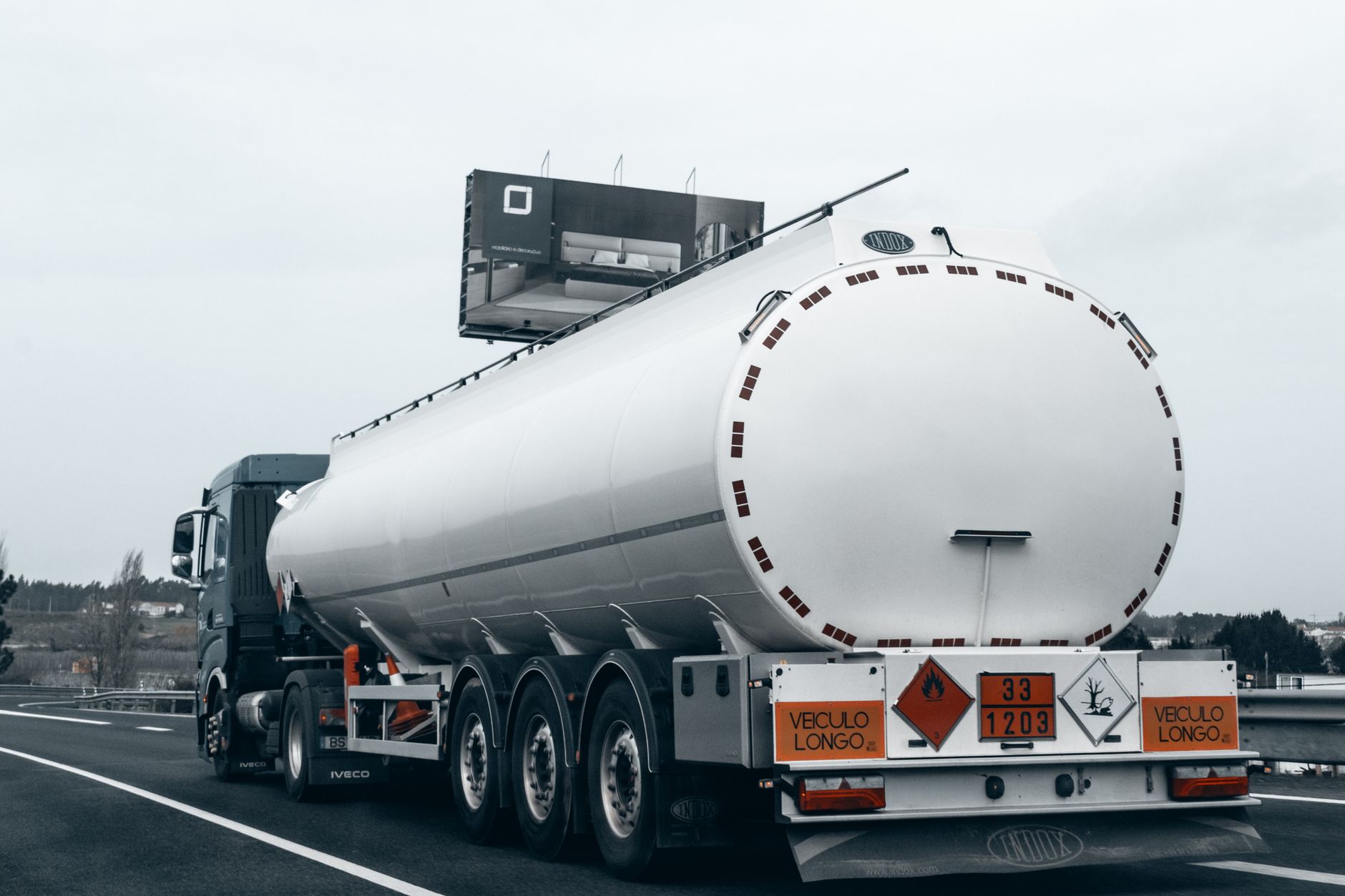
The consequences are concrete. The Great St Bernard tunnel on the Swiss and Italian border, an obvious alternative when Mont Blanc is disrupted, is a category E tunnel and does not accept dangerous goods traffic at all. The Gotthard road tunnel has operated under throughput limits since the fatal 2001 collision, when the bore closed for two months and reopened with a cap of 150 trucks per hour, and it enforces a hard 4.00 metre height limit that rules out a good deal of high-cube road equipment.
Mont Blanc is the one to read carefully, because the headline and the calendar disagree. There is no extended autumn shutdown in 2026, which sounds like relief, but the operator has scheduled repeated eight-hour weekday night closures from 22.00 to 06.00 between mid-September and December, plus two longer stoppages of 11 to 12 hours. Night closures of that length remove night running altogether: a truck arriving in the evening waits until morning, so one maintenance calendar entry costs a driver's whole shift and pushes the delivery into the next day. Fréjus began its own scheduled night closures on 23 February 2026, and Alpine tunnel tolls rose across the year.
Put together, a hazardous or high-cube load crossing the Alps has fewer real options than the map suggests, and the binding constraint is usually the tunnel code, the height limit or the closure window rather than the distance.
How to plan a tunnel routing
When I check an Alpine road routing, I open the tunnel restriction codes before the mileage, because the codes can eliminate a corridor outright while the mileage only makes it slower. The sequence I use:
- Start from the tunnel code, not the shortest path. Look up the restriction category of every bore on the route and the tunnel code of your goods before you price the lane.
- Check corner height against the four-metre corridor. Rail through the Gotthard axis accepts four-metre trailers. Anything taller stays on the road and pays road pricing.
- Read the closure calendar as a cost. Eight-hour night closures at Mont Blanc from mid-September to December, and Fréjus night work since February, push driving into daylight windows and collide with driver hours rules and delivery slots.
- Check height before class. The Gotthard road tunnel holds a 4.00 metre limit, so high-cube equipment is excluded regardless of what the cargo is.
- Price the alternative before you need it. If Great St Bernard cannot take your cargo and Mont Blanc is closed overnight, the remaining option may be a much longer detour or a rail shuttle booking made days in advance.
- Watch hourly throughput caps. A 150 trucks per hour limit means queue time is a function of arrival timing, so a two-hour shift in departure can outperform any route change.
- Separate opening dates from planning horizons. Brenner in 2032 and Rogfast in 2033 belong in a capital plan, not in a 2026 rate negotiation.
What the ranking tells a freight buyer
The figure I keep coming back to from this year's data is 68.6 percent, because it shows that even 24 billion francs of tunnel and gauge investment does not hold freight on rail by itself. Tunnels are the most rigid links in a network. A congested port can add a berth window and a busy motorway can add a lane, while a tunnel offers exactly the cross-section it was bored with, for a century. That rigidity is why chokepoint politics attaches to them so quickly, and why a 57 kilometre bore under the Alps only helps the shippers whose loading gauge and cargo class fit through it.
The same logic runs through our ranking of the biggest and busiest canals, where a lock chamber's dimensions cap an entire trade lane, and it is the reason the ranking of the longest highways says so little about freight capacity on its own. For rail, pair this with the longest railway lines, since a base tunnel exists to flatten the profile of a line rather than to shorten it.
Frequently asked questions
What is the longest tunnel in the world?
The Gotthard Base Tunnel in Switzerland at 57.1 kilometres, in service since June 2016. The Brenner Base Tunnel will take the title at 64 kilometres including the Innsbruck bypass, with opening expected in 2032 after the main bores were broken through on 28 July 2026.
What is the longest road tunnel?
The Lærdal tunnel in Norway at 24.5 kilometres. Norway is also building Rogfast, which at 27 kilometres and 392 metres below sea level will become both the longest and the deepest subsea road tunnel when it opens, currently planned for 2033.
Is the Mont Blanc tunnel closing in autumn 2026?
Not for an extended period, but the calendar is still disruptive. The operator has scheduled repeated eight-hour weekday night closures from 22.00 to 06.00 between mid-September and December 2026, along with two longer stoppages of 11 to 12 hours, which removes night running for freight on those dates.
Can trucks carrying dangerous goods use any tunnel?
No. Tunnels are categorised from A to E under the road transport agreement on dangerous goods, where A carries no restriction and E prohibits the cargo outright. The Great St Bernard tunnel is category E and takes no dangerous goods, so hazardous loads crossing the western Alps have fewer options than a road map suggests.
Is Alpine rail freight still growing?
No. Rail's share of transalpine freight fell to 68.6 percent in 2025 from 70.3 percent, its first drop below 70 percent in a decade, and volumes through the Gotthard and Simplon corridors declined 7.5 percent to 23.7 million tonnes.
Tunnel lengths are as published by the operators and infrastructure owners; where a project combines several bores, as at Brenner, the headline figure depends on whether connecting tunnels are included. Construction milestones and opening dates for Brenner Base and Rogfast come from the project companies and are subject to change. Alpine modal share and corridor volumes follow Swiss federal transport reporting, and Channel Tunnel shuttle volumes come from the operator's monthly traffic releases. Dangerous goods tunnel categories, height limits and closure schedules change, and the Mont Blanc night closure dates cited here are the operator's published 2026 programme: check the current tunnel restriction code, the permitted height and the operator's maintenance calendar before dispatch rather than relying on any published summary.